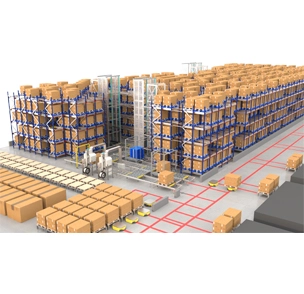
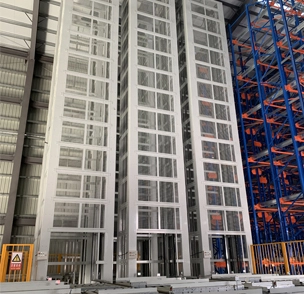
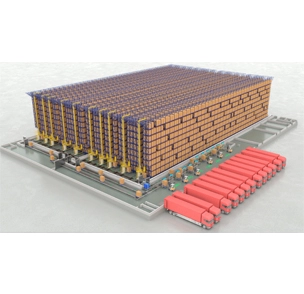
Outstanding Features of MASTER RGV Vehicle
Various of Delivery
Support for reciprocating and surround type
High System Efficiency
Support for one rail of multiple vehicles, system efficiency
Flexible and Reliable
Simple and reliable, and flexible in scheduling
Adapt to Different Environments
Standardized versatility, beautiful and convenient maintenance

Specifications of MASTER RGV Vehicle
| Content | Specifications and Parameters | Remark |
| Load | ≤1200Kg |
|
| Cargo Unit Dimensions | 1200mm (W)X1200mm(L)X1750mm(H) |
|
| Horizontal Walking Light Load Speed | 180m/min |
|
| Horizontal Walking Speed | 90m/min |
|
| Horizontal Walking Acceleration | 0.5m/s2 |
|
| Conveying Speed | 16m/min Frequency Conversion Speed Regulation |
|
| Positioning Accuracy | Horizontal ±2mm |
|
| Power | Traveling: 2kw, Conveying: 0.75kw | This Power May Be Adjusted During the Detailed Design Stage. |
| Travel Wheel Material | Polyurethane or Nylon Wheels |
|
| Positioning Method | Barcode Address Identification |
|
| Positioning Accuracy | ±2mm |
|
| Communication Plan | Wireless Communication |
|
| Power Supply Method | Slide Line |
|
| Equipment Painting | Epoxy Resin Powder Electrostatic Spraying or Spray Painting, Yellow Color Is Recommended, Thickness 60~80um |
|
What's the difference between RGVs and AGVs?
RGV and AGV are both used in warehouses for automatic cargo handling. RGVs(Rail Guided Vehicles) are connected to tracks that are fixed in the warehouse racking structures. The high efficiency transportation of goods between designated stations becomes possible through the implementation of these RGV vehicles, which enable high-speed deliveries in RGV system warehouses. AGVs(Automated Guided Vehicles) have self-navigating systems composed of magnetic tape sensors and lasers, enabling them to roam independently through facilities without needing any physical networks or laying tracks. Their capability to shift and change enables operation in advanced and profiled surroundings.
While AGVs offer flexibility in navigation, RGVs excel in precision, efficiency, and handling high-volume transportation in confined layouts.
| Feature | RGVs | AGVs | Forklifts |
|---|
| Speed | High | Moderate | Dependent on operator skill |
| Infrastructure | Requires fixed rail tracks | Flexible navigation | No infrastructure needed |
| Precision | High (predefined routes) | Moderate (autonomous) | Dependent on human operation |
| Scalability | Highly scalable | Moderately scalable | Limited scalability |
| Safety | Superior collision avoidance | Good safety protocols | Risk of human error |
Generally, RGV vehicles will be a better choice for warehouses to get both speed and precision with high-density storage. By using an RGV system, your business can achieve enhanced performance, lower costs, and a more efficient warehouse logistics system.
How Does an RGV System Work?
At its core, an RGV system combines physical infrastructure and intelligent technology to multiply operational efficiency. Here's a breakdown of how it functions:
Rail Tracks: Fixed tracks provide a guided pathway for the vehicles to follow, ensuring controlled movement.
RGV Vehicle: The vehicle, embedded with smart sensors and programming, moves along the rails transporting goods between stations.
Control Systems: A centralized system manages and optimizes the movement of the RGV fleet, integrating seamlessly with other automation tools like warehouse management systems (WMS).
The operation is incredibly flexible, enabling smooth transportation of materials across multiple zones, with minimal delays, bottlenecks, or mismanagement.

Applications of Rail Guided Vehicles Across Industries
The versatility and precision offered by rail guided vehicles (RGVs) have made them indispensable across a wide range of industries. Wherever operational efficiency, safety, and automation are crucial, RGVs excel. Below are some of the key industries where RGVs are making a significant impact:
1. Logistics and Supply Chain
In warehouses and distribution centers, RGVs play a pivotal role in transporting goods between storage areas, picking zones, and shipping docks. They help optimize supply chain workflows by enabling faster inventory management and meeting the growing demand for quick deliveries in e-commerce and retail industries.
2. Automotive Manufacturing
RGVs are widely used in automotive assembly lines to transport heavy components, such as car chassis, engines, and transmissions, with unmatched precision. By automating these tasks, automotive manufacturers significantly reduce production downtime and boost throughput.
3. Food & Beverage
In highly regulated industries like food and beverage, RGV systems are used to transfer raw materials and finished goods in temperature-controlled environments. Their hygiene-friendly, contactless design ensures compliance with safety and sanitation standards while minimizing human errors.
4. Medicine and Pharmaceuticals
RGVs are vital in pharmaceutical manufacturing and hospital settings, where delicate transportation of medical supplies, raw materials, and finished products is required. These systems ensure strict adherence to regulatory cleanliness and safety standards while facilitating seamless, traceable material movement.
5. Electronics Manufacturing
In electronics production, where delicate and high-value items like semiconductors, PCBs, and display panels need precision handling, RGVs excel. Their automated workflows minimize material damage and improve operational efficiency, making them an ideal choice for the electronic manufacturing sector.
6. Chemical and Hazardous Material Handling
With advanced safety mechanisms, RGVs are widely used in chemical plants to transport hazardous or sensitive materials. By automating the movement of volatile or fragile products, RGVs improve workplace safety while maintaining accuracy and regulatory compliance.
7. Textile and Garment Industry
In textile production facilities, RGV systems can be used to automate the handling of large fabric rolls, yarns, and other materials. They contribute to smoother operations, improving overall efficiency and reducing manual handling time.
8. Aerospace Industry
The aerospace sector relies on precise assembly of components, such as airplane wings, fuselages, and turbine engines. RGVs facilitate the efficient transportation of these parts across production stations, ensuring safety and accuracy in highly regulated environments.
Whether it's enabling faster logistics in supply chains, maintaining hygiene in food & beverage operations, or handling delicate materials in medicine and electronics, the flexibility and reliability of rail guided vehicles make them an essential tool for modern industries.
Why Master Auto Group Is a Leader in RGV Solutions
At Tianjin Master Group, we specialize in providing sophisticated RGV solutions tailored to your unique requirements. From customizable solution to ongoing support, our RGV systems are engineered for efficiency and reliability.
Our advantages include:
Decades of expertise in material handling automation.
Customizable RGV options for diverse industrial needs.
Dedicated after-sales service and upgrades.

The Future of Material Handling with Rail Guided Vehicles
As industries continue to embrace automation, Rail Guided Vehicles (RGVs) remain at the forefront of the movement. Their ability to enhance workflow, reduce costs, and improve safety is revolutionizing how businesses handle materials.
If you're looking to stay ahead in the competitive industrial landscape, adopting an RGV system may be your next big step toward scalable, efficient operations.
Take the leap into the future of automated material handling solutions! Learn how our advanced RGV systems can transform your operations today by contacting us.
Related Transport System


 English
  Indonesia