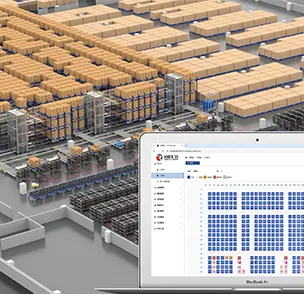
Video of Tianjin Master Pallet Stacker Crane
Outstanding Features of Tianjin Master's Pallet Stacker Cranes
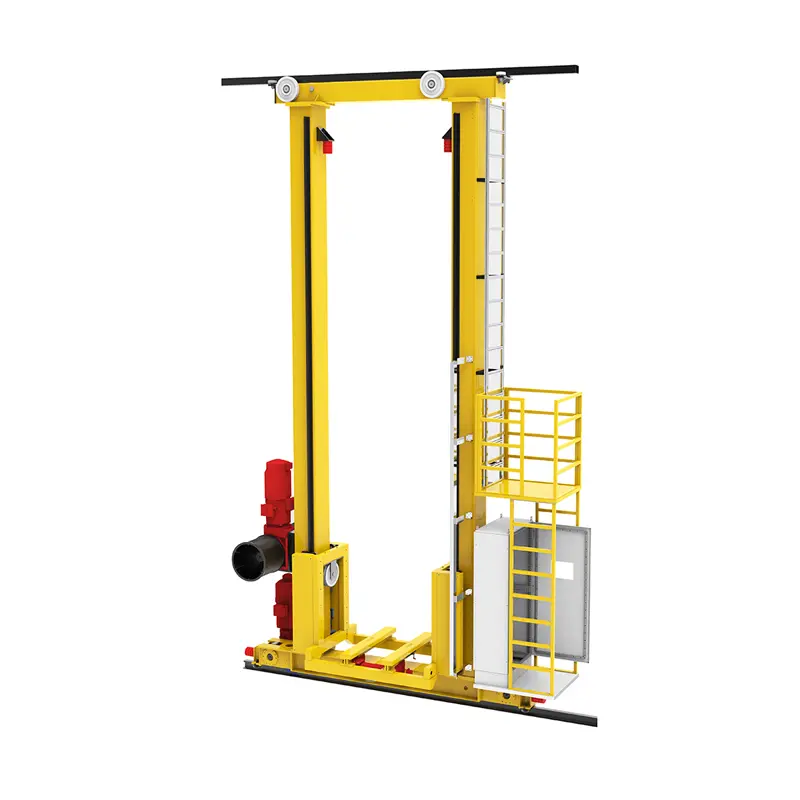
The safety configuration is superior to that of peers to improve the safety and stability of the crane stackers. Compared with similar products, the number is doubled, the platform has higher bending and shear resistance, long service life and low failure rate.
Laser barcode positioning and absolute position positioning are adopted, with a positioning accuracy of ±2mm, which is more suitable for projects with high stacker height and high efficiency requirements of owners.
Absolute position positioning, with a positioning accuracy of ±2mm, these stacker cranes for pallets are more suitable for projects with high stacker height and high efficiency requirements of owners.
With these precision positioning and safety advantages, the system is well-suited for integration into an asrs stacker crane solution for high-bay automated warehousing.

What is a Stacker Crane?
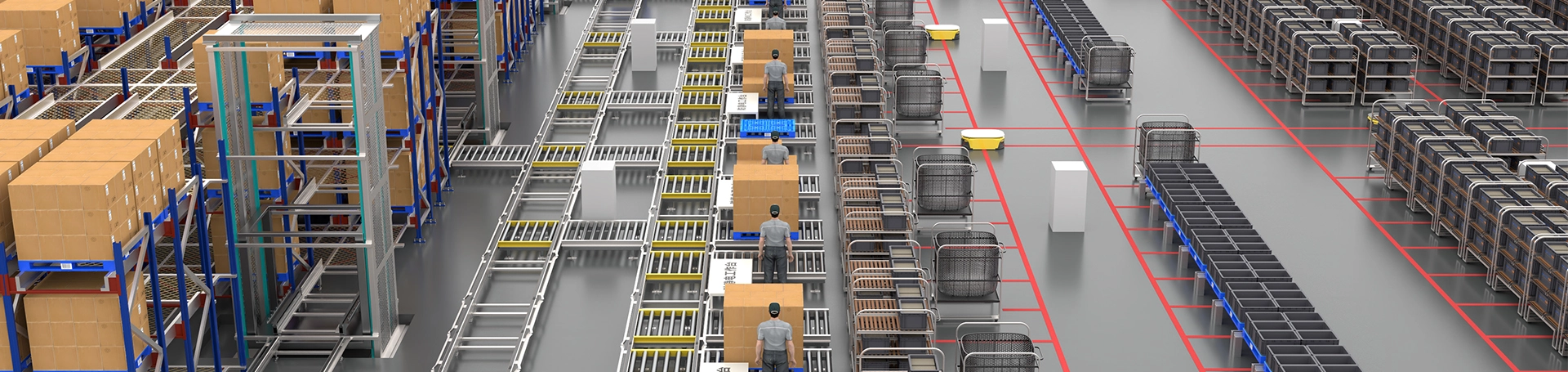
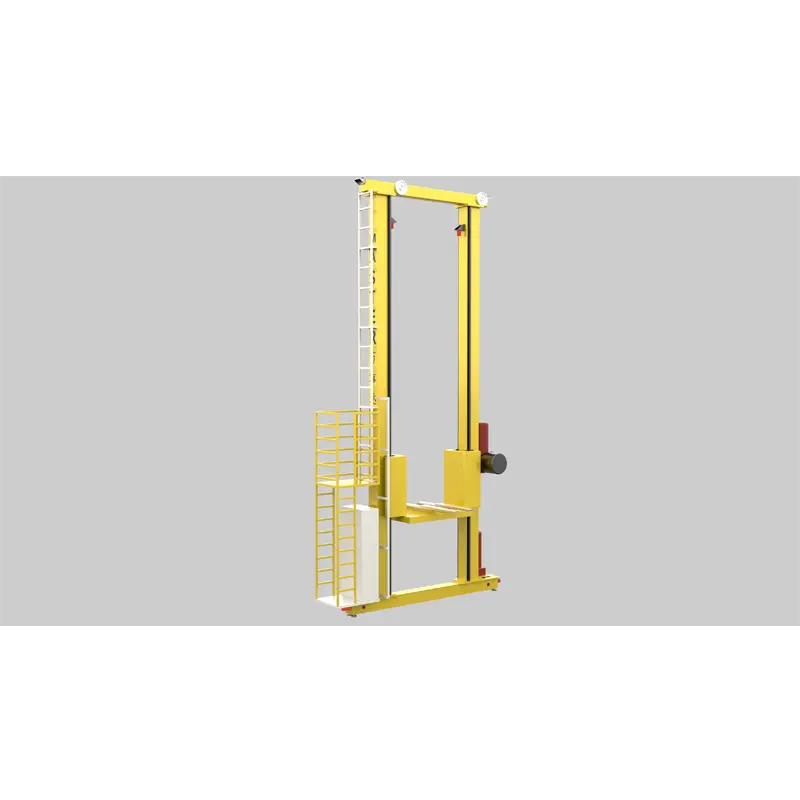
A stacker crane is a specialized piece of equipment designed to automate the storage and retrieval of materials within a warehouse or factory. These cranes consist of a vertical mast, a carriage that moves vertically and horizontally along the mast, and an automated lifting mechanism. They operate seamlessly within the framework of ASRS systems, moving goods with precision to maximize storage and speed up retrieval.
Commonly deployed in stacker crane warehouses, they are built to handle various load types, from pallets to smaller containers. By eliminating manual movement, stacker cranes significantly reduce errors and operational downtime, making them indispensable for high-density storage environments.

Key Features and Benefits of a Stacker Crane
Key Features Stacker Cranes:
High Vertical Storage Capability: Stacker cranes can reach significant heights, allowing warehouses to utilize unused vertical space.
Precision and Control: With advanced sensors and monitoring systems, these cranes ensure exact picking and placement of items.
Durability and Load Capacity: They are designed to handle heavy loads, making them ideal for industries like manufacturing and logistics.
Benefits of Stacker Cranes:
Maximized Space Utilization: Stacker cranes compactly arrange goods, enabling businesses to store more items in the same footprint.
Enhanced Operational Speed and Accuracy: Automation ensures faster, error-free sorting, which improves overall productivity.
Reduced Labor Dependency: Stacker cranes reduce reliance on manual labor, cutting costs and enhancing safety.
Improved Safety: By minimizing manual handling and using automation, stacker cranes reduce the chances of workplace accidents.
From large-scale automated stacker cranes in mega warehouses to smaller solutions for specific industries, these systems excel in delivering efficiency and cost savings.

How Stacker Cranes Work in ASRS Systems
Automated Storage and Retrieval Systems (ASRS) leverage stacker cranes to automate warehousing tasks. Here's how they work:
Storage: Using warehouse management software (WMS), goods are assigned optimal storage locations based on size, weight, and turnover rate.
Retrieval: Upon a retrieval command, the ASRS crane navigates to the designated storage slot, picks the item, and delivers it to the required location.
Real-Time Monitoring: Advanced sensors and IoT technology enable real-time tracking of inventory and crane movements.
This process minimizes human intervention while maximizing productivity and space utilization—a win-win for efficiency-focused warehouses.

Applications of Stacker Cranes in Industry
Key Industries Benefiting from Stacker Cranes:
Warehousing and Logistics:
Stacker cranes play a pivotal role in high-density warehouses where manual storage isn't feasible.
Manufacturing Facilities:
These cranes integrate seamlessly with assembly lines, moving components efficiently between stations.
Cold-Storage Facilities:
With stacker cranes, warehouses can efficiently store perishable items in freezing conditions, optimizing space and reducing human exposure to harsh environments.
Their versatility makes them ideal for handling everything from stacker cranes for pallets to smaller, specialized loads.

Factors to Consider When Buying a Stacker Crane
Key Considerations:
Load Capacity: Ensure the crane can handle the weight and dimensions of your goods.
Height and Reach: The crane's reach should match your warehouse's vertical storage needs.
Compatibility: Check how well the crane integrates with your existing WMS or ASRS setup.
Price and ROI: Evaluate the stacker crane price against its expected return on investment to ensure long-term profitability.
Choosing the right solution from reputable stacker crane manufacturers ensures you get reliable and efficient performance.

Why Invest in a Stacker Crane for Your Warehouse?
The Future of Stacker Cranes and Automation in Warehousing
The future of stacker cranes is intertwined with advancements in technology. Soon, we may see cranes equipped with AI-driven robotics for even smarter inventory management or energy-efficient designs that focus on sustainability.
Moreover, integration with IoT for predictive maintenance and real-time monitoring will ensure that stacker cranes remain at the forefront of warehousing automation. As warehouses grow smarter, automated stacker cranes will continue to play a central role.
The Benefits of Investing in a Stacker Crane
The efficiency, accuracy, and cost savings offered by stacker cranes make them a critical investment for modern warehouses. By leveraging these automated solutions, businesses can enhance their competitiveness and future-proof their operations.
Interested in bringing the power of stacker cranes to your warehouse? Contact Tianjin Master today to learn how our cutting-edge solutions can transform your warehousing efficiency!

Specifications of Warehouse Stacker Cranes
| Name | MASTER Pallet Stacker Crane |
| Model | double upright/ straight moving/ single or double deep/ double working station |
| Rated Capacity | 1200Kg |
| Horizontal moving speed | 0~220m/min、0~120m/min、 0~90m/min |
| Horizontal moving acceleration | 0.5m/s² |
| Vertical liftion speed | 0~60m/min、0~30m/min、 0~40m/min |
| Vertical liftion acceleration | 1m/s² |
| Fork telescopic speed | 30/60m/min |
| Fork telescopic acceleration | 0.5/1m/s² |
| Positioning mode | walking:bar code address lifting:bar code+encoder forking:photoelectric+encoder |
| Positioning accuracy | Vertical:±5; Fvertical:±3;Forking:±3mm; |
| Communication solution | Infrared communication |
| Power supply mode | contact power line |
| Equipment painting | spray paint, recommend yellow, thickness 105um |
| Noisy | less than 84dB |
| Fork | Mias |

Related Automated Material Handling Equipment


 English
  Español
  português
  العربية
  tiếng việt
  ไทย
ไทย  Indonesia