My name is Robin Zhen. I've been a project manager at Master Auto Group for eleven years. I've handled projects ranging from small racking retrofits worth a few hundred thousand to massive smart AS/RS facilities worth billions. Friends often ask me which one was the “biggest.” But the first project that comes to mind is the one at an old textile mill in North China in 2018.
It wasn't an “easy” project. The budget was tight, the building was thirty years old with low ceilings and dense columns, yet the client's demands were high: they wanted automation to handle hundreds of SKUs from fabric rolls to finished garments, without disrupting daytime production.
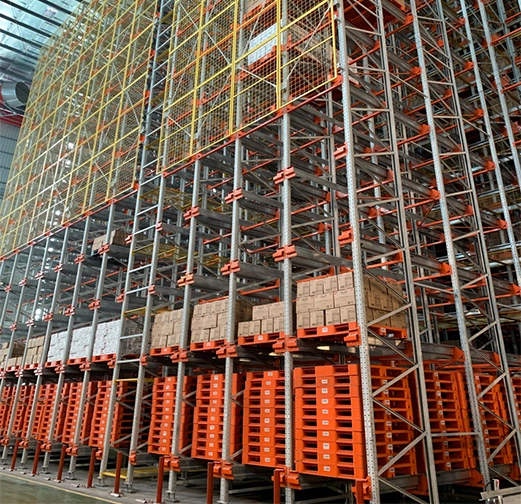
Back then, the company was mainly promoting ASRS (Automated Storage & Retrieval Systems) and Pallet Shuttles—mature solutions with predictable returns. But looking at the old factory's structural drawings, I knew both these “standard answers” wouldn't work—there wasn't enough space, and the goods were too varied.
The Breakthrough Came from an “Alternative” Choice
During an internal tech seminar, I listened as R&D colleagues passionately presented a new technology: the 4-Way Shuttle (4WS). It could change direction freely, didn't rely on fixed lifts, had low requirements on building structure, and was ideal for retrofit projects and non-standard storage.
In that moment, I felt like I'd found the door handle in a maze. But recommending it to the client required courage. At the time, there weren't many large-scale domestic applications of 4WS. Clients were naturally wary of “new tech”: “Is this thing reliable? Don't use us as guinea pigs.”
We didn't push. Instead, we made a bold decision: at our own expense, we built a complete 1:10 scale model of their warehouse scenario at our Tianjin demo center. We used small models to simulate fabric rolls and garment boxes, letting the client see with their own eyes how the 4WS could flexibly handle goods of different sizes and coordinate in tight spaces.
The client's veteran factory director, a meticulous engineer who wore reading glasses and had been严谨 his whole life, spent an entire afternoon at the demo center, asking countless detailed questions. Finally, he nodded and said just one thing: “This thing understands our difficulties.”
Implementation Was a “Surgical” Retrofit
Once the project started, the real challenges began. We had to work nights and weekends, like performing surgery without stopping production. The old factory floor was uneven, so we engineered a precise leveling compensation system for the rails. The client's fabric rolls were a non-standard size, so we redesigned the fork attachments.
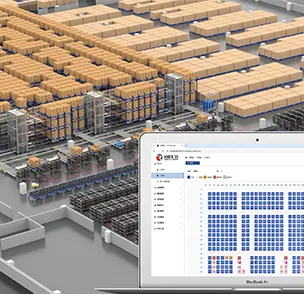
The most unforgettable moment was during the small-hours system integration test. When the first fabric rolls were automatically put away, and the 4WS shuttles smoothly delivered them to assigned locations, then accurately retrieved the next day's production materials to the docking station under WCS command, the entire project team held its breath. The old factory director looked at the data on the screen and patted my shoulder. Not many words were needed; I knew we had succeeded.
What Did This Project Change?
For the client, it gave a nearly obsolete old warehouse a modern heart capable of handling complex logistics, revitalizing the resilience of their entire supply chain.
For me, it was a profound baptism. I understood that at Master Auto Group, technology is never a trophy for display, but a tool for solving real problems. The company's value lies not in how many “ace” products it has, but in its ability to accurately “diagnose” a client's “ailment” and “prescribe” and “operate” accordingly—whether that means deploying mature ASRS or betting on emerging 4WS.
For the company, this project became a classic case study. It proved that beyond our traditional strengths, our deep understanding of technology and precise grasp of application scenarios could open new frontiers. It also helped the 4-Way Shuttle product line rapidly grow from a “rising star” into a pillar standing alongside ASRS and Pallet Shuttles.
Now, when I face complex projects, I always think back to that old textile mill. It reminds me that true automation isn't about filling a space with the most expensive technology, but about using the most suitable solution to light up that mix of hope and worry in a client's eyes.
That, perhaps, is the most important thing I've learned in my decade at Master Auto Group.


 English
  Español
  português
  العربية
  tiếng việt
  ไทย
ไทย  Indonesia