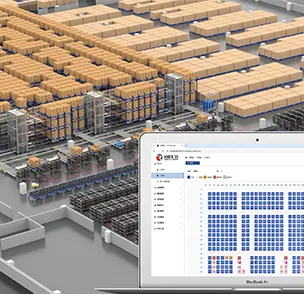
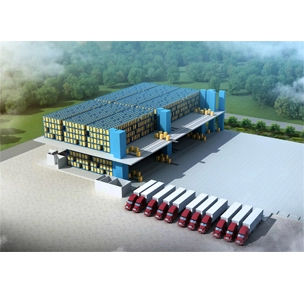
In today's world, your supply chain is a collection of risks: demand spikes, labor shortages, port delays, price volatility. Many companies respond reactively—firefighting each crisis. But what if you could build resilience directly into your operations? Modern warehouse automation, specifically shuttle systems, isn't just about efficiency; it's a powerful risk mitigation strategy.
Here’s how 4-Way Shuttles and Pallet Shuttles act as your strategic shock absorbers.
1. Mitigating Labor Volatility Risk (The Human Buffer)
The Risk: A sudden labor shortage or a 30% turnover rate brings your fulfillment to a halt.
The Shuttle Solution: Both 4-Way and Pallet Shuttle systems decouple your throughput from the availability of manual labor. They provide a predictable, automated baseline capacity. Your existing team is upskilled to manage the system, becoming more valuable and stable. You're no longer hostage to the job market.
2. Mitigating Demand Volatility Risk (The Elastic Capacity)
The Risk: A viral product or a seasonal surge overwhelms your manual picking, causing missed deliveries and brand damage.
The Shuttle Solution: A 4-Way Shuttle system is inherently scalable. You can add more shuttle vehicles to the existing grid to handle peak throughput, almost like adding more servers to a website during a traffic spike. This elasticity turns unpredictable demand from a threat into a manageable variable.
3. Mitigating Space & Cost Volatility Risk (The Financial Buffer)
The Risk: Skyrocketing real estate or energy costs (especially in cold storage) compress your margins.
The Shuttle Solution: A Pallet Shuttle is a density multiplier. It can increase storage capacity by 60-100% within your existing four walls, delaying or eliminating the need for expensive expansion. It also drastically reduces energy loss in cold storage. This is a direct hedge against inflationary cost pressures.
4. Mitigating Error & Compliance Risk (The Control Layer)
The Risk: A picking error leads to a regulatory fine (in pharma) or a massive product recall (in food). Manual processes are inherently risky.
The Shuttle Solution: Automated shuttles are directed by a WMS, ensuring perfect traceability and pick accuracy (>99.99%). Every movement is logged. This creates an auditable, failsafe control layer that protects you from catastrophic quality and compliance failures.
5. Mitigating Single-Point-of-Failure Risk (The Redundancy)
The Risk: A key piece of manual equipment fails, or a key person is out, stopping a whole process.
The Shuttle Solution: In a 4-Way Shuttle grid, multiple shuttles perform the same function. If one fails, the system dynamically reassigns its tasks to others. The fleet provides built-in redundancy. Your operation is no longer brittle.
The Strategic Shift: From Cost Center to Resilience Center
Viewing a shuttle system as merely a capital expense misses the point. It’s an investment in operational resilience. It transforms your warehouse from a vulnerable, people-and-space-dependent node into a predictable, adaptable, and controlled asset.
In an uncertain world, the greatest cost is often the cost of being unprepared. Automation is your preparedness plan.
Is your supply chain brittle or resilient? Let's stress-test it and build in the shock absorbers.


 English
  Español
  português
  العربية
  tiếng việt
  ไทย
ไทย  Indonesia