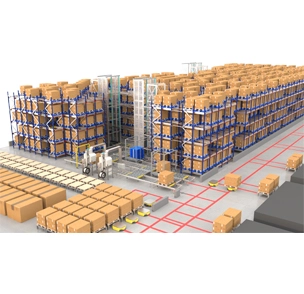
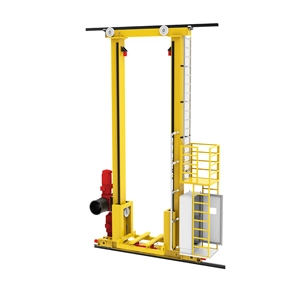
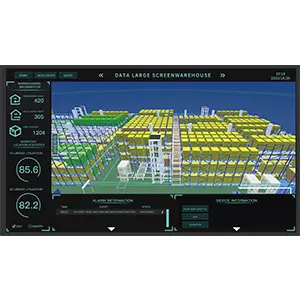
Your 4-Way Shuttles are fast. Your Pallet Shuttles are dense. Your system runs efficiently. But is it smart?
There's a difference between automation and intelligence. Automation follows rules. Intelligence learns, adapts, and improves. And the gap between them is where the next wave of competitive advantage lies.
Welcome to the era of AI-powered shuttle systems.
Automation vs. Intelligence: The Spectrum
Most warehouses today operate at Level 2. The winners tomorrow will operate at Level 3 and 4.
How AI Supercharges Your Shuttle System
1. Predictive Slotting: Where Should Items Live?
In a traditional system, slotting is static. Item A always lives in Location B. But what if demand changes? What if items are often bought together?
AI-powered slotting analyzes:
Then it automatically:
Moves fast-movers closer to pick stations
Groups frequently-bought-together items
Reconfigures the 4-Way Shuttle grid overnight
Result: Your pick paths get shorter every day. The system learns from itself.
2. Dynamic Routing: Which Shuttle Should Go Where?
With multiple 4-Way Shuttles sharing the same grid, traffic management is critical. AI takes it further.
AI routing considers:
Current position of every shuttle
Battery levels (avoid running out mid-task)
Predicted congestion (avoid traffic jams)
Task priority (rush orders first)
Future demand (pre-position shuttles for expected orders)
Result: Throughput increases by 15-25% without adding a single shuttle.
3. Predictive Maintenance: When Will It Break?
You know when to change your car's oil because the manufacturer tells you. But what if your car could tell you exactly when it needed service based on how you actually drive?
AI-powered maintenance:
Monitors every shuttle's vibration, temperature, current draw
Learns normal patterns for each individual vehicle
Detects anomalies before they become failures
Schedules maintenance during low-activity windows
Result: Unplanned downtime drops by 50-70%. Your shuttles tell you when they need care.
4. Demand Forecasting: What Will Happen Tomorrow?
Your shuttle system knows what's moving today. AI helps it predict what will move tomorrow.
AI analyzes:
Then it:
Pre-positions inventory closer to pick stations
Adjusts staffing recommendations
Optimizes battery charging schedules
Result: You're ready for tomorrow's demand before it arrives.
5. Anomaly Detection: What's Wrong With This Picture?
Most systems alert you after something breaks. AI alerts you when something looks different.
"This shuttle's energy consumption is 15% higher than usual." (Bearing starting to fail)
"This SKU is being picked 3x faster than forecast." (Unexpected demand spike)
"This picking station has 40% lower throughput than others." (Training issue or equipment problem)
Result: Problems are solved before they become crises.
The AI-Powered Warehouse in Action
Scenario: It's 2 AM. Your AI system notices:
A 4-Way Shuttle motor is showing unusual vibration patterns → schedules maintenance for 5 AM, before the morning rush
Weather forecast predicts a snowstorm tomorrow → automatically pre-positions winter-related products closer to pick stations
Historical data shows tomorrow is typically a high-order day → increases the number of active shuttles in the grid
An SKU is moving faster than forecast → adjusts its slotting location to be more accessible
All of this happens without a single human intervention. Your warehouse gets smarter while you sleep.
Real-World AI Success
The Company: A national distributor with 50,000 SKUs
The Problem: Manual slotting couldn't keep up with changing demand. Fast-movers were often buried deep in storage. Pick times were inconsistent.
The Solution: AI-powered slotting integrated with their 4-Way Shuttle system
The Results:
Average pick time: Reduced 22%
Fast-mover access: Improved 35%
Labor required for slotting: Eliminated
System re-optimizes itself: Every night
Their operations director told me: "Before AI, our slotting was a best guess. Now it's a science. The system knows more about our inventory than we do."
The Path to Intelligence: A Phased Approach
The Bottom Line
Your 4-Way Shuttles and Pallet Shuttles are incredible machines. But they're capable of so much more than following programmed instructions.
With AI, they become learning systems. They adapt to your business. They predict problems before they happen. They optimize themselves continuously.
The gap between automation and intelligence is the gap between competing on cost and competing on capability.


 English
  Español
  português
  العربية
  tiếng việt
  ไทย
ไทย  Indonesia