Old Wang had managed a cold storage warehouse for twenty years. He always said cold storage management came down to three things: save electricity, don't damage the goods, store more. But these three things always seemed to be at odds.
To save power, you had to minimize door openings. But forklifts needed in and out to access pallets, so the doors had to open frequently. To store more, racks had to be packed tightly. But forklifts needed three-meter aisles to turn. More goods meant aisles became the biggest waste of space. As for "don't damage the goods"—in an environment of -25°C with thin ice on the floor, even the most seasoned forklift driver could slip.
That was until the day Xiao Wu, an engineer from Tianjin Master, came for an assessment. Pointing at the wide aisles, he said, "Master Wang, look, all your cold air is being lost right here."
A "Space Magic" Trick
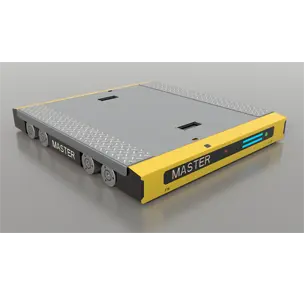
The core of Xiao Wu's proposal was a system called Pallet Shuttle. The principle didn't sound complex: lay rails inside each dense storage rack aisle, and place a small electric vehicle that could run back and forth on them. The forklift only needed to deliver pallets to the aisle entrance. The rest of the job—sending the pallet to the deepest location or retrieving the deepest pallet—was left to this silent little cart.
For Old Wang, it was revolutionary:
The aisles shrank from 3 meters to 0.8 meters, just wide enough for the shuttle from the asrs shuttle factory. This single change increased the total pallet positions in the warehouse by 65%. Old Wang no longer had to write applications for expansion due to "overcrowding."
The warehouse doors now opened only a few times a day. Forklifts no longer needed to drive deep into the storage area, operating only in the receiving/shipping zone. The thick insulated curtains stayed down, locking the cold air inside. When the electricity bill arrived at month's end, finance wondered if they had misread the meter.
The "clang" of collisions was gone. The shuttle ran smoothly, precisely, and at controlled speeds. Those expensive frozen goods finally said goodbye to dents and damage from impacts.
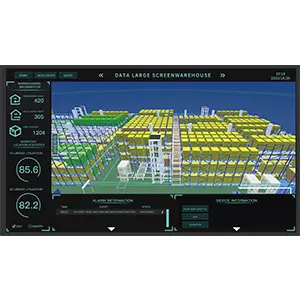
Old Wang got a new "apprentice." His youngest employee, Xiao Chen, quickly learned to dispatch these shuttles using a tablet. Watching the dots representing the vehicles move orderly on the screen, Old Wang felt his old cold storage had finally acquired a touch of "high-tech."
Beyond Cold Storage
Later, Old Wang visited a chemical raw material warehouse and found a similar system in use there. The manager told him they valued not just space, but also safety—reducing the entry of internal combustion equipment like forklifts into areas with potential volatile substances was itself a crucial safety measure.
Old Wang had an epiphany. This system was, at its core, a transformation of storage logic. It separated the actions of "transporting" and "storing." Forklifts handled efficient horizontal transport, while the repetitive in-and-out retrieval tasks in the depth dimension were handed over to specialized equipment better suited for precise operation on fixed tracks.
Now, when new clients visit, Old Wang always takes them to the row of seemingly endless racks. Pointing into the deep aisles, he says, "Look, my 'secret weapon' is working in there. It's quiet, but it's helped me control space, energy costs, and product damage all at once."
Tianjin Master's Pallet Shuttle System never just solves the problem of "where to put things." It addresses a series of intertwined business challenges: land costs, energy bills, cargo safety, and operational certainty. It might not be the flashiest star in the warehouse, but it is undoubtedly the most reassuring, indispensable cornerstone.


 English
  Español
  português
  العربية
  tiếng việt
  ไทย
ไทย  Indonesia