*A.D. 2124, an archaeological brief on early 21st-century smart warehouse sites*
Site Designation: MA-2024 (inferred abbreviation for "Master Auto")
Location: Industrial belt of a coastal city in East Asia
Date Determined: A.D. 2020-2040 (the explosive growth period of warehouse automation technology)
Excavation Summary:
This excavation revealed a relatively well-preserved site of an early integrated smart logistics hub. Its core was not grand architecture, but a highly integrated automated warehouse system. The site clearly illustrates how this civilization utilized machinery, software, and data to systematically address the ancient challenge of "material storage and flow," marking a key transition from the "Manual Handling Age" to the "Intelligent Allocation Age."
Key "Artifacts" & Technological Decoding:
The "Vertical City" Skeleton: High-Bay Racking System
A steel structure network tens of meters high was unearthed, with a density and precision far exceeding contemporary civil architecture. This confirms historical records: to address land scarcity, this civilization chose to "build upwards," treating storage as a three-dimensional art. This was not just an engineering advancement, but a fundamental shift in land-use philosophy.
The "Rule Executor": Remains of ASRS (Stacker Cranes)
Found within fixed aisles. Their precise servo mechanisms and tracks indicate they were used for large-scale, highly repetitive, high-precision storage/retrieval tasks. The archaeology team believes they were specialized tools for handling "deterministic" and "scalable" logistics, representing the pinnacle of industrial thinking in logistics—optimizing defined processes to the extreme.
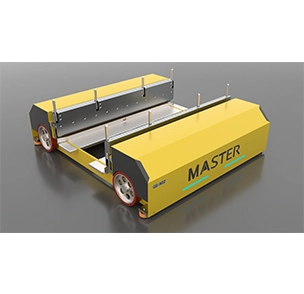
The "Free-Will Unit": 4-Way Shuttle (4WS) Rail Grid
A dense grid of rails permeating the mid-lower levels of the site was found alongside remains of small, multi-directional vehicles. Their design philosophy was starkly different from stacker cranes: they were not confined to aisles and could freely plan paths within the grid. This strongly suggests the logistics systems of that time had begun coping with "variety" and "uncertainty." They likely evolved as a "flexible solution" for handling massive, non-standard, volatile orders.
The "Depth Compression Module": Pallet Shuttle Rails
Long, enclosed rails were discovered in specific zones. Combined with literature, we infer this was a "dense storage" technology. It traded some random-access speed for extremely high spatial storage density, particularly for goods with low value density or special storage requirements (e.g.,低温). This embodies a pragmatic wisdom under resource constraints.
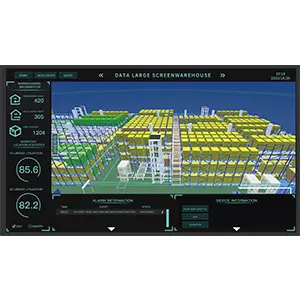
The "System Nerve Center": Control Server Remains
In the site's central control room, fossils of numerous computing devices were found. Residual data traces indicate software layers named WMS (Warehouse Management System) and WCS (Warehouse Control System) ran here. It was these that integrated all the above physical devices into an organic whole, enabling optimization decisions from a global perspective rather than isolated operation. This is the true source of the site's "intelligence."
Interpretation of Civilizational Significance:
The value of the MA-2024 site lies not only in its technology but in revealing a "cognitive layering" within 21st-century logistics civilization:
Base Layer: The physical world's rigid needs remained—storing goods.
Middle Layer: Specialization emerged: ASRS handled "scale," 4WS handled "complexity," and Pallet Shuttles handled "density." This specialization was key to the efficiency leap.
Top Layer: A "digital intelligence layer" of software provided unified调度. For the first time at scale, material flow was entrusted to systems for real-time optimization based on data and algorithms.
Furthermore, traces of human activity at the site (e.g., ergonomic control consoles, training rooms) indicate this technological leap was not aimed at replacing humans, but at liberating them from repetitive physical labor and complex scheduling, redirecting them toward more creative monitoring, maintenance, optimization, and exception handling. This was a successful "re-division of labor between human and machine."
Conclusion:
The MA-2024 site stands like an "Industrial Gothic Cathedral" of logistics civilization. Its steel skeleton (Racking) points toward the heavens of efficiency. Its three core device types (ASRS, 4WS, Pallet Shuttle) function like "intelligent organs" with distinct duties. Its software system is the governing "soul." It silently testifies that on the eve of artificial general intelligence, humanity had learned to create localized intelligent systems to驾驭 the torrent of matter with卓越 order.
The builders of this site—entities such as one named "Master Auto Group"—left behind not a cold graveyard of machines, but a passionate era-specific blueprint on how to use reason, collaboration, and innovation to meet the eternal challenges of growth and scarcity.


 English
  Español
  português
  العربية
  tiếng việt
  ไทย
ไทย  Indonesia