My surname is Chen. I've been in logistics for twenty years. They call me Engineer Chen now, but what still sounds most familiar is the old crew shouting "Lao Chen!"
My first job was pedaling a tricycle in a flat warehouse bigger than a football field, delivering documents to the senior workers. Later, I got my first RF gun. That thing beeped, and I felt so high-tech. Later still, I managed a team of thirty, yelling into walkie-talkies every day, coordinating forklifts and manpower in a mountain of goods, like directing a perpetually chaotic battle.
I once thought that was all a warehouse was: sweat, footsteps, static on the radio, and accounts that never matched.
The change started with a wall.
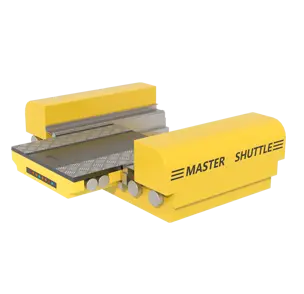
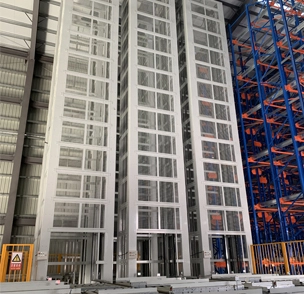
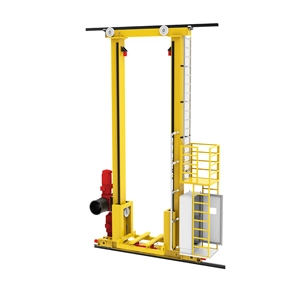
When the company decided to build an automated warehouse, I was in the first batch sent for training. The first time I stood in the control room of the Master Auto Group project team and saw that screen covering the entire wall, I was stunned. On the screen, a 3D立体 layout of the racking was crystal clear, with countless dots and lines flowing. I could understand every icon: the fast-lifting ones were stacker cranes (ASRS), the ones nimbly navigating the grid were 4-way shuttles (4WS), and those shuttling back and forth on fixed tracks, dedicated to pushing pallets into the deepest lanes, were the pallet shuttles – all integral components alongside the efficient stacker cranes for pallets.
"Master Chen, your workstation will be here from now on," the young engineer told me.
From "Running Ragged" to "Strategic Command"
For the first two months, I was extremely uncomfortable. My hands itched to run into the warehouse. Sitting in front of the screen, I felt like a bystander. Until the big sales event.
In the past, for "Singles' Day," we had to prepare a month in advance, hire temps, rehearse processes, work around the clock, and still make mistakes. But that day, I watched the screen. Orders flooded into the system like a tide. The WCS brain calculated at lightning speed, automatically generating wave picks. I watched the cluster of lights representing the 4-way shuttles being intelligently dispatched, like a well-trained swarm of bees, precisely delivering thousands of totes to different picking stations. The ASRS zone steadily ingested and disgorged pallets of bulk goods, unflustered.
The whole warehouse was roaring, but it was an orderly, low-pitched roar. The control room was quiet, save for the faint whir of server fans. It suddenly hit me: my role had changed. I was no longer the soldier scrambling on the battlefield, but the commander in the headquarters, looking at satellite maps and real-time data, allocating resources and anticipating the flow of the battle.
My New Colleagues: They Don't Tire, But They Know Teamwork
I gradually learned the temperaments of these "new colleagues." The stacker cranes were steady and powerful, the anchors, perfect for bulk goods. The 4-way shuttles were smart and agile, the rapid response team, excelling at handling massive split-case orders. The pallet shuttles were like dedicated freight trains, maximizing storage density on their fixed tracks.
They don't complain, don't take sick leave, but they do need care. I learned to read their status data: the current curve of the motors, the vibration spectrum of their travel. The system could tell me in advance which shuttle's gears might need lubrication, or which track had a micron-level misalignment. My work shifted from "fire-fighting" to "prevention" and "optimization."
The Greatest Relief: The Old Crew Found New Paths
What worried me most were my old comrades who'd worked with me for over a decade. The company didn't let them go. Xiao Zhang, once the best forklift driver, is now an equipment maintenance expert—he has a natural feel for machinery. Xiao Li, meticulous, is now a data monitor, able to spot anomalies in a string of numbers. Automation didn't discard us; it forced us to climb higher, to master more complex things, to utilize the unique human capacities for judgment and creativity.
The other day, I brought my son to the company. Pointing at the huge screen, he asked, "Dad, is this the warehouse you manage? It looks like a sci-fi movie."
I said, "Yeah. See these dots? They're like Dad's old colleagues, but faster, more accurate, and they never get tired."
My son said, "Cool! So you're their captain now?"
I smiled, not correcting him. Maybe he was right.
Before, I fought the chaos of the entire warehouse with a single scanner. Now, I collaborate with a team of silent yet powerful "colleagues" using a whole wall of screens, guarding the orderliness of the logistics flow. These twenty years, from confrontation to collaboration, from physical to mental labor—what changed wasn't just technology, but the way ordinary people like us see the world and ourselves.
What Master Auto Group brought isn't just cold steel and code. For old warehouse hands like me, it's a bridge connecting a sweaty past to a smarter, more从容, and more promising future.


 English
  Español
  português
  العربية
  tiếng việt
  ไทย
ไทย  Indonesia