You're not just investing for today. You're investing for the next 5, 10, even 15 years. So what's coming? What technologies will matter? And how do you avoid buying something that'll be obsolete next year?
Here's what we see on the horizon.
Q1: "Will my shuttle system be obsolete in 5 years?"
A: No. But here's the nuance.
What becomes obsolete: Old software that can't update. Proprietary parts that are no longer made. Systems designed without backward compatibility.
What stays relevant: Well-designed hardware with modular upgrades. Open software architecture. Systems built to integrate with future technology.
The key difference: Buy a system designed to evolve, not one designed to be replaced.
Q2: "How is AI changing warehouse automation?"
A: AI is the biggest shift since automation itself.
| Current Automation | AI-Enhanced Automation |
|---|
| Follows programmed rules | Learns from data |
| Static slotting | Dynamic, self-optimizing slotting |
| Reactive maintenance | Predictive maintenance |
| Fixed routes | Adaptive routing |
| Human optimization | Continuous self-optimization |
The bottom line: Your shuttles will get smarter over time without hardware changes—through software.
Q3: "Will robots replace shuttles?"
A: No. They'll work alongside them.
The division of labor:
Shuttles (4WS & Pallet): High-density storage and retrieval within racking
AMRs/AGVs: Horizontal transport across the warehouse floor
Robotic arms: Depalletizing, repalletizing, sorting
The future: Seamless handoffs between all three. Your Pallet Shuttle feeds a robotic depalletizer. The depalletizer feeds a 4-Way Shuttle grid. The 4WS feeds AMRs for final packing. Each does what it does best.
Q4: "What's the future of goods-to-person?"
A: It's becoming goods-to-robot-to-person.
The evolution:
Today: Shuttles bring totes to human pickers
Near future: Shuttles bring totes to robotic picking arms
Longer term: Shuttles bring totes to collaborative workstations where humans and robots work side by side
Human role shifts: From "picker" to "exception handler" and "system supervisor."
Q5: "Will 5G matter for my warehouse?"
A: Eventually, yes. But don't wait.
What 5G enables:
Real-time coordination of hundreds of shuttles
Lower latency for safety features
More reliable connections in dense environments
Why not to wait: Current WiFi and wired networks work fine for today's needs. When 5G matures, you can upgrade your communication layer without replacing shuttles.
Q6: "What about digital twins?"
A: Already here. Getting more powerful.
What a digital twin does:
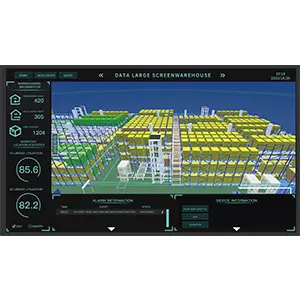
Creates a virtual copy of your entire warehouse
Simulates changes before you make them
Predicts outcomes of different strategies
Trains your team without risking real operations
The trend: Digital twins are moving from "nice to have" to "standard." Within 5 years, most modern warehouses will run one.
Q7: "How will battery technology evolve?"
A: Longer life, faster charging, smarter management.
| Today | Near Future |
|---|
| Lithium-ion batteries | Solid-state or advanced lithium |
| Charge every 8-12 hours | Charge every 24-48 hours |
| Scheduled charging | Opportunity charging (during idle moments) |
| Battery health unclear | Real-time battery diagnostics |
Impact on your operation: Fewer shuttles needed (less downtime for charging). Lower replacement costs.
Q8: "Will shuttle systems get cheaper?"
A: The hardware might. The value won't.
What may cost less:
What will cost the same or more:
The takeaway: The cheapest system isn't the best value. Value comes from intelligence, not just metal.
Q9: "What's the next big thing after shuttles?"
A: Probably not a single technology. More likely, better integration.
What's coming:
Tighter coupling between warehouse and transportation (loaded trucks depart automatically when full)
Cross-facility coordination (multiple warehouses act as one system)
Self-healing systems (failures detected and fixed without human intervention)
The pattern: Not new machines. Smarter systems.
Q10: "Will my workforce need to know coding?"
A: No. But they'll need different skills.
Old skills (less needed):
New skills (more needed):
Comfort with tablets/screens
Basic data interpretation
Troubleshooting logical flows
The bottom line: You don't need programmers. You need people comfortable with technology.
Q11: "What about cybersecurity for warehouses?"
A: Becoming critical. Plan for it.
Risks:
Ransomware shutting down your shuttles
Data breaches exposing customer inventory
Sabotage of automated systems
Mitigations:
The trend: Cyber insurance for warehouses is becoming standard. Soon, it'll be required.
Q12: "How do I future-proof my automation investment?"
A: Five principles.
| Principle | What It Means |
|---|
| 1. Buy open, not closed | Avoid proprietary systems that lock you in |
| 2. Prioritize software | Hardware changes slower than software—invest in the brain |
| 3. Demand backward compatibility | New shuttles should work with old grids |
| 4. Choose partners, not products | A good vendor evolves with you |
| 5. Plan for modular growth | Start small, expand later |
Q13: "What trend are you most excited about?"
A: Autonomous replenishment.
The vision: Your 4-Way Shuttle grid tracks inventory in real time. When levels drop below a threshold, it automatically signals the Pallet Shuttle system to release a new pallet for depalletizing. That triggers a robotic arm to break it down and feed the grid. No human touches anything. The system manages its own supply chain.
This isn't science fiction. It's being built today.
Q14: "What should I ignore?"
A: Buzzwords without substance.
Ignore:
"Blockchain for warehouse" (unless you have a specific use case)
"Quantum computing" (a decade away for logistics)
Vague claims of "AI" without specifics
Pay attention to:
Q15: "When should I automate?"
A: The answer hasn't changed.
The best time was yesterday. The second-best time is today.
Waiting doesn't make technology cheaper—it makes your competitors faster. The future is arriving, but not evenly. The companies that start now will be the ones that lead.
The Bottom Line
The future of warehouse automation isn't about replacing what works. It's about building systems that evolve. That integrate. That get smarter over time.
You don't need to predict the future. You need to build a foundation that can adapt to it.


 English
  Español
  português
  العربية
  tiếng việt
  ไทย
ไทย  Indonesia