I get it. You look at the price tag for an automated system and your first thought is, "We can't afford that."
But let me ask you this: Can you afford what you're doing now?
For the last 10 years at Master Auto Group, I've had this conversation countless times. The breakthrough never comes from arguing about the upfront cost. It comes from changing the frame of reference.
You're not just buying a machine. You're buying a solution to a dozen hidden costs you're already paying. Let's do some real, simple math.
Stop Counting Just the Invoice. Start Counting the "Leaks."
The Labor Leak:
Your math: "I pay $20/hour for a picker."
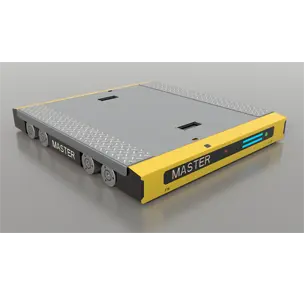
The real math: Add in recruitment fees for high turnover, training time for new hires, overtime during peaks, and the cost of errors they make. Suddenly, that $20/hour is closer to $35. An automated system like a 4-way shuttle has a fixed, predictable "hourly cost" (energy + maintenance) that's often lower, and it works 24/7 without breaks.
The Space Leak:
Your math: "My rent is $10,000 a month."
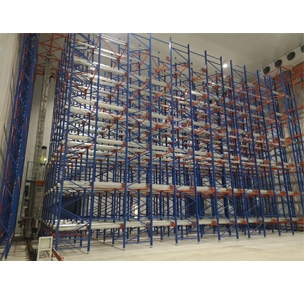
The real math: How much of that rent is paying for empty air above your racks and wide aisles for forklifts? A high-density ASRS or pallet shuttle system can often store 2-3x more in the same building. That effectively cuts your cost per pallet stored in half. It's like getting a warehouse expansion for free.
The Error Leak:
Your math: "We have a 2% error rate. It's not great, but it's manageable."
The real math: Calculate the cost of one wrong shipment: the return freight, the reshipping cost, the 25% discount you offer to appease the angry customer, and the lifetime value of a customer you might lose. Multiply that by hundreds of errors a year. That leak alone could be funding your automation.
The Opportunity Leak (The Silent Killer):
Your math: "We're doing okay. We fulfill orders."
The real math: How many orders do you turn away because you can't promise fast shipping? How much could you grow if you could offer next-day delivery reliably? Automation isn't just about saving costs; it's about unlocking revenue you're currently saying "no" to.
The "Aha" Moment: Capex vs. Opex, Revisited.
That big upfront cost is Capital Expenditure (Capex). It's an asset that depreciates. The leaks you're paying every month—labor, space, errors, lost sales—are Operational Expenditure (Opex). They are pure cost, gone forever.
Smart automation is about shifting spending from the bottomless pit of Opex into a depreciable, efficiency-producing asset. You're trading a variable, rising cost for a fixed, decreasing cost.
The Question Isn't "Can We Afford It?"
The real question is: "Can we afford NOT to fix the leaks that are slowly sinking our profitability?"
The next step isn't to ask for a cheaper machine. It's to ask for a clearer picture. A good partner will help you map your total current cost of operations and show you how automation changes that equation over 3-5 years.
Stop looking at the price tag. Start calculating the cost of standing still.
Let's map your "leaks" together. The first consultation is just math.


 English
  Español
  português
  العربية
  tiếng việt
  ไทย
ไทย  Indonesia