You've signed the contract. The system is installed. Your team is trained. Now what?
This is where many vendors disappear. But the truth is, the day after go-live is when the real partnership begins. Here are straight answers about what happens after installation.
Q1: "What kind of support do you provide after installation?"
A: Three layers of support, available 24/7.
| Support Level | What It Includes | Response Time |
|---|
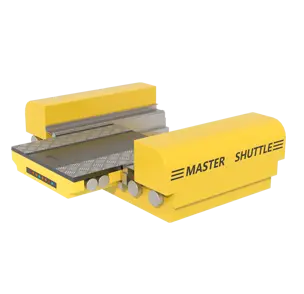
| Remote monitoring | Our team watches your system 24/7. We see problems before you do. | Proactive |
| Help desk | Phone, email, chat support for your team | < 2 hours |
| On-site service | Technician dispatched for major issues | < 24 hours (most regions) |
The key: You're never alone. Even at 3 AM on a Sunday.
Q2: "What's included in the standard warranty?"
A: Typically 12 months parts and labor.
What's covered:
What's not covered:
Extended warranties available: Ask about 3-5 year options.
Q3: "How do I know when something needs maintenance?"
A: Your system will tell you.
Predictive maintenance alerts:
"Shuttle #12 vibration increasing" → wheel bearing wearing
"Shuttle #7 motor current high" → friction or load issue
"Charging cycle time increasing" → battery degrading
"Rail section #4 alignment off" → check for damage
You don't guess. The system tells you what needs attention and when.
Q4: "What preventive maintenance do I need to do?"
A: Less than you think. But not zero.
| Frequency | Task | Time |
|---|
| Daily | Visual inspection of shuttles and rails | 10 minutes |
| Weekly | Clean rails, check charging contacts | 30 minutes |
| Monthly | Inspect wheels, run diagnostic report | 1 hour |
| Quarterly | Deep clean, torque checks | 2-3 hours |
| Annually | Professional inspection by our team | 1 day |
Most customers assign these tasks to one trained person. It's not a full-time job.
Q5: "What spare parts should I keep on hand?"
A: A strategic inventory based on your operation.
| Part | Why Keep It | Recommended Quantity |
|---|
| Wheels | Normal wear item | 2-4 per shuttle type |
| Charging contacts | Wear item | 2-4 per charging station |
| Sensors | Can fail unexpectedly | 1-2 of each type |
| Motors | Long lead time | 1 per 10 shuttles |
| Controllers | Critical component | 1 per 20 shuttles |
We'll help you build this list based on your specific configuration.
Q6: "What if a shuttle breaks down in the middle of the grid?"
A: We've designed for this. Recovery is built in.
For 4-Way Shuttles:
Other shuttles automatically cover its tasks
A recovery cart can retrieve stuck shuttles
Most recoveries take < 30 minutes
For Pallet Shuttles:
Each lane has manual retrieval procedure
Your team is trained on it
Recovery typically < 1 hour
The bottom line: One failed shuttle doesn't stop your operation.
Q7: "How often do shuttles need to be replaced?"
A: With proper maintenance, 10-15 years.
What wears out:
The structure: Racking and rails last 20+ years.
We'll notify you when components are approaching end-of-life.
Q8: "Can the system be upgraded over time?"
A: Yes. This is a key advantage.
What can be upgraded:
What doesn't need upgrading:
Your investment isn't frozen in time. It evolves with technology.
Q9: "What if my business changes? Can the system adapt?"
A: Yes. Flexibility is built in.
| Change | Adaptation |
|---|
| New SKUs | Update product dimensions in software |
| Different packaging | Adjust shuttle settings or add adapters |
| Seasonal volume spikes | Add more shuttles temporarily or permanently |
| New warehouse layout | Reconfigure zones in software (hardware stays) |
| New integration need | APIs connect to new systems |
The system works for you. Not the other way around.
Q10: "How much does ongoing support cost?"
A: Typically 5-10% of initial system cost per year.
What's included:
What's extra:
Replacement parts beyond warranty
Major system modifications
On-site service beyond included hours
We provide transparent pricing before you sign.
Q11: "What if I need help on a holiday weekend?"
A: We're here. 24/7/365.
Coverage includes:
Real example: One customer had an issue at 2 AM on Christmas morning. Our engineer was on a video call within 20 minutes. The system was back up by 3 AM.
Q12: "How do I know you'll still be here in 10 years?"
A: Fair question. Here's our answer.
What to look for in any vendor:
Financial stability (ask for references from banks)
Long-term customers (we'll connect you)
Track record of supporting older systems
Commitment to backward compatibility
Our track record: We have customers running 15-year-old systems. We still support them. We still stock parts.
Q13: "What's the most common support issue?"
A: Not equipment failure. User error.
Top support calls:
"The system isn't doing what I expected" → Usually a training refresher
"An alert popped up, what does it mean?" → Normal, we explain
"Something looks different" → Often a settings change
Genuine hardware failures: Less than 5% of support calls.
Q14: "Do you offer remote monitoring? How does it work?"
A: Yes. It's standard.
How remote monitoring works:
Your system connects securely to our monitoring center
We see real-time performance data
Alerts trigger automatically for anomalies
We often call you before you notice a problem
Security: Encrypted connection. Read-only access. We can't control your system remotely without your permission.
Q15: "What's the one thing customers wish they'd known about support?"
A: That they'd need it less than they expected.
What customers actually say:
"I thought we'd be calling every week. It's been months."
"The system just runs. I forget it's there sometimes."
"The few times we needed help, response was fast."
The truth: A well-designed, well-installed system is remarkably reliable. Support is there for when you need it—but you probably won't need it often.
The Bottom Line
Support isn't an afterthought. It's a core part of what you're buying.
Before you choose a vendor, ask about their support. How fast do they respond? Do they monitor proactively? Will they be here in 10 years?
The right vendor treats support as a partnership, not a cost center.
Ready to talk about what ongoing support looks like for your system?


 English
  Español
  português
  العربية
  tiếng việt
  ไทย
ไทย  Indonesia