Companies considering warehouse automation often ask about return on investment. The answer depends on many variables. This article explains what factors contribute to automation costs and where savings typically appear.
The Cost Side of Automation
Automation requires upfront investment. The total project cost typically includes several components.
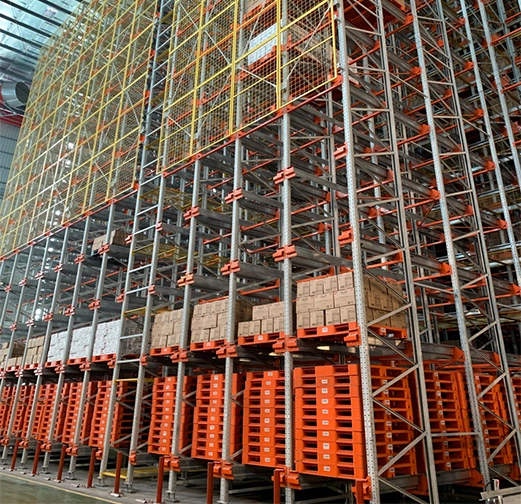
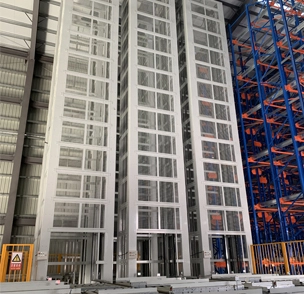
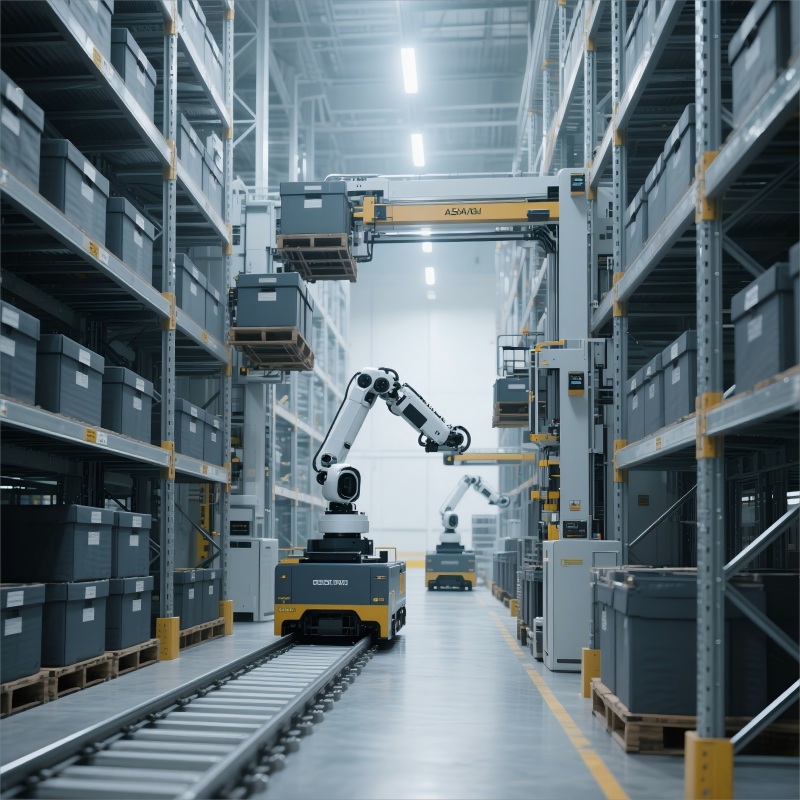
Equipment costs include the automated vehicles themselves. For pallet shuttle systems, this includes the shuttles, the rail system installed within the racking, and any lifts required for multi-level operations. For 4-way shuttle systems, costs include the shuttles, the bi-directional grid structure, and lifts for vertical movement. ASRS costs include stacker cranes, the tall racking structure, and rail systems.
Racking costs vary by type. Deep-lane racking for pallet shuttles is typically less expensive per pallet position than grid structures for four-way shuttles. ASRS racking is the most expensive per position but achieves the highest density and throughput.
Software costs include the warehouse management system and warehouse control system. Some vendors include software in the equipment price. Others charge separately for licensing, implementation, and ongoing updates.
Installation costs cover delivery, on-site assembly, and system integration. Older buildings may require floor leveling or electrical upgrades. New buildings designed for automation have lower modification costs.
Training costs vary by system complexity. Operators typically need several days of training. Maintenance staff need more extensive instruction. Some vendors include training in the project price.
The Savings Side of Automation
Automation generates savings in several areas. Not all apply equally to every warehouse.
Labor savings are often the largest category. Automated systems reduce the need for manual picking, putaway, and retrieval. A pallet shuttle system eliminates the need for forklifts to enter deep storage lanes. A 4-way shuttle system with goods-to-person picking reduces walking time significantly. Labor savings typically range from 30 to 70 percent for the automated functions.
Space savings come from higher density. Pallet shuttle systems can increase storage density by 60 to 100 percent compared to selective racking. 4-way shuttle grids are less dense than pallet shuttles but still more efficient than traditional shelving. ASRS provides the highest density for tall buildings. Space savings delay or eliminate the need for warehouse expansion.
Energy savings are significant in cold storage. Traditional forklift operations require frequent door openings, allowing cold air to escape. Pallet shuttle systems reduce door openings by 70 to 90 percent. Energy savings often reach 30 to 40 percent in freezer environments.
Error reduction saves money on returns, reshipments, and customer compensation. Manual picking error rates typically range from 1 to 3 percent. 4-way shuttle systems with barcode verification achieve accuracy above 99.9 percent. For a warehouse shipping 500,000 orders annually, a 2 percent error rate represents 10,000 mistakes. Each mistake has costs for return shipping, restocking, and customer service.
Inventory accuracy improves with automation. Manual warehouses often have inventory record errors that require cycle counting. Automated systems update records in real time with each movement. Better inventory accuracy reduces safety stock requirements and prevents stockouts.
Calculating Payback Period
The payback period is the time required for savings to equal the initial investment. It is calculated by dividing total project cost by annual savings.
For example, a pallet shuttle project costing $500,000 that saves $150,000 per year has a payback period of 3.3 years. A 4-way shuttle project costing $1,000,000 that saves $300,000 per year has a payback period of 3.3 years as well.
Industry benchmarks vary. Cold storage projects often pay back fastest due to energy savings, sometimes in 18 to 24 months. E-commerce fulfillment centers with high labor costs typically see payback in 2 to 4 years. Distribution centers with moderate labor costs may see payback in 3 to 5 years.
Factors That Influence Payback
Several factors affect how quickly automation pays for itself.
Labor costs in the local market matter. Warehouses in high-wage regions see faster payback than those in low-wage regions. Current staffing levels also matter. A warehouse with 50 pickers will see more absolute labor savings than one with 10 pickers.
Space costs vary by location. Warehouses in dense urban areas with expensive rent see faster payback from density improvements than those in rural areas with cheap land.
Error costs are often underestimated. A warehouse with high-value products or demanding customers may have much higher costs per error than a warehouse with low-value commodities.
Energy costs matter most in cold storage. Freezer operations with high electricity rates see significant savings from reduced door openings. Ambient warehouses see modest or no energy savings.
Current efficiency affects potential savings. A poorly run manual warehouse has more room for improvement than one that is already well-organized. However, poorly run warehouses also present more implementation risk.
The Role of Phasing
Many automation projects use phased implementation. This approach spreads investment over time and funds later phases with savings from earlier phases.
A typical phased approach for a warehouse needing both bulk storage and order picking might look like this:
Phase 1 installs a pallet shuttle system for bulk raw materials. This reduces space consumption and labor for putaway. Annual savings from Phase 1 help fund Phase 2.
Phase 2 installs a 4-way shuttle grid for the fastest-moving SKUs in the picking area. This reduces picking labor and errors. Combined savings from Phases 1 and 2 help fund Phase 3.
Phase 3 expands the 4-way shuttle grid to cover slower-moving SKUs or adds additional pallet shuttle lanes for seasonal inventory.
Phasing reduces upfront capital requirements and allows the warehouse to gain experience with automation before scaling.
Hidden Costs and Benefits
Several factors are often omitted from basic ROI calculations but should be considered.
Hidden costs include increased electrical consumption for shuttle charging, ongoing software license fees, spare parts inventory, and annual maintenance contracts. Some of these costs replace existing costs. For example, shuttle charging costs replace forklift fuel or battery costs.
Hidden benefits include reduced worker injury claims from less heavy lifting and walking, improved employee retention in automated environments, ability to accept more business without expanding, and faster response to customer demand. These benefits are real but harder to quantify.
Getting an Accurate Assessment
Generic ROI numbers from vendor websites have limited value. Every warehouse has different labor costs, space constraints, error rates, and energy expenses.
An accurate ROI assessment requires site-specific data. A qualified provider will collect information on current labor hours, error rates, space utilization, and energy consumption. They will then model the expected savings for a proposed automation configuration.
Summary
The economics of warehouse automation depend on local labor costs, space costs, error rates, and energy expenses. Pallet shuttle systems typically save space and energy. 4-way shuttle systems typically save labor and reduce errors. ASRS saves space and provides high throughput.
Payback periods typically range from 2 to 5 years. Cold storage projects often pay back fastest. High-labor operations also see relatively fast payback. Phased implementation reduces upfront risk and allows savings to fund expansion.
An accurate ROI assessment requires site-specific data, not generic assumptions.


 English
  Español
  português
  العربية
  tiếng việt
  ไทย
ไทย  Indonesia