A 4-way shuttle racking system is becoming a popular choice for warehouses that need both storage density and retrieval flexibility. This article explains how it works and what makes it different from other automated storage options.
How the System Works
The system has two main parts: the racking grid and the shuttle vehicles.
The racking grid is a steel structure with rails running in two directions at each level. Rails run both lengthwise and crosswise, forming a grid pattern. The grid includes openings for lifts that move shuttles between levels. Pick stations are positioned around the grid where shuttles deliver containers to workers.
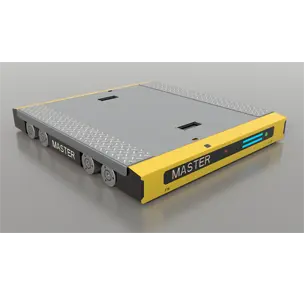
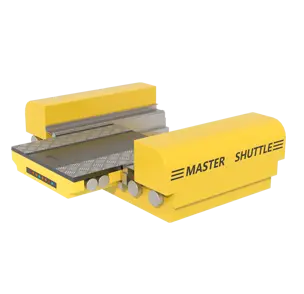
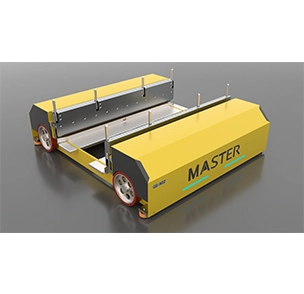
The shuttles are battery-powered carts that run on the rails. Each shuttle can move forward, backward, left, and right. This allows it to travel from any point in the grid to any other point without needing a transfer vehicle.
When a tote or case needs to be stored, a lift brings an empty shuttle to the correct level. The shuttle travels across the grid to the assigned storage cell and deposits the load. For retrieval, the process reverses. The system directs a shuttle to the cell containing the requested item. The shuttle picks it up, carries it to a lift, and the lift delivers it to a pick station or outbound conveyor.
Software manages all shuttle movements. The warehouse control system assigns tasks, calculates routes, and prevents collisions. Multiple shuttles can operate in the same grid simultaneously.
Why It Matters
Several factors make this system valuable.
Space savings are significant. The grid structure with its narrow rail spacing allows for dense rack layout. Fixed forklift aisles are eliminated. Floor space utilization can reach approximately 90 percent, compared with 40 to 50 percent for selective pallet racking.
Flexible access is a key advantage. The system allows random access to any tote or case. This is important for warehouses with many SKUs or high order variability. Items can be retrieved in any sequence, without moving other items.
Scalability is built into the design. Additional shuttles can be added to the grid as order volumes grow. This increases throughput without major structural changes.
Accuracy improves with automated retrieval. Barcode scanning verifies each item. Manual picking errors are virtually eliminated.
Where It Fits
A 4-way shuttle racking system is best suited for warehouses that handle many small to medium-sized items from many SKUs. Common applications include e-commerce fulfillment, retail store replenishment, spare parts logistics, and pharmaceutical storage. Cold storage facilities also use these systems to reduce worker exposure to freezing temperatures.
Comparison with Other Systems
Summary
A 4-way shuttle racking system combines a precision rail grid with autonomous shuttles that move in four directions. It offers high density, flexible access, scalability, and accuracy. It is well-suited for warehouses with many SKUs, variable orders, and limited floor space. The system is increasingly used in e-commerce, retail distribution, spare parts, and cold storage applications.


 English
  Español
  português
  العربية
  tiếng việt
  ไทย
ไทย  Indonesia