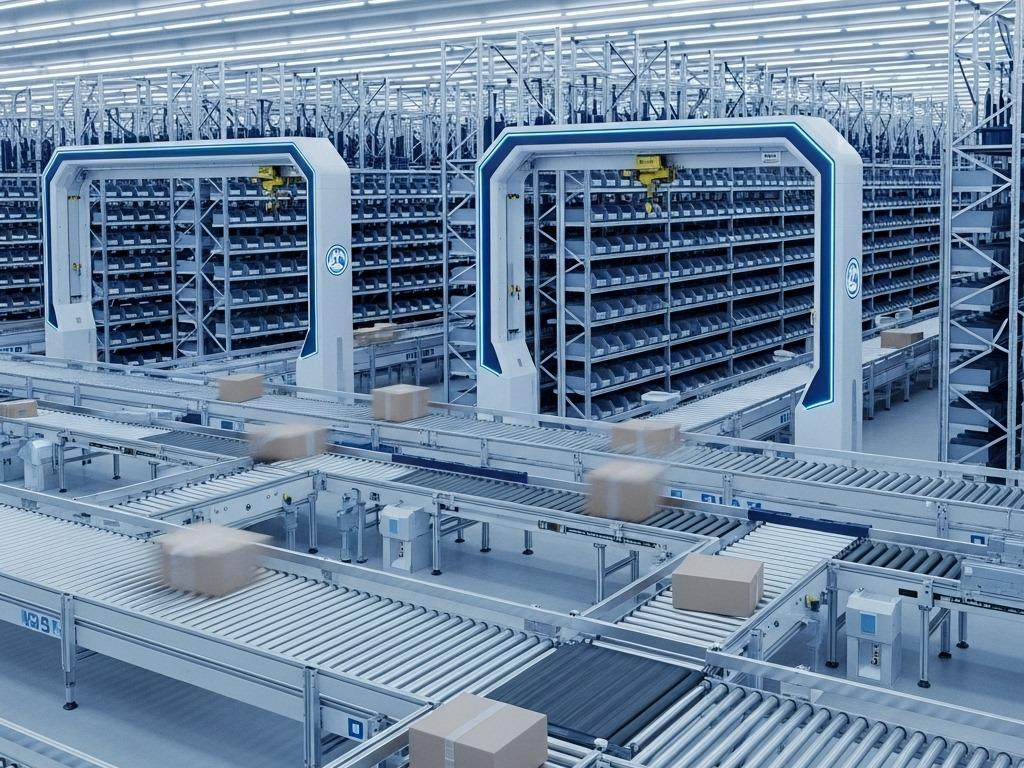
An automated sorting conveyor system is designed to do more than move packages through a facility. Its real function is to recognize each item, determine where it needs to go, and coordinate the physical movement required to get it there. In a modern distribution center or fulfillment operation, this process brings together conveyors, scanners, sensors, control software, and automated diverting equipment into one coordinated material-handling workflow.
Although sorting systems can differ considerably in layout and technology, the underlying process is generally similar. Packages enter the system through an infeed section, identification equipment captures the information needed for routing, and the control system assigns each package to a destination. The sorting conveyor then tracks the package and activates the appropriate divert mechanism as it reaches the corresponding location.
Understanding this sequence is important when evaluating an automated sorting conveyor system because sorting performance is determined by the interaction of the entire system rather than by any single component. Conveyor speed, package spacing, identification accuracy, tracking, diverting and software integration all have to work together.
Package Infeed and Conveying: How Products Move Through the Sorting System
The sorting process begins when packages enter the conveyor line. Depending on the facility, the infeed may receive products from packing stations, picking operations, manual loading points, upstream conveyors or other automated material-handling equipment. Its job is to introduce packages into the sorting process in a controlled and predictable way.
This initial stage has a direct effect on everything that follows. Packages that arrive too close together, overlap one another or enter the system in an inconsistent position can make identification and tracking more difficult. For this reason, an automated sorting conveyor system is normally designed with the infeed process in mind rather than treating the infeed as a separate conveyor section.
The conveyor configuration itself depends on the products being handled. Belt conveyors may be suitable for certain package profiles, while roller-based equipment or specialized transfer sections may be better suited to other applications. Accumulation areas can also be incorporated when the upstream process produces packages at a different rate from the sorting operation.
The objective is not simply to move packages quickly. The infeed needs to create a stable flow in which individual packages can be identified, tracked and subsequently diverted without interfering with one another. That is why package dimensions, weight, shape, surface characteristics and expected flow conditions should all be considered when developing the conveyor layout.
Package Identification: The Role of Barcode Scanning, RFID and Machine Vision
Once a package enters the identification area, the system needs to establish its identity before a routing decision can be made. Barcode scanning remains one of the most common approaches because shipping labels and logistics documents frequently contain machine-readable information that can be captured as the package moves through the line.
A barcode scanner can associate the physical package with information stored in the warehouse or order-management system. That information may determine which outbound lane, workstation, dock or consolidation area the package should ultimately reach.
RFID provides a different approach. Instead of requiring the system to optically read a printed barcode, an RFID reader communicates with an electronic tag attached to or associated with the item. Where RFID is already part of a company's logistics process, it can provide an additional source of identification data for the sorting conveyor.
Machine vision can extend the identification process further. Cameras and image-processing systems can be used to read labels, inspect package presentation, identify certain visual characteristics or support package dimensioning. In some applications, vision works alongside barcode scanning rather than replacing it, giving the control system additional information when packages vary significantly in appearance or orientation.
The right identification technology therefore depends on the operating environment. A facility handling standardized shipping labels may have different requirements from one processing irregular parcels with varying package surfaces and orientations. Successful sorting begins with choosing an identification method that can consistently capture usable data under real operating conditions.
Sorting Logic and Destination Assignment: How the Control System Makes Decisions
Identifying a package is only the first part of the process. The system must next determine what should happen to that package. This is where sorting logic connects package-level information with the physical layout of the facility.
After identification data is captured, the control system can use predefined routing rules or information received from connected warehouse and logistics software to determine the package's destination. Depending on the application, that destination could be an outbound shipping lane, a specific dock, an order consolidation area, a packing station or another processing zone.
What makes this stage particularly important is the need to maintain a reliable connection between digital information and the physical package. Once a package has been assigned a destination, the system has to continue tracking it as it moves along the sorting conveyor. The control system must know which package is approaching a particular divert point and which routing instruction belongs to it.
This is why an automated sorting conveyor system should not be viewed simply as a mechanical transport device. The conveyor provides the physical movement, but sensors, scanners and control logic determine how that movement is coordinated. If identification is accurate but tracking is unreliable, the final sorting result can still be incorrect.
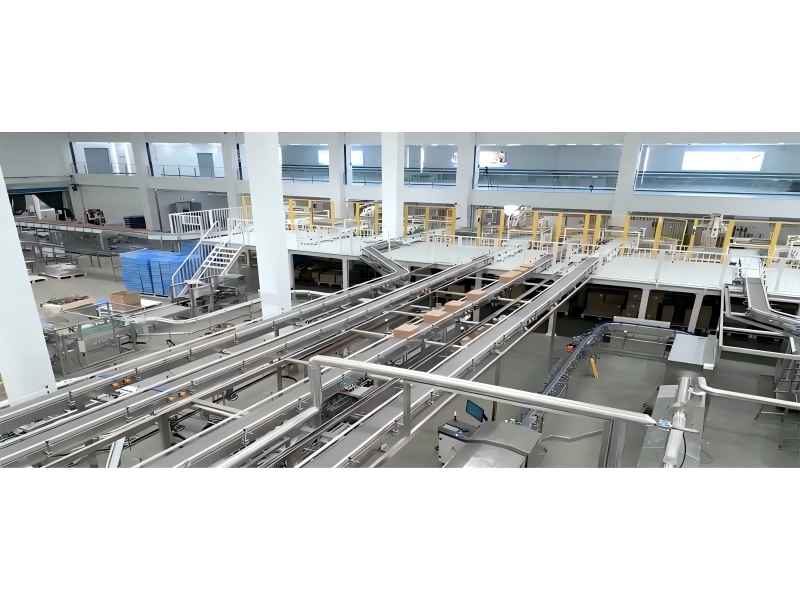
Automated Diverting: How Packages Are Routed to Their Assigned Destinations
After a destination has been assigned, the package needs to leave the main conveyor flow at the appropriate point. Automated diverting equipment performs this physical routing step.
Different sorting applications call for different diverting arrangements. Depending on package characteristics and system requirements, a sorting conveyor may incorporate sliding shoe mechanisms, pop-up wheels, belt-based transfers, roller transfers or other specialized divert technologies. The choice depends on factors such as package dimensions, weight, speed, fragility and the number and arrangement of destinations.
Timing is critical. The divert mechanism has to respond when the correct package reaches the corresponding location. The control system therefore combines package tracking information with sensor feedback to coordinate the mechanical action.
A well-designed automated sorting conveyor system should also account for exceptions. A package may arrive without a readable barcode, fail identification, have unexpected dimensions or encounter another condition that prevents normal routing. Depending on the application, the system can direct such packages to an exception area instead of allowing them to disrupt the normal sorting flow.
For companies comparing different equipment configurations, looking at the complete material-handling solution is more useful than evaluating an individual conveyor component in isolation. Master Auto Group's material-handling products can be considered as part of this broader system approach, particularly when conveyor equipment needs to work together with identification and sorting processes.
Conveyor Speed, Package Spacing and Tracking for Reliable Sorting Performance
Conveyor speed is often one of the first specifications considered when discussing automated sorting, but speed alone does not determine system performance. A faster conveyor is not necessarily more effective if packages cannot be identified, tracked and diverted consistently at that operating rate.
Package spacing is particularly important. When two packages are too close together, the identification equipment may have difficulty distinguishing them, while the control system has less time to associate each package with its correct position. Adequate spacing gives scanners, sensors and controls a clearer sequence to work with.
Tracking becomes increasingly important as the sorting conveyor becomes more complex. The system may need to maintain package identity over multiple conveyor sections before the package reaches its assigned divert point. Sensors positioned along the line can provide information about package presence and movement, allowing the control system to update its understanding of where each package is located.
This also explains why sorting performance should be evaluated using the complete operating scenario rather than a single speed figure. Package size variation, spacing consistency, identification technology, number of destinations and diverting method all influence the practical performance of an automated sorting conveyor system.
| System element | Primary role | Effect on sorting performance |
|---|
| Infeed conveyor | Introduces packages into the sorting process | Establishes stable package flow and spacing |
| Barcode scanning | Reads printed package identification | Provides routing information for individual packages |
| RFID | Reads electronic identification tags | Provides an alternative or complementary identification method |
| Machine vision | Captures visual information about packages | Supports identification, inspection and package handling decisions |
| Control system | Processes package data and routing rules | Connects package identity with its assigned destination |
| Tracking sensors | Monitor package movement | Helps maintain accurate package position information |
| Diverting equipment | Moves packages from the main conveyor to destination lanes | Performs the physical sorting operation |
WMS and WCS Integration for Automated Sorting Conveyor Systems
As sorting operations become more automated, the conveyor system increasingly becomes part of a larger digital architecture. The Warehouse Management System, or WMS, typically manages information associated with inventory, orders and warehouse operations, while the Warehouse Control System, or WCS, operates closer to the physical material-handling equipment.
The distinction is important because an automated sorting conveyor system needs both information and physical control. The WMS may contain the business or order information that determines where a package should ultimately go, while the WCS can coordinate conveyors, scanners, sensors and divert mechanisms to make that routing instruction happen on the warehouse floor.
For example, once a package is identified, its information can be matched with the relevant order or shipment record. The resulting destination can then be communicated to the control layer responsible for the sorting conveyor. As the package travels through the system, sensors and tracking logic help ensure that the correct divert command is associated with the correct physical item.
The exact integration architecture varies from one project to another. Some operations may require communication between a WMS and WCS, while others may use additional middleware or equipment-control layers. What matters is maintaining reliable communication between the software that knows what should happen and the equipment that physically makes it happen.
Integration requirements are worth defining early in the project because they can influence scanner selection, controls architecture, communication interfaces and future expansion options. A conveyor system that is mechanically suitable but difficult to integrate can create unnecessary complexity later in the project.
For this reason, system selection is best approached as an application discussion rather than simply a product purchase. If a facility has specific requirements concerning package characteristics, conveyor layout, sorting destinations or automation integration, the Master Auto Group team can discuss the application and help determine what type of material-handling configuration is appropriate.
Conclusion
An automated sorting conveyor system combines several stages that have to operate as one coordinated process. Packages first enter the system through a controlled infeed, after which barcode scanners, RFID readers or machine vision equipment capture the information needed for identification. The control system then assigns a destination and tracks the package as it moves toward the appropriate divert point.
The physical sorting result depends on more than conveyor speed. Package spacing, tracking accuracy, identification reliability, diverting technology and WMS or WCS integration all influence how consistently a sorting conveyor can perform in a real operating environment.
For businesses planning or upgrading an automated sorting operation, the most effective approach is to start with the actual package flow and operational requirements, then select the conveyor, identification, control and diverting technologies around those requirements. This system-level approach provides a stronger foundation for reliable sorting and future automation expansion.
Frequently Asked Questions
1. What is an automated sorting conveyor system?
An automated sorting conveyor system identifies packages, determines their destinations and automatically routes them to the appropriate lanes, workstations, chutes or other destinations.
2. How does a sorting conveyor identify packages?
A sorting conveyor can work with barcode scanning, RFID and machine vision. The appropriate identification technology depends on package characteristics, labeling and the facility's existing information systems.
3. Why is package spacing important for automated sorting?
Controlled spacing helps identification equipment distinguish individual packages and gives the control system enough time to track each item and coordinate the correct divert action.
4. Does a faster conveyor always provide better sorting performance?
No. Practical performance also depends on package spacing, identification speed, tracking accuracy, diverting technology and the number of destinations being served.
5. How do WMS and WCS work with a sorting conveyor?
A WMS generally manages warehouse and order information, while a WCS coordinates material-handling equipment and translates routing information into physical conveyor and sorting actions.
6. Can one automated sorting conveyor system handle different package sizes?
Yes, a properly designed automated sorting conveyor system can handle package-size variation, but the conveyor, identification and diverting technologies need to be selected according to the actual range of package dimensions, weights and shapes.


 English
  Español
  português
  العربية
  tiếng việt
  ไทย
ไทย  Indonesia