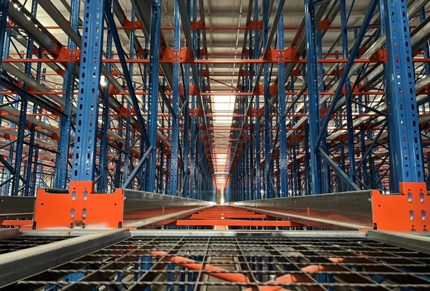
Warehouse storage performance is no longer determined only by how many pallets or containers a facility can hold. As inventory volumes increase and order fulfillment becomes more time-sensitive, warehouse operators need to use available space efficiently while keeping products accessible for retrieval. This is particularly important when floor space is limited, inventory turnover is high, or labor-intensive handling creates operational bottlenecks.
An automated storage retrieval system addresses these challenges by combining automated storage equipment, inventory control and material-handling software into a coordinated workflow. Instead of relying entirely on forklifts and manual searching, an automated retrieval system can place goods into designated storage locations and retrieve them when required.
The real value of automation, however, goes beyond replacing manual movement. A properly designed system can use vertical space more effectively, optimize inventory locations, reduce unnecessary travel and coordinate storage with downstream material handling. The result is a warehouse where storage density and retrieval efficiency are considered together rather than as separate objectives.
Maximizing Vertical Space with Automated Retrieval Systems
Vertical space is one of the most underused resources in many conventional warehouses. Forklift-based storage requires sufficient aisle width for vehicle movement, turning and operator access. These requirements can limit how much of the building's available volume can actually be used for inventory.
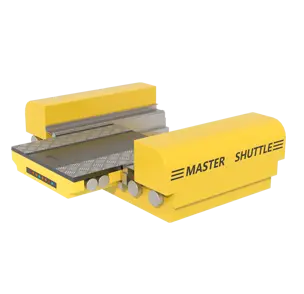
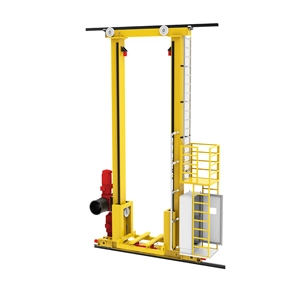
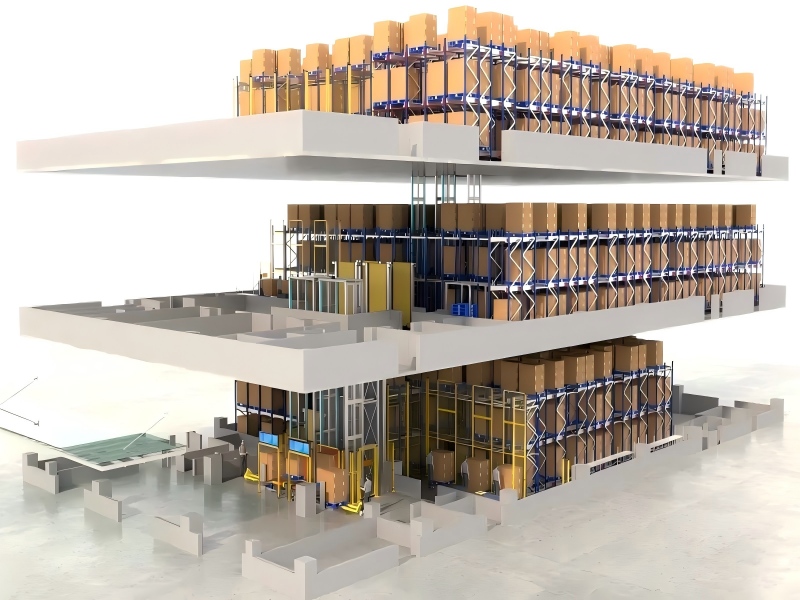
An automated retrieval system changes this relationship by allowing storage equipment to move loads between different levels without requiring a forklift to enter every storage aisle. Depending on the application, automated cranes, shuttles or other handling equipment can position goods within vertically organized storage locations and deliver them to designated transfer points.
This makes building height an important part of warehouse planning. Instead of viewing storage capacity only in terms of floor area, an automated storage retrieval system can help operators consider the usable volume of the facility. The exact storage height and configuration still depend on building structure, load requirements, fire protection, equipment specifications and applicable regulations.
Vertical optimization should not simply mean making a storage structure as tall as possible. Equipment travel, load stability, maintenance access, retrieval frequency and transfer-point design all influence the practical value of additional storage levels. A successful system uses vertical capacity while maintaining a predictable material flow.
For businesses evaluating warehouse automation, Master Auto Group provides material-handling products that can be considered within a broader storage and retrieval workflow. Looking at equipment as part of the complete warehouse process helps ensure that vertical storage improvements also support actual operational requirements.
Improving Storage Density Through Automated Warehouse Storage
Storage density refers to how effectively a warehouse uses its available space for inventory. Higher density can be valuable when warehouse expansion is difficult or expensive, but density alone does not determine whether a storage system performs well. Inventory must still be accessible, identifiable and retrievable at the required rate.
An automated storage retrieval system can improve storage density by coordinating storage positions and material movement through a centralized control process. Because automated equipment handles the movement between storage locations and access points, the layout may require less space for manual vehicle circulation than some conventional storage configurations.
Another advantage is more systematic location management. Instead of depending on operators to decide where individual loads should be placed, warehouse software can assign storage positions according to defined rules. These rules can consider dimensions, weight, inventory turnover, product type, batch information and other operational requirements.
| Storage approach | Space utilization | Inventory control | Retrieval process | Key consideration |
|---|
| Conventional manual storage | Influenced by forklift aisles and operator access requirements | Depends heavily on warehouse procedures | Operator-driven | Offers flexibility but may require more manual movement |
| High-density automated storage | Designed around efficient use of available storage volume | Digitally coordinated storage locations | Equipment-driven | Requires careful layout and equipment planning |
| Automated storage with dynamic slotting | Storage locations can be adjusted according to inventory conditions | Integrated with inventory information | System-coordinated | Useful when product mix and retrieval patterns change |
The most effective approach depends on the warehouse's product mix and operating profile. A facility handling stable, predictable inventory may require a different configuration from one processing many SKUs with rapidly changing demand. This is why storage density should be evaluated together with throughput and retrieval requirements.
Optimizing Inventory Location and Slotting for Faster Retrieval
Storage location has a direct relationship with retrieval efficiency. If frequently requested products are positioned in locations that require unnecessary equipment travel, the warehouse may spend more time moving inventory than necessary.
Slotting provides a way to address this issue. An automated retrieval system can work with warehouse inventory data to assign products to storage positions according to their operational characteristics. Frequently retrieved goods can be placed in strategically accessible locations, while slower-moving inventory can occupy positions that are less critical to rapid order fulfillment.
Slotting decisions can also consider product dimensions and weight. Storage equipment must be capable of handling the required load safely, while the assigned location needs to be compatible with the product's physical characteristics. Inventory rotation requirements, expiration dates and batch control can also influence location strategies.
Dynamic inventory patterns make this even more important. A product that experiences high demand during a particular season may not need the same storage position throughout the year. When an automated storage retrieval system is integrated with appropriate warehouse software, storage assignments can be adjusted as inventory and retrieval patterns change.
The objective is not simply to minimize the travel distance for every individual retrieval. The system should optimize the overall movement pattern while maintaining storage capacity, inventory rules and equipment availability. This broader approach produces a more stable warehouse operation than relying on isolated slotting decisions.
Reducing Retrieval Time Through Automated Material Handling
Retrieval time consists of more than the physical speed of a storage machine. It can include locating the inventory, initiating the retrieval request, moving the load, transferring it to another handling system and delivering it to the required workstation or dispatch area.
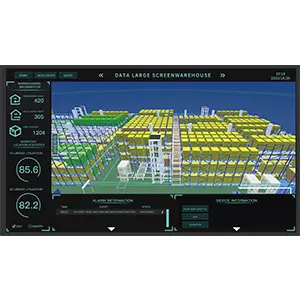
An automated storage retrieval system can coordinate these activities through inventory records and automated material-handling equipment. When a retrieval request is generated, the system identifies the relevant storage position and directs the appropriate equipment to retrieve the load.
This removes much of the searching and manual travel associated with conventional storage. Operators do not necessarily need to drive through multiple aisles to locate a pallet or container. Instead, the storage position is digitally recorded and the automated equipment executes the required movement.
An automated retrieval system can also become more effective when connected with conveyors, transfer stations and warehouse control software. This allows retrieval to be considered as part of the complete material flow rather than as an isolated machine operation.
However, faster equipment movement does not automatically guarantee faster order fulfillment. If retrieved products accumulate at a transfer point or downstream conveyor capacity is insufficient, the bottleneck simply moves elsewhere. Retrieval efficiency must therefore be evaluated across the entire process.
Balancing Retrieval Speed, Throughput and Warehouse Layout
Warehouse automation requires a balance between retrieval speed, transaction volume and physical layout. A machine capable of moving quickly may not deliver the expected operational improvement if the system cannot handle the required volume of simultaneous or sequential retrieval requests.
Throughput requirements depend on the warehouse's order profile, inventory characteristics, operating schedule and downstream processes. Rather than selecting equipment according to a single speed specification, warehouse designers should consider how frequently storage and retrieval transactions occur and how those transactions interact with receiving, picking, consolidation and shipping.
Layout is equally important. The position of storage zones, retrieval stations, conveyors and work areas determines how material moves through the facility. An automated retrieval system should therefore be designed around the actual workflow rather than inserted into an existing layout without evaluating its effects on material flow.
Peak operating periods also deserve attention. A warehouse may have moderate average activity but experience significantly higher demand during particular order windows. Designing only around average conditions can leave insufficient capacity during critical periods.
The goal is a coordinated system in which storage equipment, control software and material-handling interfaces work together. When these elements are properly matched, the warehouse can pursue higher retrieval efficiency without creating unnecessary congestion.
Achieving High-Density Storage Without Sacrificing Inventory Accessibility
High-density storage becomes valuable only when inventory remains accessible enough for the warehouse's operational requirements. Filling every available position does not necessarily create a more efficient warehouse if retrieving frequently needed products becomes difficult.
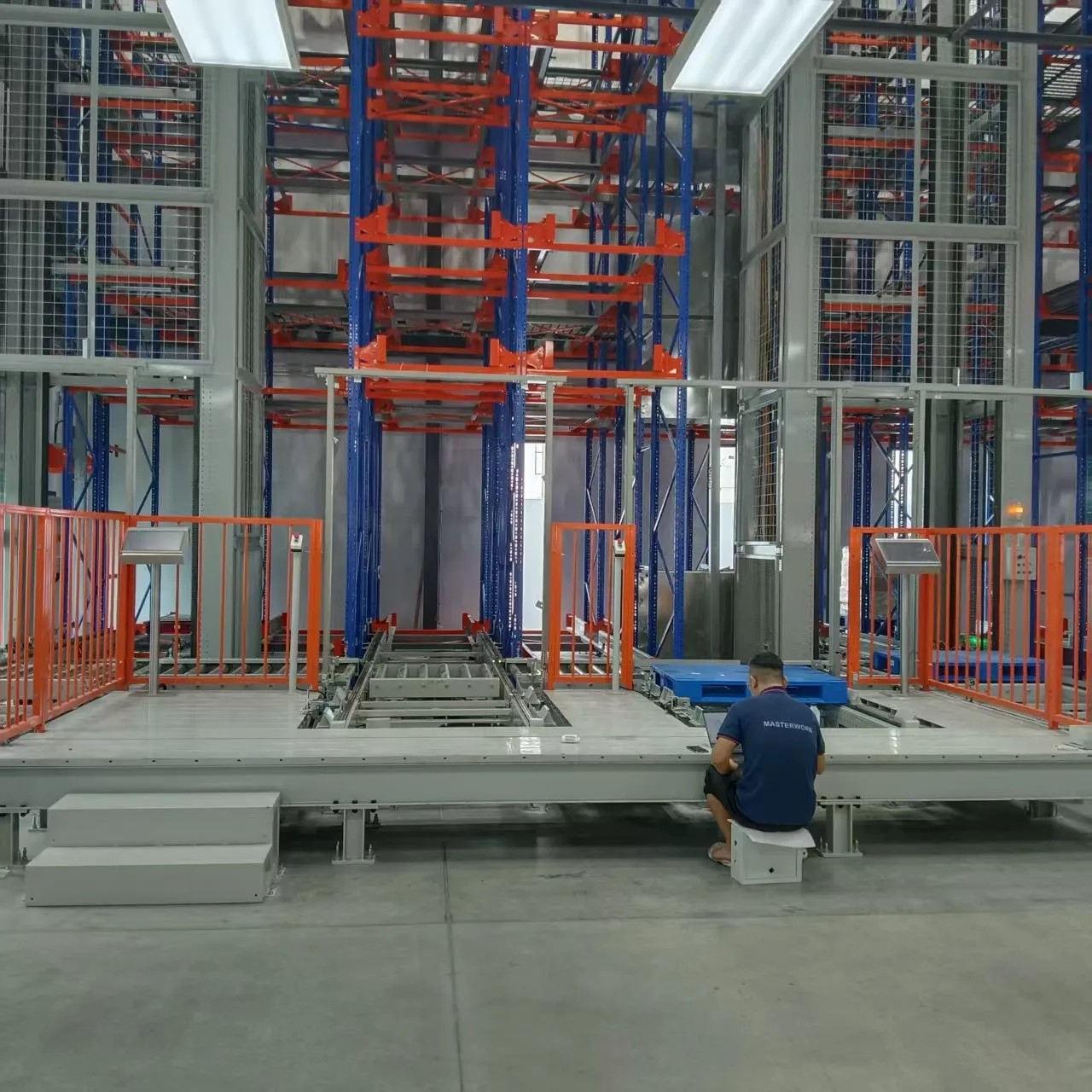
An automated storage retrieval system helps separate physical storage density from manual accessibility. Goods can be positioned within vertically organized storage locations while automated equipment handles movement between those locations and designated access points.
Digital inventory visibility is an equally important part of accessibility. When the system maintains an accurate record of where inventory is stored, retrieval requests can be executed without relying on manual searching. This is especially useful for warehouses managing many SKUs, variable inventory levels or strict product rotation requirements.
Inventory accessibility also needs to be considered during system expansion. A warehouse may initially have a predictable product mix, but new SKUs, seasonal demand and changing order patterns can alter the required storage and retrieval profile. An automated retrieval system should therefore be evaluated not only for current capacity but also for how well the architecture can adapt to future operational requirements.
For companies considering warehouse automation, the right starting point is usually the complete workflow rather than an individual machine. Product dimensions, load characteristics, storage capacity, retrieval frequency, available building height and downstream material flow all contribute to the final system design. Businesses that want to discuss a specific application can contact Master Auto Group with their storage and material-handling requirements for a more application-focused evaluation.
Conclusion
An automated storage retrieval system can improve warehouse performance by addressing two closely connected challenges: how efficiently inventory is stored and how efficiently it can be retrieved. By making better use of vertical space, coordinating storage locations and automating material movement, the system can support higher storage density while reducing unnecessary manual handling.
The most effective results come from treating storage, slotting, retrieval, throughput and layout as one connected system. An automated retrieval system should not be selected solely according to equipment speed or storage capacity. Its value depends on how well the complete solution matches the warehouse's inventory profile and material flow.
For warehouse operators planning new automation or upgrading an existing facility, evaluating these factors together provides a stronger basis for selecting an appropriate storage and retrieval configuration. The objective is not simply to store more goods, but to create a warehouse in which inventory remains visible, accessible and efficiently handled.
Frequently Asked Questions
1. What is an automated storage retrieval system?
An automated storage retrieval system uses automated handling equipment and control software to store goods in designated locations and retrieve them when required.
2. How does an automated retrieval system improve storage density?
An automated retrieval system can use vertical storage space more effectively and reduce some of the aisle and vehicle-access requirements associated with conventional forklift storage.
3. Can automated storage improve retrieval efficiency?
Yes. An automated storage retrieval system can digitally identify inventory locations and coordinate equipment movement, reducing manual searching and unnecessary travel.
4. What is the role of slotting in an automated warehouse?
Slotting determines where products are stored. Assigning inventory according to retrieval frequency, dimensions, weight and other operational factors can help reduce unnecessary movement.
5. Does a faster automated retrieval system always increase warehouse throughput?
No. Throughput also depends on storage capacity, equipment availability, transfer points, conveyors, warehouse layout and downstream processes.
6. How should a company evaluate an automated storage retrieval system?
Evaluation should consider inventory characteristics, storage density, retrieval frequency, building space, required throughput, layout, software integration and future expansion needs.


 English
  Español
  português
  العربية
  tiếng việt
  ไทย
ไทย  Indonesia