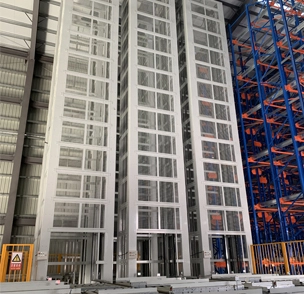
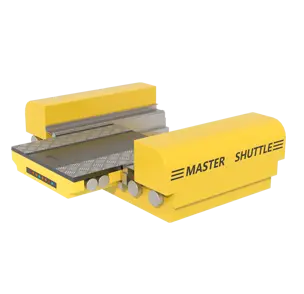
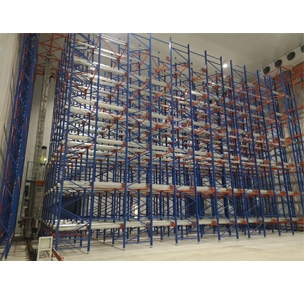
The way automotive parts are stored is changing as quickly as the vehicles themselves. A modern automotive supply chain must support not only traditional mechanical components, but also new categories of electronic modules, battery-related parts, and specialized assemblies. This shift has made warehouse operations more complex, requiring storage systems that can handle greater product variety while maintaining fast and reliable access.
For many automotive manufacturers and suppliers, the challenge is no longer simply having enough storage locations. The real challenge is managing thousands of different parts within limited space while ensuring that production lines receive the right components at the right time. Storage density, inventory visibility, and material flow have become closely connected factors in warehouse performance.
This changing environment is driving greater interest in automated solutions such as the four way shuttle system. By enabling flexible movement inside high-density rack structures, this technology helps warehouses rethink how inventory is stored and retrieved. Combined with a well-designed dense storage system, it provides a practical approach for improving space utilization without sacrificing operational flexibility.
Rather than viewing storage as a static function, automotive companies are increasingly treating warehouses as active parts of their supply chain strategy. With the right automation design, warehouses can become more adaptable, efficient, and prepared for future production demands. Master Auto Group supports different industrial applications with automation approaches designed around specific warehouse requirements, and businesses can explore available configurations through its warehouse automation solutions.
Why Automotive Parts Warehouses Are Rethinking Traditional Storage Strategies
Automotive manufacturing depends on a highly coordinated flow of components. A vehicle assembly process may involve thousands of individual parts, and each component plays a role in maintaining production continuity. For suppliers and manufacturers, the warehouse is not simply a place where inventory is stored; it is an important connection point between suppliers, production lines, and distribution networks.
Traditional storage methods have supported automotive logistics for decades because they are easy to understand and operate. However, as inventory variety increases, many warehouses are facing limitations related to space utilization and operational efficiency. Conventional rack layouts often require large aisle areas for forklifts and manual handling, reducing the amount of space available for actual storage.
This issue becomes more significant for automotive companies located near production facilities. Expanding warehouse buildings may involve higher construction costs, longer project timelines, and additional operational challenges. Improving the efficiency of existing space has therefore become an important consideration.
A dense storage system addresses this challenge by focusing on how warehouse space is used rather than simply increasing the number of storage racks. Through optimized layouts and automated handling methods, companies can store more components within the same facility while maintaining better inventory organization.
For automotive applications, higher storage density must also work together with accessibility. Parts cannot remain difficult to retrieve simply because a warehouse stores more products. The ideal solution needs to provide both compact storage and reliable access to support daily production requirements.
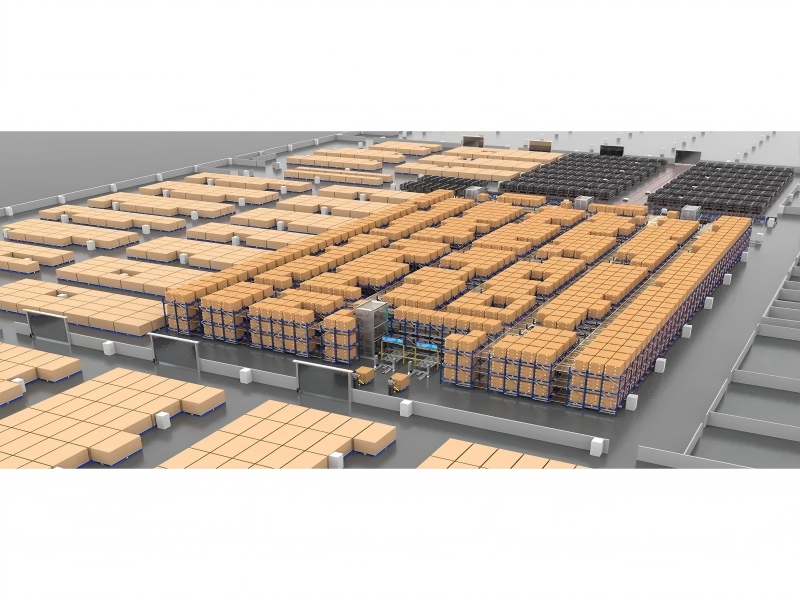
How Four Way Shuttle Systems Create More Efficient Storage for Automotive Components
A four way shuttle system is an automated storage solution designed to move pallets or storage carriers in multiple directions within a rack structure. This multi-directional capability allows warehouses to create more flexible storage layouts compared with conventional systems that depend mainly on fixed forklift paths.
For automotive warehouses, this flexibility is especially valuable because inventory requirements are rarely uniform. Some components may be needed frequently for production replenishment, while others may remain in storage as safety stock or seasonal inventory. A four way shuttle system allows companies to organize storage locations according to actual operational priorities.
One of the key benefits of this approach is improved use of warehouse volume. By reducing dependence on wide aisles and manual transportation routes, more space can be dedicated to storage positions. This makes the system particularly suitable for facilities where available warehouse area is limited but inventory requirements continue to grow.
Another important advantage is operational consistency. Automated shuttle movement reduces repetitive manual transportation tasks and creates a more predictable material handling process. In automotive production environments, where delays in parts availability can affect assembly schedules, stable warehouse operations are critical.
When connected with warehouse management software, a four way shuttle system can also support better inventory tracking and more accurate storage management. This creates a stronger connection between warehouse activities and overall supply chain planning.
Finding the Right Balance Between Storage Density and Parts Accessibility
Increasing storage capacity is only one part of warehouse optimization. Automotive companies also need to ensure that frequently used components can be retrieved quickly and that inventory remains easy to manage. This creates a balance between maximizing storage density and maintaining operational flexibility.
A properly designed dense storage system considers factors such as part characteristics, inventory turnover, production schedules, and replenishment frequency. Fast-moving components may require different storage strategies compared with long-term inventory or backup stock.
For example, a warehouse supporting a vehicle assembly line may need rapid access to frequently used parts, while another facility focused on spare parts distribution may prioritize maximum storage capacity. The best storage approach depends on the role of the warehouse within the supply chain.
| Storage Method | Main Characteristics | Suitable Scenario |
|---|
| Traditional pallet racking | Provides direct access but requires larger operating space | Warehouses with lower density requirements and simple inventory structures |
| Drive-in storage | Improves storage density by reducing aisle requirements | Applications with large quantities of similar products |
| Four way shuttle system | Combines high-density storage with automated and flexible movement | Automotive warehouses managing diverse components and changing demands |
A successful automotive storage strategy does not focus on density alone. It creates a warehouse environment where capacity, accessibility, and workflow efficiency work together.
Why Four Way Shuttle Systems Fit the Requirements of Modern Automotive Logistics
The automotive industry is experiencing significant changes. Electric vehicles, intelligent systems, and increasingly complex vehicle designs are introducing new types of components and new logistics requirements. These changes are increasing pressure on warehouses to become more flexible and responsive.
A four way shuttle system provides advantages because it supports changing inventory conditions without relying entirely on manual adjustments. Its automated movement capability allows warehouses to handle different storage requirements while maintaining efficient operations.
For automotive suppliers, this adaptability is particularly useful when managing mixed inventories. A single warehouse may need to store mechanical components, electronic parts, production materials, and replacement inventory at the same time. A flexible storage solution helps organize these different requirements more effectively.
Another important factor is scalability. Automotive businesses often need storage solutions that can support future growth. A well-planned dense storage system combined with shuttle automation can provide a foundation for expanding capacity and improving warehouse performance over time.
Four Way Shuttle Systems Compared with Conventional Automotive Storage Methods
Every warehouse has different priorities, and traditional storage solutions continue to play an important role in many applications. However, when automotive companies require higher storage density, improved automation, and better long-term flexibility, shuttle-based solutions can provide additional value.
| Comparison Factor | Conventional Storage Methods | Four Way Shuttle System |
|---|
| Storage utilization | Limited by aisle requirements and manual access methods | Uses compact layouts to increase storage capacity |
| Material handling | Relies mainly on forklifts and operators | Automated movement improves process consistency |
| Inventory management | Requires more manual coordination | Supports more intelligent storage and retrieval strategies |
| Future expansion | May require significant layout adjustments | Provides greater flexibility for future automation needs |
For automotive supply chains, the decision is not simply about replacing existing equipment. It is about creating a storage environment that can support production requirements today while remaining adaptable for future changes.
Key Factors for Building a Future-Ready High Density Storage Solution
Building an effective dense storage system requires more than selecting automated equipment. The solution must be designed around warehouse conditions, inventory characteristics, and business objectives.
Warehouse layout is one of the first considerations. Available floor space, building height, storage area design, and existing logistics processes all influence the final system configuration. Inventory analysis is equally important because different automotive parts require different storage and retrieval strategies.
Throughput requirements should also be evaluated carefully. A warehouse supporting high-volume manufacturing may need faster retrieval cycles compared with a facility designed for long-term inventory storage. Integration with warehouse management systems can further improve visibility and coordination.
A successful automation project combines equipment, software, and operational planning. Master Auto Group works with companies to evaluate warehouse challenges and develop suitable automation approaches based on specific requirements. Businesses looking to discuss their storage needs can connect with Master Auto Group through its warehouse automation consultation service.
Conclusion
Automotive parts storage is becoming more challenging as manufacturers manage wider product ranges, tighter production schedules, and increasing supply chain complexity. Traditional storage methods may not always provide the space efficiency and flexibility required by modern automotive operations.
A four way shuttle system combined with a carefully planned dense storage system provides a practical way to improve warehouse performance. By making better use of available space while maintaining reliable access to inventory, these solutions help automotive companies create more efficient and adaptable logistics environments.
As automotive supply chains continue to evolve, flexible warehouse automation will play an increasingly important role in supporting production reliability and long-term operational growth.
FAQ
1. What is a four way shuttle system?
A four way shuttle system is an automated storage solution that uses shuttle vehicles capable of moving in multiple directions within a rack structure to improve storage and retrieval efficiency.
2. Why do automotive warehouses need high-density storage?
Automotive warehouses manage large numbers of components, and high-density storage helps maximize available space while maintaining organized inventory management.
3. How does a four way shuttle system improve automotive parts storage?
It improves storage by reducing unnecessary aisle space, automating material movement, and supporting more flexible inventory organization.
4. What makes a dense storage system different from traditional racking?
A dense storage system focuses on maximizing warehouse capacity through optimized layouts and automated handling rather than relying only on conventional rack access.
5. Can four way shuttle systems support different automotive components?
Yes. They can be designed to handle different inventory types, including various pallet sizes, component categories, and storage requirements.
6. What should companies consider before implementing a four way shuttle system?
Companies should evaluate warehouse space, inventory characteristics, throughput requirements, software integration, and future expansion plans.


 English
  Español
  português
  العربية
  tiếng việt
  ไทย
ไทย  Indonesia