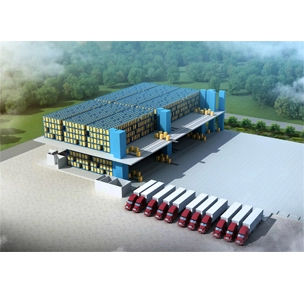
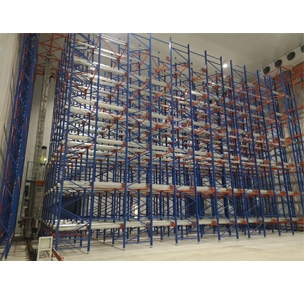
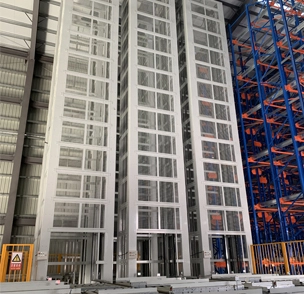
In the selection process for pallet-level automated storage systems, a common misconception is that "four-way shuttles are more advanced and feature-rich, so they must be better." In reality, two-way shuttles and four-way shuttles are not in an iterative replacement relationship. They are two distinct technology paths designed for different operational scenarios -3.
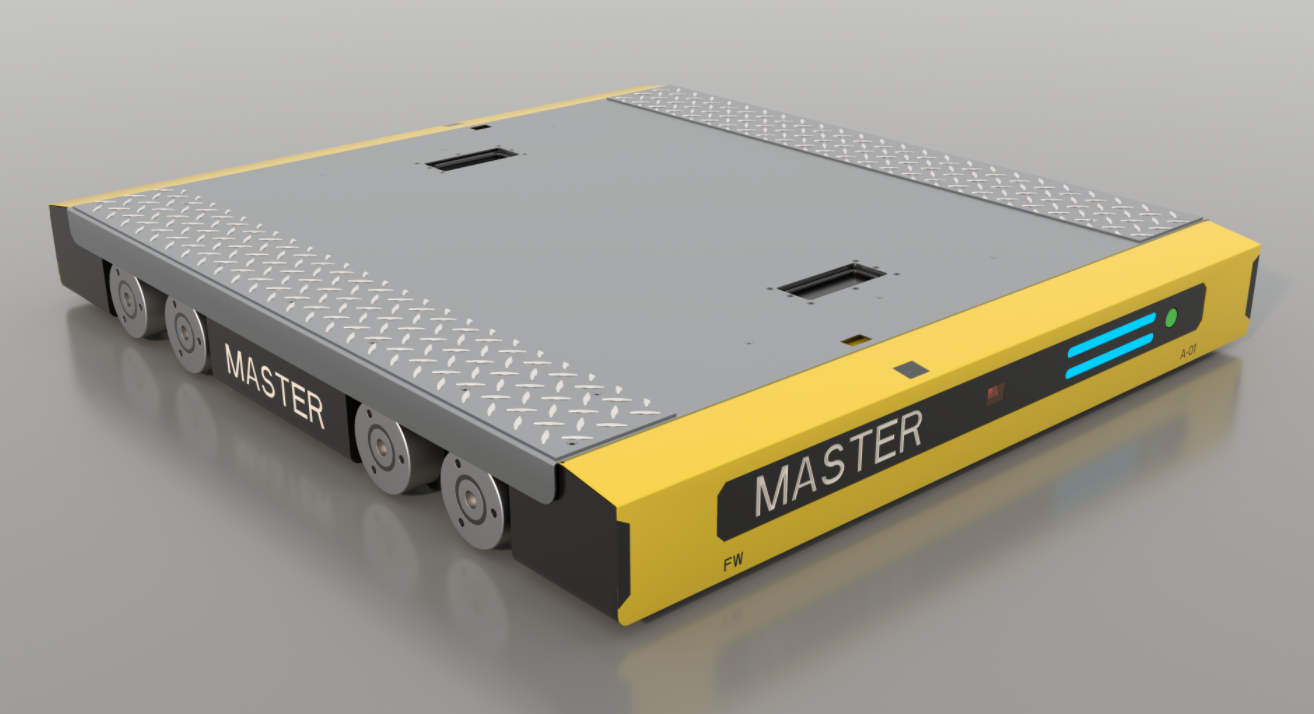
The core of selection is not "chasing the new," but matching actual throughput, warehouse layout, and long-term planning -3-1.
I. Core Logic: The Essential Difference Between the Two Vehicle Types
Two-way shuttles can only travel forward and backward along tracks within a single aisle. Their operational scope is strictly confined to that aisle, requiring cooperation with lifts at the end of the aisle for vertical transfer -3. The technical essence is exchanging fixed paths for ultimate operational efficiency and reliability. With simpler mechanical designs, they typically have lower upfront investment and maintenance requirements -1-4.
Four-way shuttles can move forward, backward, left, and right. Through intersecting tracks, they can achieve cross-aisle and cross-level scheduling. A single vehicle can cover multiple storage locations -3-7. The technical essence is exchanging path flexibility for equipment reuse rate and infrastructure cost-effectiveness. A fleet of shuttles can dynamically service multiple aisles, balancing resources when some aisles are busy and others idle -1.
Master has formed a full range of automated logistics equipment products, including 2-way shuttles, 4-way shuttles, multi-layer shuttles, and more. This allows the company to provide tailored solutions for different scenarios -5.
II. Core Parameter Comparison
Master's four-way shuttle products have a rated capacity of 1500kg, no-load speed of 1.5-2.0 m/s, and positioning accuracy of ±2mm -5. The product supports operation in -25°C low-temperature environments, making it suitable for cold chain logistics.
III. Infrastructure Cost: Completely Different Pricing Logic
The cost of a two-way shuttle system increases linearly with the number of aisles: each aisle requires its own independent lift, buffer conveyor line, and track system -3. For multi-aisle warehouses with the same number of pallet positions, the infrastructure investment for a four-way solution is typically 20%–40% lower than the two-way solution, a benefit that is especially clear in small-to-medium scale projects -3.
IV. Throughput Efficiency: Not "Who Is Faster," But "Who Is More Suitable"
The advantage of a two-way shuttle is its single-aisle efficiency. With no steering and no scheduling wait times, its single-unit cycle time is 1.5-2 times that of a four-way shuttle during continuous full-load operation. This makes it suitable for high-throughput scenarios like e-commerce fulfillment centers or fast-moving consumer goods distribution centers -3.
The advantage of a four-way shuttle lies in global dynamic balancing. While a single vehicle is less efficient, it can dispatch idle vehicles to busy aisles, avoiding the waste that occurs when some aisles are overloaded and others are idle. For manufacturing line-side warehouses and raw material storage with high SKU counts and low turnover rates, the overall equipment utilization rate of the four-way solution is often higher -3.
V. Expansion Flexibility: A Key Difference for Long-Term Investment
This is the most overlooked difference, yet it has the greatest impact on long-term returns -3.
The two-way solution is a rigid plan: adding new aisles later requires adding lifts and buffer lines, a major renovation that often requires production stoppages.
The four-way solution is a flexible plan: after the track infrastructure is laid once, later expansion only requires adding more shuttles, with no modifications to the racking or infrastructure -1. This is especially important for businesses in a growth phase that require phased expansion.
VI. Selection Recommendations
Based on over a decade of experience in shuttle system R&D, Master can provide multiple technical solutions including two-way shuttles, four-way shuttles, and multi-layer shuttles for different business scenarios, supporting customized design and full-system integrated delivery. The company holds more than 40 invention and utility model patents and has successfully implemented and delivered nearly 100 automated warehouse systems to the market -2-5.


 English
  Español
  português
  العربية
  tiếng việt
  ไทย
ไทย  Indonesia