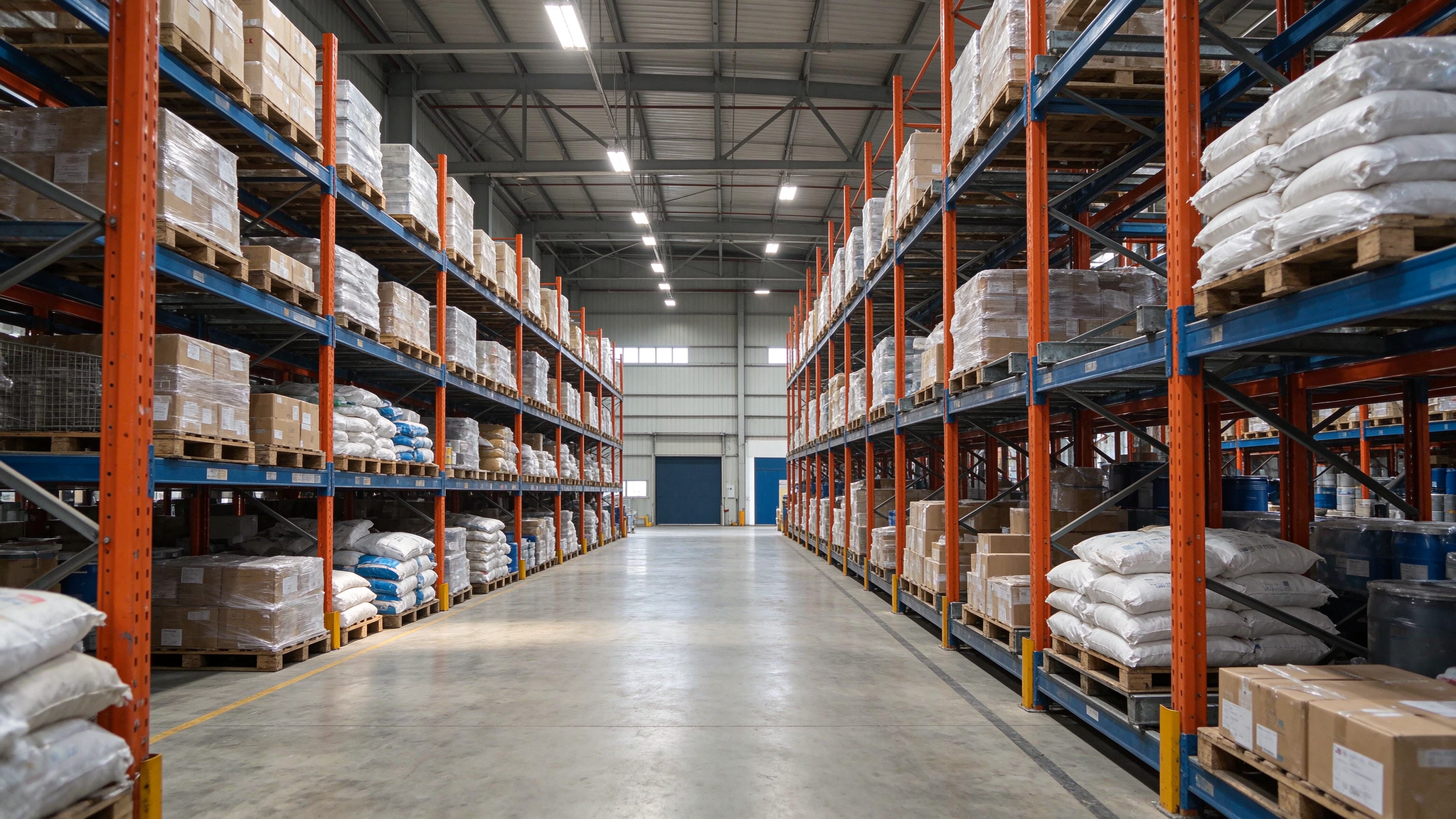
Four rack types cover almost every pallet storage decision: selective racking when every pallet must be reachable, drive-in when SKUs are few and batches are large, shuttle racking when density and throughput both matter, and ASRS racking when a crane does the storing. The differences come down to three variables — access per pallet, pallets per square meter, and what the steel has to hold besides the load. This guide compares those four types (plus two conditions that change the answer: cold storage and protection/inspection practice), then gives the sizing order we use before quoting: pallets → levels → bays → aisles. Load figures here are structural logic, not datasheet promises; type coverage follows the seven racking families published on the product page.
Pallet racking types which rack fits your load and throughput
What a Racking Bay Actually Carries
A rack bay is three parts: upright frames, beams that span between them, and — where the load needs it — shelf panels or support bars. The load rating that matters is per beam level, per pallet, multiplied by the number of levels; "rack capacity" quoted as a whole-frame figure is close to meaningless for buying decisions. Two 5-level bays rated for one pallet per level do not hold twice a 10-level bay's pallets unless both the beams and the uprights were specified for it.
Three loads act on the steel, and only one of them is the pallet:
The pallet weight, carried by the beams
The beam connection loads, carried into the uprights at each level
The vehicle loads — forklift impacts in conventional operation, or rail and guidance loads where the rack itself carries a moving shuttle
That third load is the one buyers forget, and it is why the later rack types are engineered differently from the first two.
Selective Racking: The Default When Access Matters
Selective racking gives one pallet per position with every position directly reachable from the aisle — the 100% selectivity option, at the cost of one aisle per row. For warehouses up to roughly a few thousand pallet positions with many SKUs and fast turnover, it usually remains the right answer, because the aisle space it "wastes" is cheaper than the handling complexity of alternatives.
The trade is easy to quantify before any vendor quote: pallets stored per square meter go up roughly in proportion to how many pallets you are willing to store behind each other, and access speed goes down the same way. When selectivity is genuinely needed — many SKUs, single-pallet picks, FIFO discipline — selective is the type to price first. See the full range on the pallet racking system page, where selective (heavy-duty) racking is one of the published families.
Drive-In Racking: Density When SKUs Are Few
Drive-in racking removes aisles between rows: the forklift drives into the rack itself, and pallets sit on rails several positions deep. One SKU per lane is the operating rule, because the first pallet in is the last pallet out — lanes are LIFO, not FIFO. A warehouse holding few SKUs in large batches (beverage, packaged food, raw material) can multiply stored pallets per square meter several times over selective, and that is the only condition under which the access loss is worth it.
Two limits decide whether drive-in survives contact with your operation. First, LIFO makes it wrong for any product with date rotation requirements unless lanes turn over completely between batches. Second, forklift-in-rack operation is the highest-impact-load condition in storage: the rack needs protection at every lane entry, and the pallets themselves must be in good condition, because a broken stringer deep in a lane is a much bigger problem than one at the aisle face. Food and beverage projects are the typical users; this is the "entry" racking family on the product page.
Shuttle Racking: The Rack That Carries the Vehicle
Shuttle racking looks like drive-in but works nothing like it: a shuttle vehicle rides on rails inside the lane and moves pallets, so the forklift only works at the lane face. The rack now carries two functions at once — storing pallets and serving as the runway for the vehicle — and that second function drives its engineering. Rail alignment, joint tolerances between bay sections, and pallet presence detection at each position are rack-quality questions, not vehicle questions.
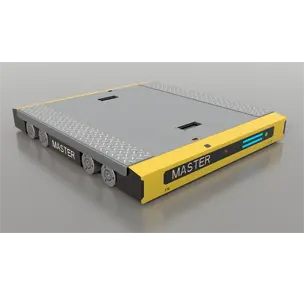
Detection matters more than it sounds. A shuttle needs to know whether the position ahead is occupied before it places a pallet; optical pallet presence checks handle the standard cases, but warped or overhanging pallets are the failure mode to control operationally, not technically. Master's dense-storage line publishes three versions of this architecture: four-way shuttle racking (vehicle can move across aisles at the same tier), and the shuttle and carrier mother-child configuration (a carrier changes the shuttle's tier). The rack engineering behind these families is covered in the overview of a shuttle racking system, and the rail-guided variant is explained in what is a 4-way shuttle racking system.
ASRS Racking: The Tolerances That Decide Crane Accuracy
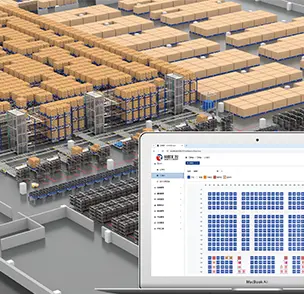
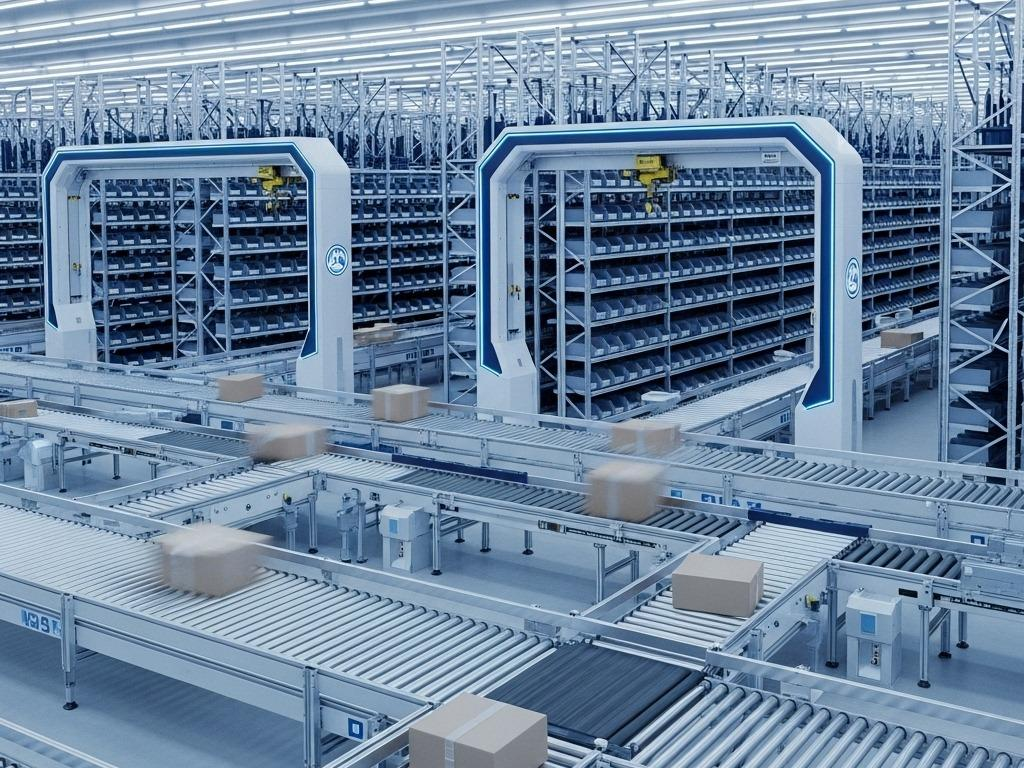
When a stacker crane stores and retrieves pallets, the rack stops being passive infrastructure and becomes part of the machine. The crane positions itself against the rack structure; Master's multi-level shuttle line publishes ±2 mm positioning accuracy, and a crane operating against a rack must locate its target positions to a similar order of precision. That requirement runs backward into the steel: upright verticality tolerances, beam level tolerances and floor flatness under the rails are all specified tighter than conventional racking, because every millimeter of rack error is a millimeter the machine must hunt for at height.
The practical consequence for buyers: an ASRS rack is not a "stronger rack" — it is a more precisely built rack, and its acceptance criteria are geometric. Ask how verticality and level tolerances are measured and certified on the installed structure, not just what the load rating is.
Cold Storage Racking: Steel Below Zero
Freezer conditions change rack selection in two ways: the steel itself and the condensation cycle. Steel grades and welding details must be specified for the service temperature; a structure rated at ambient does not carry its rating unchanged at −25 °C, where impact toughness of some steels drops. Condensation is the operational half: every door opening brings humid air onto cold surfaces, so coating systems, drainage and inspection routines for corrosion all need a freezer-specific answer.
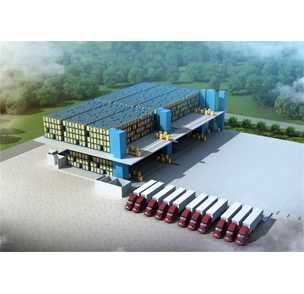
Cold storage also narrows the type choice. High-density layouts (shuttle racking) are usually favored because aisle volume is expensive to refrigerate — the less air you cool, the less you pay to keep it cold. Master's cold storage projects — including the published case of 12,000 pallet positions with four-way vehicles and 15 elevators — apply exactly this logic. The building-level decisions are covered on the cold storage racking and cold chain warehousing page.
Protection, Load Signs and Inspection
Rack damage is an operating expense you manage, not a defect you buy away. Three practices keep the structure safe between inspections:
Protection at impact points. Column guards and end-of-aisle barriers at every position a forklift can reach — for drive-in, that includes every lane entry, not just the aisle ends.
Load signage per bay. A sign per bay stating the per-level and total load limits, because the crew that loads the rack tomorrow did not read this article.
Periodic inspection. A monthly walk-through that records beam deflection, upright impacts, missing or deformed components, and loose anchors — with a defined threshold for taking a bay out of service.
Which national standard applies and how frequently formal expert inspection is required depends on the project's jurisdiction — confirm the applicable local code for the installation country before writing the maintenance contract.
The Sizing Order: Pallets → Levels → Bays → Aisles
Type selection and layout sizing are the same exercise done in sequence. The order that works:
Count the pallets. Not the SKUs, not the square meters — the number of pallet positions at steady state, plus growth over the planning horizon.
Choose levels. Building clear height minus sprinkler clearance, dock leveler zones and top-loading clearance gives the buildable height; divide by (pallet height + beam + handling clearance) and round down. Low buildings force more floor area; high buildings reward density types.
Divide into bays. Positions per bay follow from pallet size and beam spans; total bays = pallet positions ÷ levels per bay.
Fit the aisles. Aisle count comes last, because it is the variable the rack type actually trades away — selective needs one aisle per row, shuttle racking shares lanes, ASRS needs one machine aisle per crane aisle.
Worked in that order, the published project cases read as checkable examples: Master's integrated racking project and its rack-supported warehouse for a food company both state position counts that come out of exactly this chain — pallet count, level count, bay geometry, aisle plan. Reverse-engineering those four numbers from any quote is the fastest way to see whether the layout was engineered or guessed.
If you have the pallet dimensions and target position count, the layout falls out of this sequence in one pass — send both figures through the request a quote form and the return is a bay-and-aisle layout, not a price list guess.
FAQ
Can beam levels be adjusted after installation?
Yes on selective racking — beam heights adjust on teardrop or bolted connections without unloading the uprights, which is the type's main advantage over fixed structures. On drive-in and shuttle racking the rail levels are part of the load path and must not be repositioned casually; on ASRS racking, level geometry is calibrated to the machine and must not be adjusted at all without re-survey.
Can drive-in lanes store multiple SKUs?
Only one SKU per lane is workable, because lanes are LIFO: the last pallet in is the first out. Two SKUs in one lane means the front SKU blocks the back one until the lane empties. Batch turnover patterns that fully empty lanes between products are the exception that makes two-SKU lanes tolerable.
Does shuttle racking need separate rails?
No — the rails are part of the rack structure, integrated into the beam levels. What the buyer verifies separately is rail alignment across bay joints and pallet presence detection, both of which are rack-supplier quality items, not shuttle-vehicle options.
Why does cold storage racking cost more?
Not one reason but three: steel specification for sub-zero impact toughness, coating and drainage designed around the condensation cycle, and the geometric precision required when the layout is dense or machine-served. It is priced as an engineered structure, not as a catalogue item.
We use cookies to offer you a better browsing experience, analyze site traffic and personalize content. Part of the tracking is necessary to ensure SEO effectiveness, By using this site, you agree to our use of cookies.
Visit our cookie policy to learn more.


 English
 Español
 português
 العربية
 tiếng việt
 ไทย
 Indonesia