Racking is the foundation of any automated warehouse. Without proper racking, shuttles cannot move and cranes cannot operate. Yet racking is often overlooked in automation discussions. This article explains the basics.
Why Racking Matters
In manual warehouses, racking holds static loads. A forklift places a pallet on a beam. The beam supports the weight. In automated warehouses, racking has additional jobs. It guides moving equipment. It withstands dynamic forces from starting and stopping. It maintains alignment over years of use.
Standard racking is not always sufficient for automation.
Racking for Pallet Shuttles
Pallet shuttles run in deep storage lanes. The racking must include rails along each lane. Rails guide the shuttle as it moves pallets in and out.
Key features include deep lanes that can extend 20 pallets or more. The structure needs extra bracing because shuttles apply lateral forces. Racking can be designed for FIFO with loading on one end and retrieval on the other, or for FILO with loading and retrieval from the same end.
Pallet shuttle racking is common in cold storage and food warehouses. The steel must handle temperatures as low as -30°C.
Racking for Four-Way Shuttles
Four-way shuttles operate on a grid. Racking must support movement in two directions at each level. Rails run both lengthwise and crosswise.
Key features include precision alignment within a few millimeters. The grid includes openings for lifts and picking stations. Multiple levels are connected by dedicated lifts.
This racking is used in e-commerce fulfillment and retail distribution where many SKUs need frequent access.
Racking for ASRS
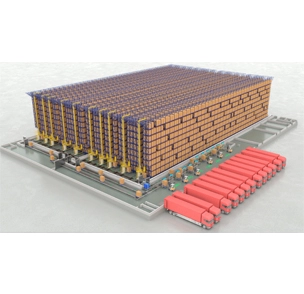
ASRS uses stacker cranes in fixed aisles. Racking must be tall, often exceeding 20 meters. It must support both stored pallets and moving cranes. Crane rails run along the floor and top of the racking.
Installation requires extreme precision. Small misalignments cause crane positioning errors.
Retrofitting Existing Racking
Pallet shuttles can sometimes be retrofitted into existing racking. The structure must be sound and rails must be added. Four-way shuttles typically require new, purpose-built grids. ASRS always requires new racking.
Summary
Racking is an active part of automated systems. Pallet shuttle racking uses deep lanes with rails. Four-way shuttle racking uses bi-directional grids. ASRS racking is tall and precise. Choose racking that matches your technology.


 English
  Español
  português
  العربية
  tiếng việt
  ไทย
ไทย  Indonesia