For companies new to automation, the number of available technologies can feel overwhelming. Suppliers talk about 4-way shuttles, pallet shuttles, ASRS, and various types of racking. They mention WMS and WCS as if these terms are common knowledge. This article provides a basic overview of how these components fit together.
The Three Layers of Warehouse Automation
Any automated warehouse operates across three layers. Understanding these layers makes the rest of the technology easier to grasp.
Layer 1: The Physical Structure
This is the most visible part of an automated warehouse. It includes the racking that holds inventory, the rails that guide equipment, and the supporting steel that holds everything in place.
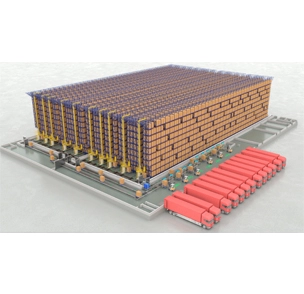
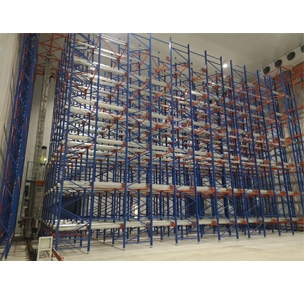
For pallet shuttle systems, the racking includes deep lanes with rails running along each level. For 4-way shuttle systems, the racking forms a grid with rails in both directions. For ASRS, the racking is typically tall, often exceeding 20 meters, with fixed aisles for stacker cranes.
The physical structure also includes lifts for moving between levels, charging stations for shuttles, and pick stations where workers interact with the system.
Layer 2: The Moving Equipment
This layer includes all automated vehicles that move inventory. The three most common types are ASRS stacker cranes, pallet shuttles, and 4-way shuttles.
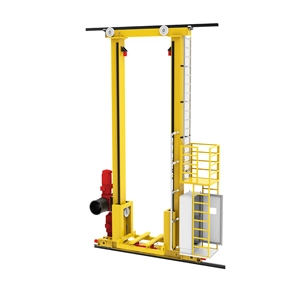
ASRS stacker cranes travel within fixed aisles. They move horizontally along the aisle and vertically up the racking to place or retrieve pallets. These cranes are designed for high throughput and tall buildings.
Pallet shuttles are rail-guided carts that move full pallets within deep storage lanes. A forklift places a pallet at the lane entrance, and the shuttle carries it to the correct position. Pallet shuttles prioritize storage density over access speed.
4-way shuttles are more flexible. They can move forward, backward, left, and right on a grid of rails. This allows them to change aisles and access any location without a separate transfer vehicle. Four-way shuttles are often used for totes and cases in high-SKU environments.
Layer 3: The Control Software
This is the least visible but most important layer. The software directs all movement in the automated warehouse.
WMS (Warehouse Management System) manages inventory data. It knows what items are in storage, where each item is located, and how many units are available. The WMS also processes incoming orders and determines which items need to be picked.
WCS (Warehouse Control System) takes instructions from the WMS and translates them into specific movements for the equipment. It decides which shuttle should retrieve which item and what path that shuttle should follow. The WCS also manages traffic to prevent collisions.
In most automated warehouses, the WMS and WCS operate continuously without human intervention. People step in only for exceptions, maintenance, or strategic decisions.
How the Layers Work Together
A typical automated warehouse operation follows this sequence:
Receiving: When a truck arrives with new inventory, workers or automated systems log the items into the WMS. The WMS records the quantity, SKU, and any batch or expiration information.
Putaway: The WMS determines where to store each item based on factors like size, turnover rate, and available space. It sends a putaway instruction to the WCS. The WCS directs a pallet shuttle or ASRS crane to move the pallet to the assigned location. The racking guides and supports the equipment during this movement.
Order Processing: When customer orders arrive, the WMS groups them into efficient pick waves. It sends retrieval requests to the WCS.
Retrieval: The WCS dispatches 4-way shuttles or pallet shuttles to fetch the required items. For full pallet orders, a pallet shuttle retrieves the entire pallet. For case or each orders, four-way shuttles bring individual totes to pick stations.
Picking: At goods-to-person stations, workers remove the requested quantity from the container. The WMS records the pick and updates inventory counts. The empty or partially filled container returns to the grid for future use.
Shipping: Completed orders are packed, labeled, and loaded onto outbound trucks.
Why Multiple Technologies Are Often Better
Few warehouses use only one type of equipment. A common hybrid approach combines pallet shuttles for bulk storage, ASRS for high-bay buffering, and 4-way shuttles for order picking.
In this model, the pallet shuttle system stores incoming pallets with maximum density. When those pallets are needed for order fulfillment, they move to a depalletizing area. Cases or totes from the pallet transfer into the four-way shuttle grid. The four-way shuttles then handle the high-frequency, high-variability task of order picking.
Each technology does what it does best. The racking for each system is designed specifically for that technology. The software coordinates across all three.
Factors That Influence Technology Choice
Several factors determine which combination of technologies works for a given warehouse:
Building height: Tall buildings (15 meters or more) favor ASRS. Lower buildings work well with shuttles.
Load type: Full pallets require pallet shuttles or ASRS. Cases and totes require four-way shuttles.
SKU count: High SKU counts favor four-way shuttles. Low SKU counts may work with pallet shuttles alone.
Throughput requirements: Very high throughput may require ASRS or a large fleet of four-way shuttles.
Cold storage: Pallet shuttles are common because they reduce door openings and save energy.
Common Misconceptions
"Automation means no people." Most automated warehouses still employ people. The roles change from manual handling to system monitoring, maintenance, and exception resolution.
"Automation requires a new building." Many installations are retrofits into existing warehouses. Older buildings with sufficient height and flat floors can often accommodate pallet shuttles or four-way shuttles.
"Small warehouses don't need automation." Small warehouses can benefit from automation, especially when space is expensive or labor is difficult to find. One pallet shuttle lane or a small four-way shuttle grid can make a significant difference.
"All shuttles are the same." Pallet shuttles and four-way shuttles have different designs, capabilities, and applications. Choosing the wrong type for the task reduces effectiveness.
Getting Started
For warehouses considering automation, the first step is a site assessment. A qualified provider will measure the facility, review inventory data, and analyze order patterns. Based on this information, they will recommend a combination of racking, shuttles, and software.
Small pilot projects are common. A single pallet shuttle lane or a limited four-way shuttle grid can demonstrate the technology before a larger investment.
Summary
Warehouse automation combines physical structure (racking), moving equipment (4-way shuttles, pallet shuttles, ASRS), and control software (WMS, WCS). These three layers work together to store and retrieve inventory with minimal manual intervention.
Different technologies serve different purposes. Pallet shuttles prioritize density. Four-way shuttles prioritize flexibility. ASRS prioritizes height and throughput. Many warehouses benefit from combining multiple technologies rather than choosing just one.
A site assessment and data analysis provide the information needed to make informed decisions.


 English
  Español
  português
  العربية
  tiếng việt
  ไทย
ไทย  Indonesia