This guide answers basic questions about automated storage technologies including ASRS, 4-way shuttles, pallet shuttles, and related racking systems. Answers are general and may vary by application.*
Section 1: Basic Concepts
Q1: What is warehouse automation?
A: Warehouse automation uses technology to move, store, or track inventory with less manual handling. Examples include conveyors, robotic arms, automated cranes, and shuttle systems.
Q2: What is an ASRS?
A: ASRS stands for Automated Storage and Retrieval System. It typically uses stacker cranes running in fixed aisles to store and retrieve pallets or smaller loads from high-bay racking.
Q3: What is a 4-way shuttle?
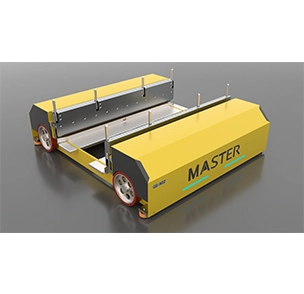
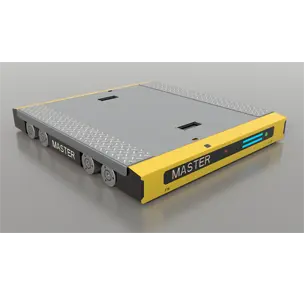
A: A 4-way shuttle is a motorized cart that moves on rails inside a racking grid. It can travel forward, backward, left, and right, which allows it to change aisles without a transfer car.
Q4: What is a pallet shuttle?
A: A pallet shuttle is a rail-guided cart designed to move pallets within a deep storage lane. It is commonly used for dense storage applications such as cold rooms or bulk inventory.
Q5: What is the difference between a pallet shuttle and a 4-way shuttle?
A: Pallet shuttles typically move in one direction (forward/backward) within a single lane. Four-way shuttles can move in two directions on a grid, allowing access to multiple lanes and levels.
Section 2: Equipment & Components
Q6: What types of racking are used with shuttles?
A: Shuttle systems require specialized racking with integrated rails. Pallet shuttles use deep-lane racking. Four-way shuttles use a grid structure with rails on each level.
Q7: What is pallet racking?
A: Pallet racking is a storage system designed to hold palletized goods. Common types include selective racking, drive-in racking, and push-back racking. Shuttle systems replace some of these configurations.
Q8: How do shuttles receive power?
A: Most shuttles use rechargeable batteries. Charging stations are placed within the racking system. Some designs include opportunity charging during idle periods.
Q9: What is WMS and WCS?
A: WMS (Warehouse Management System) manages inventory data and order processing. WCS (Warehouse Control System) directs the movement of equipment like shuttles and cranes.
Q10: Can shuttles handle different load sizes?
A: Shuttle systems are typically designed for specific load dimensions. Some 4-way shuttle designs can accept multiple tote sizes. Pallet shuttles are usually matched to one pallet type.
Section 3: Applications
Q11: What industries use pallet shuttles?
A: Pallet shuttles are common in cold storage, food and beverage, chemicals, building materials, and any industry requiring high-density pallet storage.
Q12: What industries use 4-way shuttles?
A: 4-way shuttles are often used in e-commerce, retail distribution, spare parts logistics, and pharmaceutical warehouses where SKU variety and order volumes vary significantly.
Q13: Can shuttles work in cold storage?
A: Yes. Both pallet shuttles and 4-way shuttles can be built with cold-rated components. Operating temperatures down to -25°C or lower are possible with appropriate specifications.
Q14: Are shuttles suitable for small warehouses?
A: Shuttle systems can be scaled to different warehouse sizes. Pallet shuttle systems can start with one lane. Four-way shuttle grids can cover a small picking zone.
Q15: Can existing racking be converted for shuttles?
A: In some cases, yes. Pallet shuttles can be retrofitted into existing selective racking with the addition of rails. Four-way shuttles typically require a purpose-built grid.
Section 4: Implementation
Q16: How long does installation take?
A: Installation time varies based on system size and complexity. Small pallet shuttle projects may take weeks. Large ASRS or 4-way shuttle installations may take months.
Q17: Does the warehouse need to close during installation?
A: Many installations use a phased approach. One zone is installed at a time while other zones continue normal operations.
Q18: What training is required for operators?
A: Operators typically learn system interfaces, basic troubleshooting, and safety procedures. Training duration ranges from a few days to several weeks depending on system complexity.
Q19: What happens if a shuttle malfunctions?
A: Most systems include redundancy. For pallet shuttles, each lane operates independently. For 4-way shuttles, multiple vehicles share the grid. Manual retrieval procedures exist for both types.
Q20: How are software updates handled?
A: Updates are typically scheduled during low-activity periods. Cloud-connected systems may receive updates remotely. Some systems require on-site technician visits.
Section 5: Operations & Maintenance
Q21: What daily checks are needed for shuttles?
A: Typical checks include visual inspection of rails, verification of charging contacts, and review of system alerts from the control dashboard.
Q22: How long do shuttle batteries last?
A: Battery life varies by usage pattern. Many shuttles run 8-16 hours per charge. Battery replacement is typically needed every 3-6 years depending on cycle count.
Q23: Can shuttles be added after the system is installed?
A: Yes. Both pallet shuttle and 4-way shuttle systems are designed for modular expansion. Additional vehicles can be added to the existing grid or lanes.
Q24: How is inventory tracked in a shuttle system?
A: Inventory is tracked through the WMS. Barcode or RFID scanning confirms placement and retrieval. The system records each transaction with time and location data.
Q25: What is the typical lifespan of a shuttle system?
A: With regular maintenance, shuttle hardware may operate for 10-15 years. Racking structures may last longer. Software and control systems can be updated over time.
Summary
Additional Resources
For more specific information about your application, consult a qualified warehouse automation provider. System performance and features vary by manufacturer and configuration.


 English
  Español
  português
  العربية
  tiếng việt
  ไทย
ไทย  Indonesia