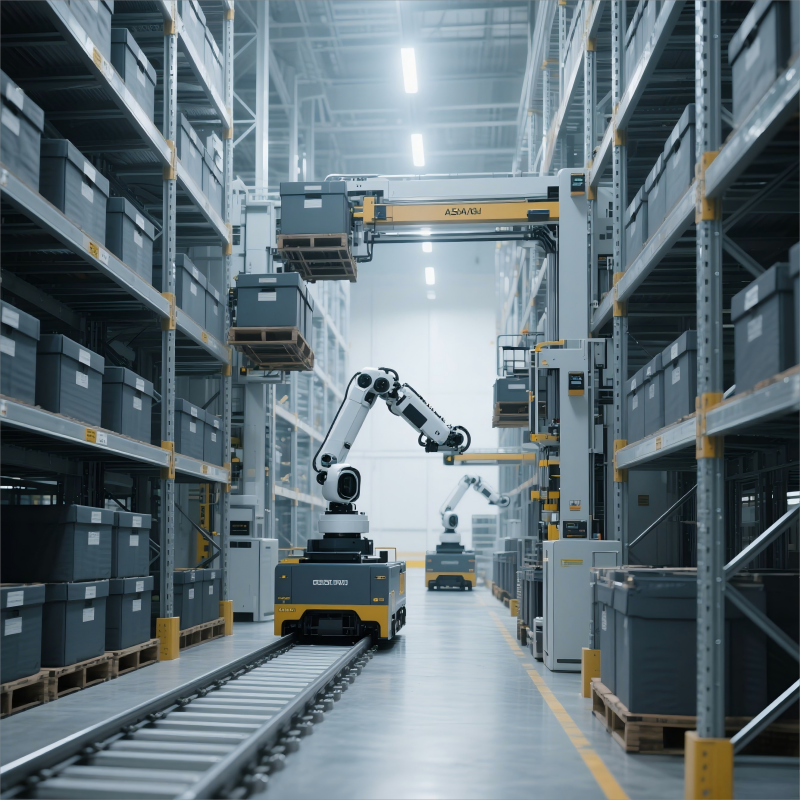
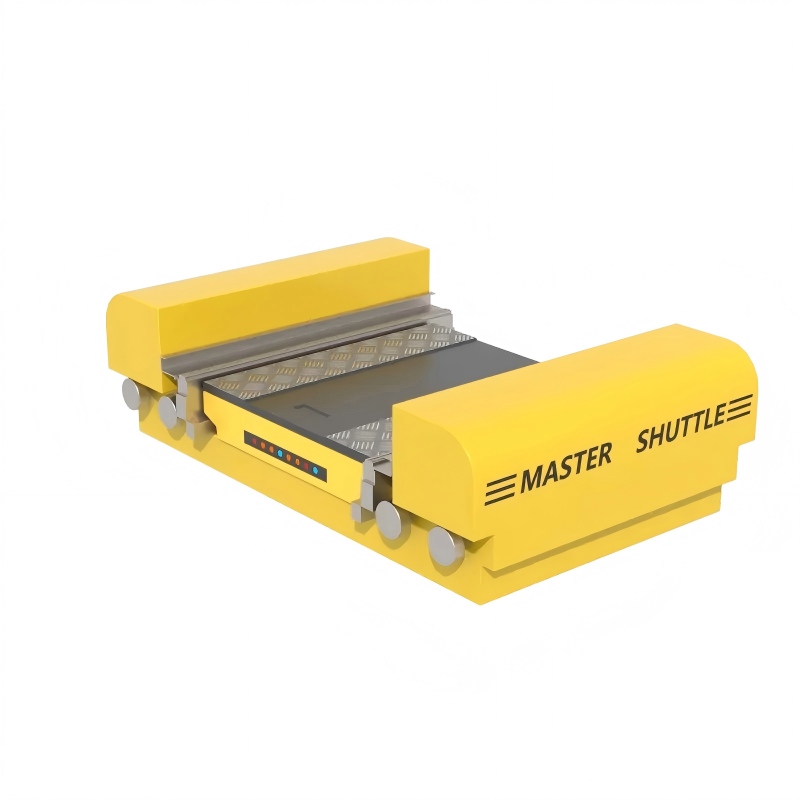
A warehouse conveyor line is specified in this order: unit load first, mechanism second, layout third, controls last — and most failed line projects invert that order. This guide covers where a conveyor line belongs in the flow (and where it does not), the four unit-load classes and the mechanisms that match them, pallet conveying hardware, vertical transfer inside a line, where sorting starts versus plain transport, layout rules for accumulation and merge, WCS interface basics, and the six specifications to fix before requesting a layout. Hardware figures cited come from the published product page: 1,200 kg rated load, 16 m/min conveying speed, 0.75 / 1.1 kW NORD/SEW drives.
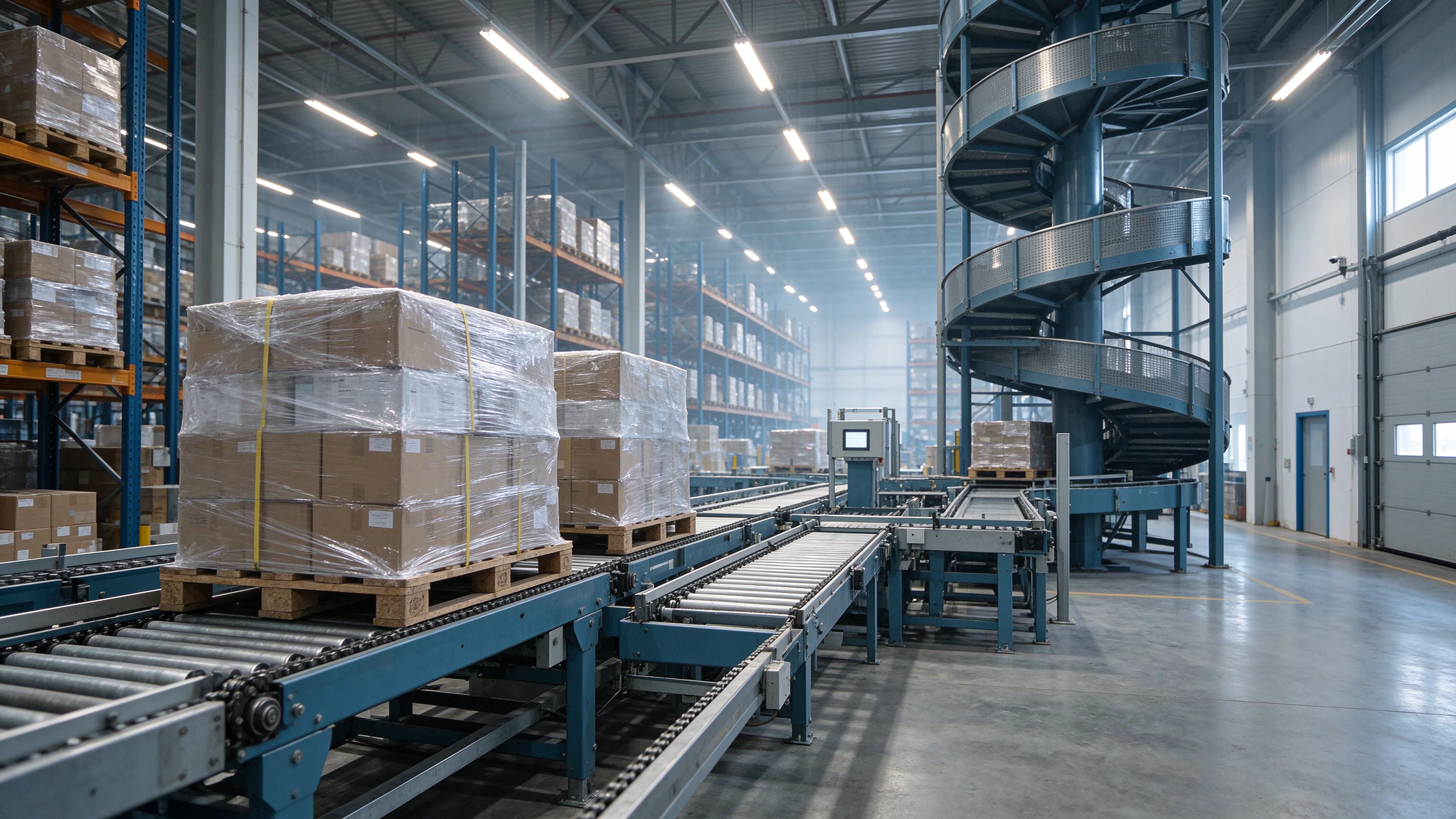
Warehouse conveyor systems roller chain and spiral conveyor
Where a Conveyor Line Sits in the Flow
A conveyor line earns its floor space by connecting two workstations that generate pallets or cartons faster than staff can carry them between — typically receiving to storage interface, storage to picking, picking to packing, and packing to dispatch. Between those points, conveyance is mechanical plumbing: repeatable routes, fixed timing, no decisions.
The equally useful answer is where a line does not belong. A single transfer between two fixed points that a forklift covers in one minute does not need a conveyor. A flow with fewer than a handful of moves per hour does not amortize the controls engineering. And a warehouse whose routes change weekly is a poor match for fixed steel — conveyance rewards stable, repeating flows. Before counting sections, count the repeating flows; the line is sized to those, not to the building. The full equipment scope is listed on the material handling conveyor system product page.
Choose by Unit Load: Pallet, Carton, Tote
Every other specification follows from the unit load, because the load decides the mechanism class and the mechanism decides everything downstream.
Unit-load classes and matching conveyor mechanisms
Unit load
Typical weight class
Matching mechanism
Design driver
Full pallet
Hundreds of kg to tonnes
Chain conveyor, heavy roller
Load capacity and pallet bottom condition
Carton / case
Single-digit to tens of kg
Roller (driven or gravity), belt
Carton bottom flatness and minimum size
Tote / bin
Tens of kg
Belt or roller, tight transfers
Small-item tracking and gap control
Irregular / soft items
Varies
Belt only
Item needs continuous support
Two consequences worth stating plainly. First, pallet conveying and carton conveying are different engineering disciplines despite the shared name — mixing them on one shared line is a special design case, not a default. Second, the pallet bottom decides pallet conveyor type: a stringer pallet rides chain or roller differently, and a damaged pallet bottom is the recurring fault of every pallet line.
Chain conveyors carry pallets on supporting chains, tolerant of imperfect pallet bottoms; roller conveyors ride the pallet on rollers, faster to accumulate but choosier about bottom condition. The choice between them is a pallet-quality question before it is a price question.
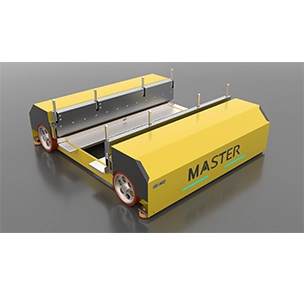
Three motion functions fill out a pallet line. Transfer stations move a pallet sideways from one line to another; turntables rotate a pallet to change its orientation between line axes; and lift-and-position modules handle the level changes and precise stops that docking to an elevator or a shuttle station requires. Master's published pallet conveyor specification gives the duty envelope for this hardware: 1,200 kg rated load at 16 m/min conveying speed — a pallet transport duty, not a high-speed parcel sortation duty.
Vertical Transfer Inside a Line: Spiral vs Lift
Inside a single line, vertical movement comes down to two devices with different jobs. A spiral (vertical) conveyor moves a continuous stream of cartons or totes between levels without interrupting flow — it is always moving, so it suits steady small-unit traffic. A lift moves whole pallets as discrete cycles: the platform loads, rises, docks, unloads. Continuous versus discrete is the whole distinction.
The selection rule: if the vertical leg carries a steady stream of cartons, spiral; if it carries pallets, or must dock level with other equipment at a defined height, lift. Where the pallet lift sits in the wider flow — buffers, hand-off geometry, who owns the call logic — is covered in the warehouse elevators selection guide.
Where Sorting Begins: Sorter vs Transport Conveyor
A transport conveyor moves everything on it to one destination; a sorter reads each item and diverts it to one of several destinations. The hardware difference is the diverter; the control difference is an identification step — typically a scan point feeding destination data to the sorter's controller — that plain transport never needs.
Costs scale accordingly: a sorter brings the reading equipment, the diverting mechanism and the control logic that ties them together, so it is justified only where flow genuinely splits into many destinations with volume at each. If the routing decisions in your warehouse can be counted on one hand, fixed routing on transport conveyor sections with simple divert points is the leaner answer. The reader who needs the full sortation pipeline — identification, destination assignment, diverter types — should continue with the guide to how an automated sorting conveyor system works, which covers that process in depth.
Four layout elements decide whether a line runs or jams, and each has a sizing rule.
Accumulation.
Accumulating sections hold cartons back-to-back with zero-pressure gaps so downstream stops do not create pressure jams. Size accumulation by the upstream station's burst output: how many units can the packing station release before the next merge point opens. Under-sized accumulation turns every downstream pause into a line stoppage.
Merge.
Every merge point is a decision the controls must make — which stream goes first — and a bottleneck the layout must absorb. Merge angle and merge distance from the upstream scan point are the two parameters that decide merge throughput; 90-degree merges cost more capacity than shallow ones, and every merge needs recovery length behind it.
Divert.
A divert needs the same look-ahead as a merge in reverse: the item must be identified and tracked for the distance between scan point and diverter, and the diverter needs its own discharge lane clearance. Divert placement failures show up as mis-sorts, not jams — worse, because they are silent.
Stations.
Workstations sit beside the line, not on it: pick faces, packing benches and palletizing stations each need a take-off buffer and a completed-work buffer, and the line's speed is set by the slowest station, not by the conveyor. Master's published drive configuration — 0.75 and 1.1 kW NORD/SEW motors with three control modes — reflects the practical consequence: drives are sectioned so that a busy accumulation zone runs separately from the stations it feeds.
Controls and Interfaces: WCS, Scan Points, Bypass
A conveyor line in an automated warehouse runs under the warehouse control system, not under its own panel. Three interface facts are worth fixing early:
Scan points are data sources, not just hardware.
Each scan point feeds the WCS an identity that it tracks from section to section; the distance between scan and divert is the tracking window the WCS must hold. Their placement is a controls decision, agreed with the WCS scope before layout freeze.
Single points of failure need a bypass.
Any section whose failure stops the whole line — a merge, a transfer, a lift docking — needs a defined manual or automatic bypass route. Bypass routes are drawn at layout stage; they cannot be added to a finished line without rebuilding it.
Control modes are contractual.
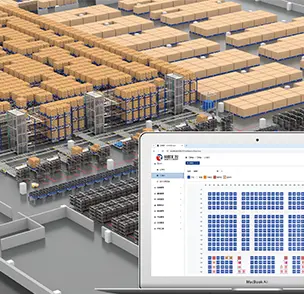
The published product supports three control modes; which mode governs each section, and which commands the WCS may send, should be written into the controls specification rather than assumed. How a WCS coordinates shuttles, lifts and conveyor sections together is covered in the article on Master's warehouse control system (WCS).
Six Specifications to Fix Before an RFQ
A layout request that arrives without these six numbers comes back as assumptions. Fix them first:
Unit load: type, weight range, dimensions, and pallet bottom condition for pallet duty
Speed: required conveying speed (for reference, the published standard line runs 16 m/min)
Length and level changes: route length, climb or drop between levels, available height
Flow points: number of merges, diverts and transfers on the route
Temperature zone: ambient, chilled or freezer — surface treatment and lubrication change (the published line uses acid-pickling, phosphating and powder coating)
Control interface: who runs the line — WCS scope, scan points, bypass requirements
With those six fixed, send the route sketch and unit-load data through the request a quote form and the response will be a layout proposal rather than a parts list.
FAQ
Can a conveyor line operate in a cold store?
Yes, with the specification adjusted: steel surface treatment, lubrication and electrical components are selected for the temperature zone, and the condensation cycle around door openings needs the same attention it gets on any freezer equipment. Item 5 of the RFQ list exists precisely so this is specified before quotation, not discovered at commissioning.
Can pallets and cartons share one line?
Only as separate, dedicated sections — the load classes use different mechanisms, speeds and accumulation rules. A shared line that carries both interleaved is a special design case requiring explicit engineering; the default answer is two lines or a scheduled changeover.
Can we buy just one section of conveyor?
Yes for a plain transport run between two fixed points — that needs little controls work. What does not transfer well as a standalone purchase is anything with a merge, divert or WCS integration in it: those elements are engineered against the surrounding flow, and buying them piecemeal moves the integration risk onto you.
What maintenance does a conveyor line need?
The routine is mechanical: chain and roller wear checks, drive unit service at the intervals the motor supplier specifies, and tracking adjustment on belt sections. Corrosion inspection joins the routine in chilled and freezer zones. None of it is exotic — the line's reliability depends far more on correct accumulation sizing and merge design than on maintenance tricks.
We use cookies to offer you a better browsing experience, analyze site traffic and personalize content. Part of the tracking is necessary to ensure SEO effectiveness, By using this site, you agree to our use of cookies.
Visit our cookie policy to learn more.


 English
 Español
 português
 العربية
 tiếng việt
 ไทย
 Indonesia