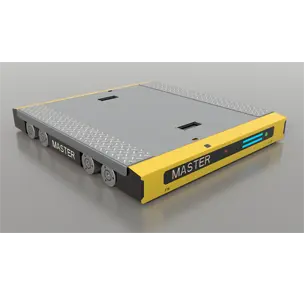
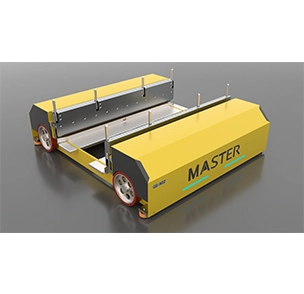
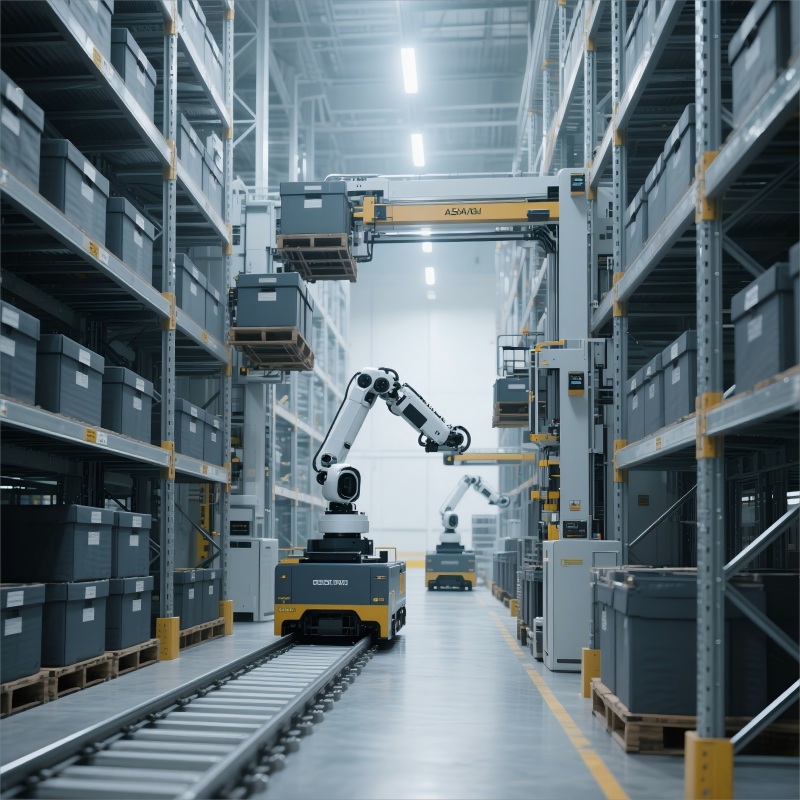
In the field of automated warehousing, four-way shuttle systems are highly regarded for their high-density storage and flexible layout advantages. However, the industry has long faced a technical bottleneck: system heights are typically limited to below 20 meters, with heights exceeding this considered a "restricted zone" by many suppliers-4.
The root of this limitation lies in the complexity of four-way shuttle systems—high precision requirements for equipment docking, difficult high-level elevator design, and the challenge of ensuring stability in multi-vehicle coordination. Compared to mature stacker crane systems (AS/RS) that routinely exceed 30 meters in height, four-way shuttles have historically lagged in vertical space utilization.
Tianjin Master's recent technological breakthroughs are changing this landscape.
Technical Breakthroughs: From the "20-Meter Restricted Zone" to a New 36-Meter Height
Master's technical accumulation in four-way shuttle systems dates back to around 2014, making it one of the earliest domestic enterprises to independently develop shuttle storage systems-6. After more than a decade of continuous development, Master has formed a comprehensive product line covering 2-way shuttles, parent-child shuttles, 4-way shuttles, multi-layer shuttles, circular shuttles, automated aisle stacker cranes, lifts, RGVs, conveyor lines, and high-bay warehouse racking.
In terms of breaking through height limitations, Master has focused on two key areas:
1. High-Level Elevator Speed and Stability Optimization
The elevator is the core equipment enabling vertical transport in four-way shuttle systems. Master has increased elevator vertical speed to more than double the industry average while conducting dedicated optimization for high-level operational stability. This improvement enables the system to maintain smooth operation even in projects exceeding 20 meters.
2. Systematic Precision Improvement in Equipment Docking
The height limitations of four-way shuttle systems largely stem from cumulative errors in equipment docking precision. Leveraging its advantages in independently developing and manufacturing core components, Master has refined equipment docking design to ensure reliability under high-level operating conditions.
Building on these technical breakthroughs, Master has already completed multiple four-way shuttle projects exceeding 20 meters in height, with completed projects now surpassing 26 meters-8.
The 36-Meter Project: Setting a New Industry Record
Recently, Master's overseas team won a bid for a 36-meter ultra-high four-way shuttle project. This project not only validates Master's technical strength but also sets a new industry height record for four-way shuttle systems.
While four-way shuttles have significant advantages in multi-aisle, medium-to-low flow scenarios—with selection frameworks indicating 20% to 40% lower infrastructure investment compared to two-way solutions-1—their height limitations have previously been a key constraint on their application in large-scale projects. The 36-meter breakthrough means that four-way shuttle systems can now compete directly with AS/RS in vertical space utilization, offering logistics companies a more flexible high-bay storage option.
Hardware-Software Synergy: Digital Twin and Scheduling Algorithm Empowerment
Master's technical breakthroughs extend beyond hardware. On the software side, the company has assembled an R&D team of approximately 30 people, which has successfully completed development and implementation for nearly 100 real-world cases.
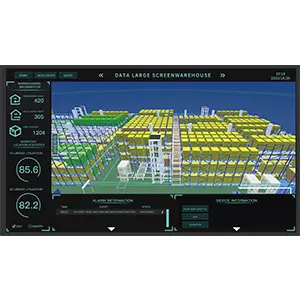
In 2024, Master obtained the patent for "Digital Twin-based 4-Way Shuttle Logistics Modeling Method, System, and Medium," applying digital twin technology to achieve efficient modeling and optimization of logistics processes, solving the resource waste and inefficiency issues associated with complex models in traditional approaches. The company has also applied 3D digital twin control and display systems to pallet 4-way shuttle projects, enabling real-time display of equipment operating status and performance data.
In terms of scheduling algorithms, Master has optimized system path planning capabilities through in-depth research into 4-way shuttle scheduling algorithms, solving multi-vehicle intersection and complex working condition path planning issues, further improving 4-way shuttle operational efficiency and accuracy.
Project Validation
The value of these technical breakthroughs has been validated in real projects. In the Inner Mongolia Jihong Packaging project, Master deployed 32 intelligent 4-way shuttles, a digital twin control platform, and customized WMS/WCS systems, achieving multi-vehicle operation on the same level (9 shuttles running simultaneously per level) 24/7. The project achieved approximately 40% improvement in turnover efficiency, 2-3 times increase in storage space utilization, and over 99% inventory accuracy.
Industry Significance of Height Breakthroughs
Breaking through the 20-meter height limitation carries multiple implications for the industry:
Land Resource Savings: Higher storage heights mean more goods can be stored on the same footprint, which is particularly important in urban areas where land costs are rising.
Unit Area Efficiency Improvement: High-bay storage directly increases unit area warehousing efficiency, creating greater operational space for logistics companies.
Application Scenario Expansion: The removal of height limitations enables four-way shuttle systems to enter high-bay warehouse domains previously dominated by AS/RS, offering customers a new option that combines density and flexibility.
As a company deeply rooted in the pallet automated dense storage system field, Master is continuously expanding the application boundaries of four-way shuttle systems. From early shuttle racking systems to today's 36-meter ultra-high projects, this technology evolution path demonstrates the value of focus and sustained investment. For companies seeking high-density, flexible storage solutions, the height ceiling for four-way shuttle systems is being progressively dismantled.


 English
  Español
  português
  العربية
  tiếng việt
  ไทย
ไทย  Indonesia