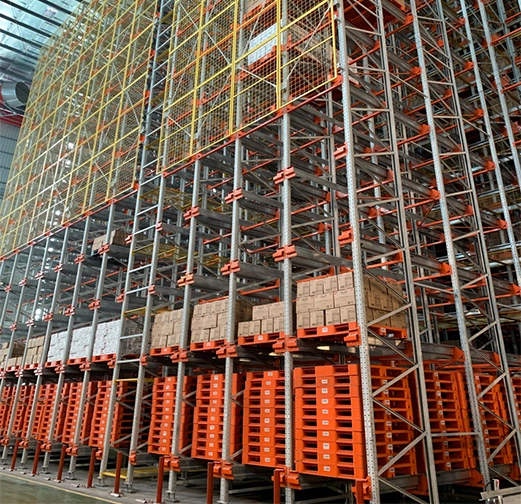
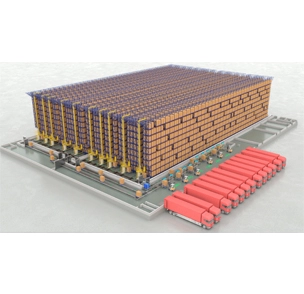
In the field of automated warehousing, discussions about shuttle technology often focus on pallet-level applications—comparing four-way shuttles with two-way shuttles, or pallet shuttles with stacker crane systems. However, for tote and case-level logistics, there is another important technology path: the multi-layer shuttle system.
The multi-layer shuttle system is an automated storage solution designed for totes or cartons. Compared with traditional MINILOAD systems, it offers significant advantages in storage density, operational efficiency, and system flexibility-3-9.
I. Technical Positioning: The "High-Density Express Lane" for Tote-Level Storage
The multi-layer shuttle system consists of multiple high-speed shuttles operating on dedicated racking units, rapid lifts, tote conveyors, sorting lines, and WMS/WCS control systems, integrating dense storage with "goods-to-person" picking capabilities-3-9.
Unlike pallet-level shuttles, multi-layer shuttles are designed for totes or cartons up to 50kg-8. Their core values include:
Maximized cubic space utilization: Compact design reduces floor space by 30%-50% compared with traditional solutions-8
Multiplied throughput capacity: In the same footprint, throughput capacity increases by 5-10 times compared with traditional storage systems-8
Energy efficiency: Low-voltage power supply saves approximately 10% energy compared with traditional stacker cranes for the same goods throughput-8
II. Key Parameters and Applicable Scenarios
Master's multi-layer shuttle product specifications are as follows-8:
The multi-layer shuttle supports both single-deep and double-deep designs, as well as both two-way and four-way travel configurations-3-8-9.
The system is widely applicable to automotive parts, electronics, biopharmaceuticals, and e-commerce retail light-item tote logistics-3-9, particularly suitable for fulfillment centers with large SKU volumes and frequent split-case picking operations.
III. Two-Way vs. Four-Way Multi-Layer Shuttles
Similar to pallet-level shuttles, multi-layer shuttles are also available in two-way and four-way configurations. They are not an iterative replacement but distinct technology paths suited to different scenarios.
The core selection logic is consistent with pallet-level shuttles: prioritize two-way solutions for few aisles, high throughput, and ultimate efficiency; prioritize four-way solutions for multiple aisles, medium-to-low flow, and flexible expansion-1.
IV. System Components and Core Equipment
The core equipment of a multi-layer shuttle system includes:
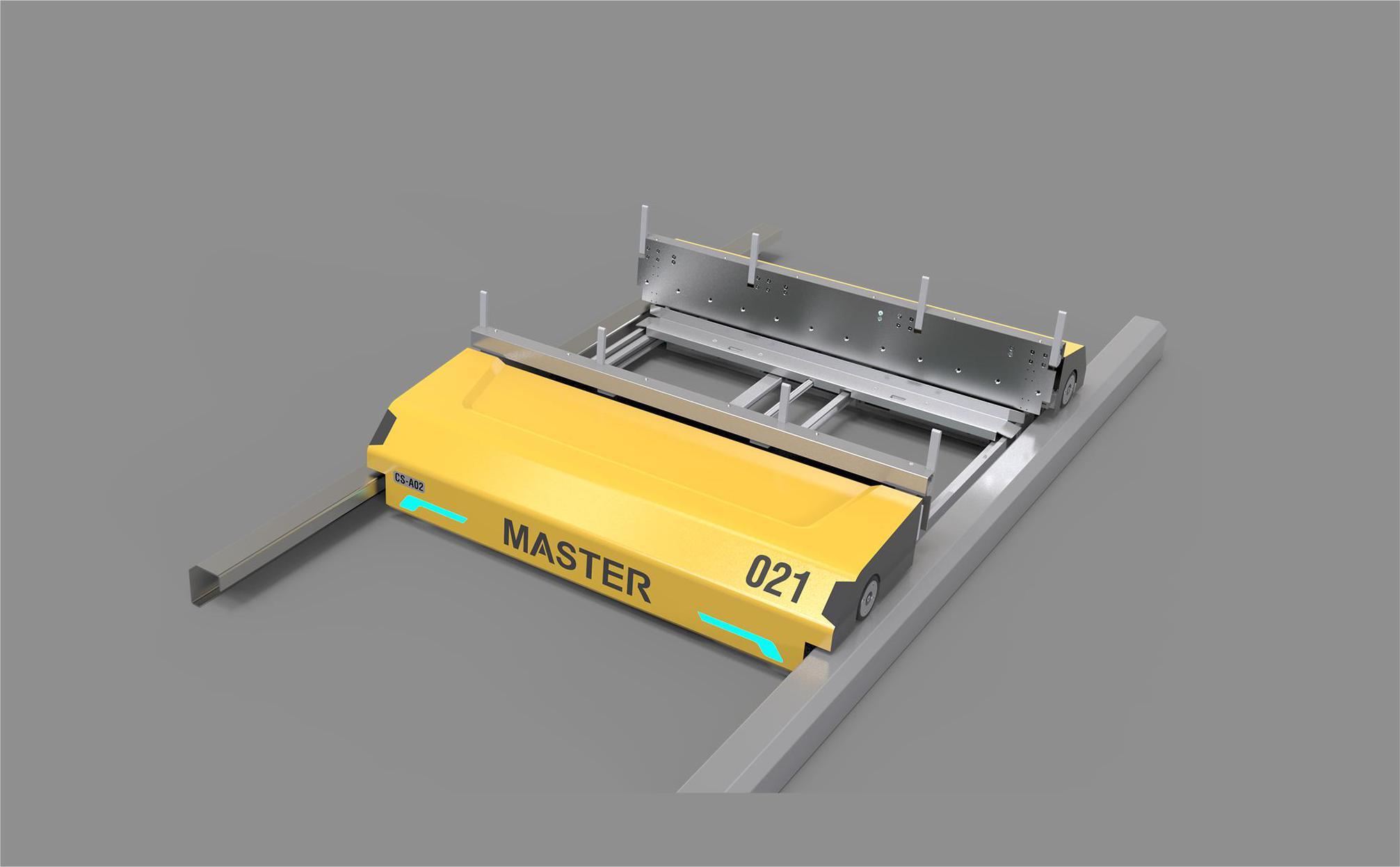
1. Multi-Layer Shuttle Body
High-speed shuttles operate on dedicated racking rails, using lifting or telescopic fork mechanisms to pick and place totes. Four-way multi-layer shuttles can change direction and operate across aisles through intersecting tracks.
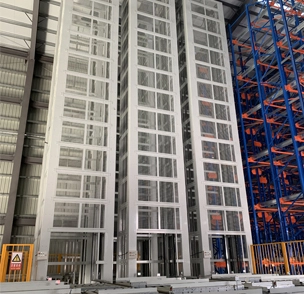
2. Rapid Vertical Lifts
Responsible for vertical transfer of shuttles and goods between levels. The efficiency of the multi-layer shuttle system largely depends on the speed and stability of the lifts.
3. Tote Conveyors and Sorting Lines
Responsible for transferring totes or cartons from lift docking stations to sorting stations or goods-to-person picking workstations.
4. WMS/WCS Control Systems
Similar to pallet-level systems, WMS handles inventory management and order strategy, while WCS manages real-time equipment scheduling and path optimization.
V. Synergy with Pallet-Level Shuttle Systems
In practical projects, multi-layer shuttle systems and pallet-level shuttle systems often form a tiered collaboration:
Pallet-level shuttles/ASRS: Handle bulk storage of raw materials, finished goods, and other pallet-level inventory
Multi-layer shuttle systems: Handle split-case picking and tote-level outbound operations
Connecting layer: Equipment such as pallet depalletizers and tote conveyors complete the transition from pallets to totes
This combined approach covers the complete operational chain from "bulk receiving" to "tote outbound."
VI. Selection Recommendations
As one of the earliest domestic enterprises to independently develop shuttle storage systems, Master has formed a comprehensive product line covering pallet-level shuttles (two-way, four-way, parent-child), multi-layer shuttles (two-way, four-way), stacker cranes, lifts, and conveyor lines, with self-developed WMS/WCS software and full-system integration services-6-11. The company holds over 40 invention and utility model patents, with products certified by ISO9001, CE, and RMI, and business covering more than 20 countries including the United States, Southeast Asia, and Europe-11.


 English
  Español
  português
  العربية
  tiếng việt
  ไทย
ไทย  Indonesia