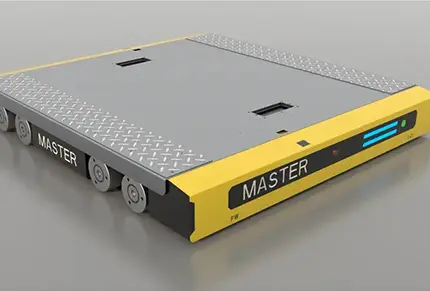
What happens when a warehouse reaches its physical limits but business growth continues? More inventory, faster delivery expectations, and increasing operational pressure can quickly turn traditional storage systems into a bottleneck for efficiency and profitability.
Many warehouses are facing the same challenge: there is demand for more storage capacity, but expanding the facility is not always the most practical solution. The real opportunity lies in using existing space more intelligently, improving product movement, and creating a more efficient storage process.
ASRS warehouse automation provides a smarter approach by transforming conventional warehouses into intelligent storage environments. Through automated storage and retrieval technology, an ASRS warehouse can optimize space utilization, improve inventory control, and reduce the limitations of manual operations.
Rather than simply adding more storage racks or increasing labor resources, businesses are increasingly adopting automation to make warehouses more productive, accurate, and scalable. ASRS technology enables companies to manage growing inventory demands while maintaining consistent operational performance.
This article explores how ASRS warehouse automation addresses the biggest challenges in modern warehouse operations and explains why automated storage and retrieval systems are becoming an essential solution for improving storage efficiency.
Common Challenges Facing Modern Warehouse Operations
Modern warehouse operations are becoming increasingly complex. Companies must handle larger inventory volumes, faster order cycles, and higher customer expectations while controlling operating costs. Traditional warehouse methods often struggle to meet these requirements.
One of the biggest challenges is limited storage space. As businesses expand, warehouses need to store more products without increasing their physical footprint. Conventional storage systems often require large aisles for forklifts and manual operations, which reduces the amount of space available for inventory.
Labor management is another major concern. Manual storage, picking, and retrieval processes require significant human involvement. With labor shortages and rising workforce costs, businesses are looking for ways to maintain productivity while reducing dependence on repetitive manual tasks.
Inventory accuracy also plays a critical role in warehouse efficiency. Manual tracking processes can lead to misplaced products, incorrect stock information, and delays in order fulfillment. These issues can negatively affect customer satisfaction and increase operational expenses.
In addition, modern warehouses need greater flexibility. Market demand changes quickly, and businesses require storage systems that can adapt to increased inventory levels, new product categories, and future expansion.
| Warehouse Challenge | Traditional Storage Limitation | ASRS Warehouse Automation Solution |
|---|
| Limited Storage Space | Requires more floor area and wider aisles | Maximizes vertical and high-density storage |
| High Labor Dependency | Relies on manual handling and operation | Automates storage and retrieval processes |
| Inventory Errors | Manual records may cause inaccuracies | Improves tracking through digital control systems |
| Growing Operational Demands | Difficult to scale efficiently | Provides flexible and scalable automation |
Optimizing Warehouse Space Utilization with ASRS Warehouse Automation
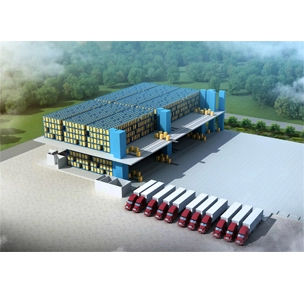
Space utilization is one of the most important advantages of ASRS warehouse automation. For many businesses, expanding warehouse buildings is expensive and time-consuming. Improving the efficiency of existing storage space is often a more practical solution.
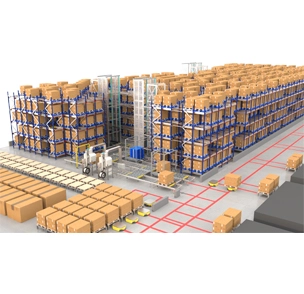
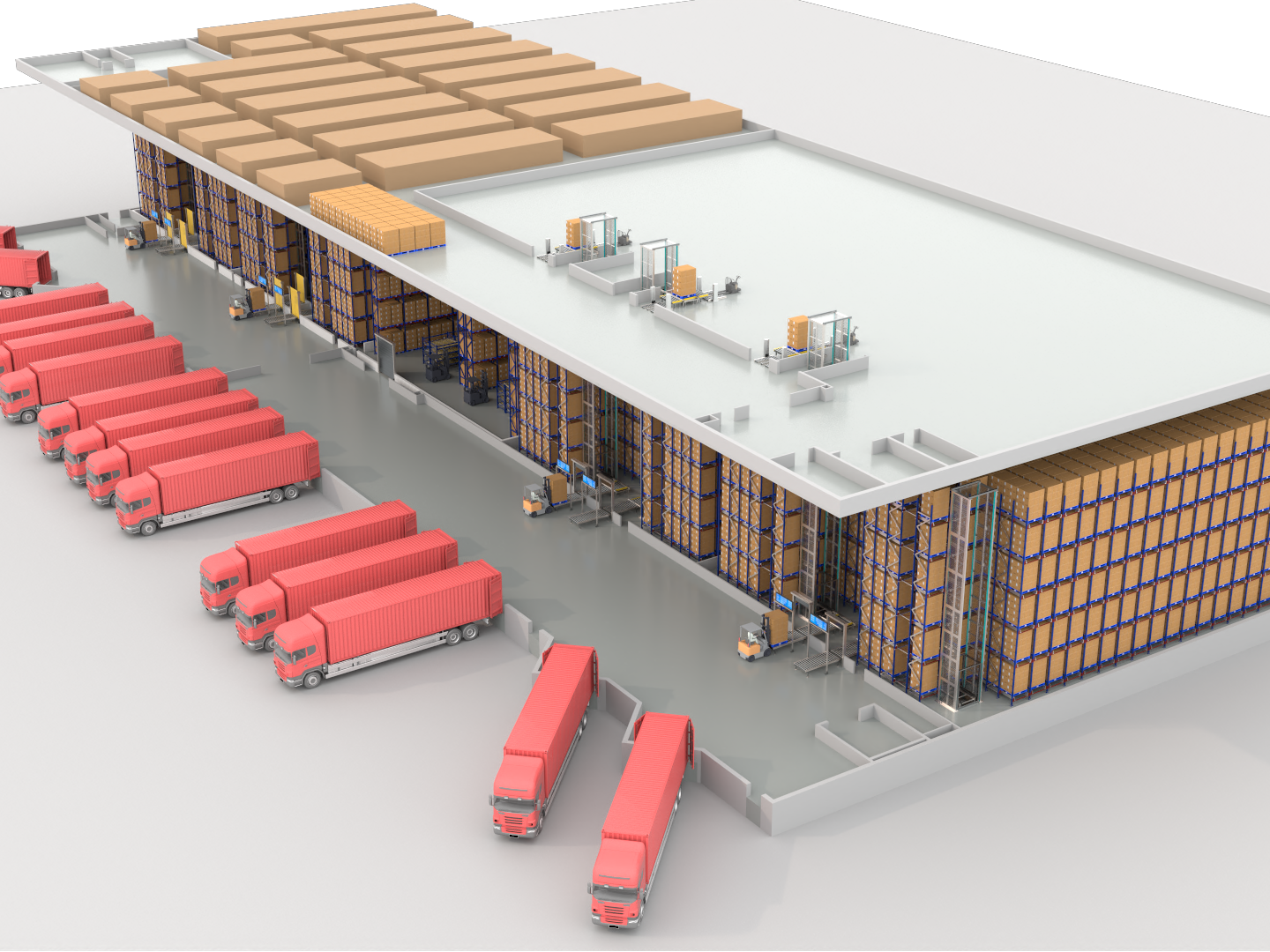
An ASRS warehouse uses automated equipment such as stacker cranes, robotic handling systems, and intelligent software to organize products more efficiently. By reducing the need for traditional forklift aisles, ASRS allows warehouses to store more goods within the same building area.
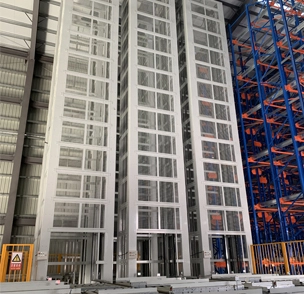
Vertical storage optimization is another key benefit. Traditional warehouses often leave significant unused vertical space because manual equipment has limitations. ASRS systems can operate at greater heights, helping businesses increase storage capacity without expanding their facilities.
This makes ASRS especially valuable for industries where warehouse space is costly, including manufacturing, automotive, pharmaceuticals, food logistics, and e-commerce distribution.
Businesses evaluating warehouse automation solutions can explore different system configurations and equipment options through Master Auto Group’s automated warehouse solutions.
By improving storage density and reducing unnecessary movement, ASRS warehouse automation helps companies create more efficient warehouse layouts while supporting long-term business growth.

Enhancing Storage Efficiency with Automated Storage and Retrieval Systems
Storage efficiency is not only about storing more products; it is also about making every storage and retrieval operation faster, more accurate, and more reliable.
ASRS warehouse automation improves efficiency by using automated systems to manage product movement. Instead of depending on workers to locate and move inventory manually, ASRS technology uses programmed instructions to complete storage and retrieval tasks.
A modern ASRS warehouse typically includes:
Automated storage racks
Stacker cranes or robotic handling equipment
Warehouse control systems
Warehouse management software integration
Sensors and monitoring technology
These components work together to create a connected warehouse environment. Products can be assigned optimized storage locations, retrieved quickly, and tracked throughout the entire storage process.
Compared with traditional systems, ASRS reduces unnecessary product movement and improves workflow consistency. This is particularly important for businesses handling large quantities of inventory or high-frequency warehouse operations.
| Efficiency Factor | Traditional Warehouse | ASRS Warehouse |
|---|
| Storage Density | Limited by manual accessibility | Optimized through automated layouts |
| Product Retrieval | Depends on worker operation | Automated according to system commands |
| Inventory Visibility | Requires manual tracking | Improved through digital management |
| Workflow Stability | Can vary with human performance | Consistent automated operation |
Reducing Labor Costs and Improving Inventory Accuracy Through ASRS Automation
Labor costs continue to be a major factor affecting warehouse operations. Repetitive tasks such as product searching, pallet movement, and inventory checking require time and workforce resources.
ASRS warehouse automation helps reduce these challenges by automating routine storage activities. Employees no longer need to spend most of their time performing repetitive warehouse movements, allowing them to focus on higher-value tasks such as supervision, planning, and process improvement.
Inventory accuracy is another important advantage of an ASRS warehouse. Automated systems follow precise storage instructions, reducing mistakes caused by manual handling or incorrect recording.
Accurate inventory information improves order fulfillment efficiency, reduces stock discrepancies, and provides better supply chain visibility. This is especially important for industries that require strict inventory management and product traceability.
For businesses planning automation upgrades, reliable supporting infrastructure is also essential. Companies can consult Master Auto Group’s technical team for warehouse automation project recommendations based on their operational requirements.
Key Benefits of ASRS Warehouse Automation for Modern Businesses
The adoption of ASRS warehouse automation provides businesses with a more intelligent way to manage storage operations. By combining automation technology with optimized warehouse design, ASRS creates long-term operational advantages.
Improved space utilization: ASRS maximizes storage capacity through high-density and vertical storage solutions.
Higher operational efficiency: Automated systems reduce unnecessary movement and improve workflow speed.
Better inventory accuracy: Digital tracking minimizes human errors and improves stock visibility.
Lower labor requirements: Automation reduces repetitive manual operations.
Enhanced warehouse safety: Reduced manual handling and forklift activity improve workplace safety.
Future scalability: ASRS systems support business expansion and changing logistics needs.
As supply chains continue to evolve, ASRS warehouse automation is becoming an important technology for companies seeking smarter, more efficient, and more reliable warehouse operations.
Conclusion
Modern warehouses must overcome challenges related to limited space, rising labor costs, inventory accuracy, and increasing operational complexity. Traditional storage approaches may no longer provide the efficiency and flexibility required for future growth.
ASRS warehouse automation offers an effective solution by combining automated storage and retrieval technology with intelligent warehouse management. It helps businesses maximize storage space, improve operational accuracy, reduce manual workload, and create more scalable logistics systems.
Whether upgrading an existing facility or developing a new warehouse, choosing the right ASRS solution can provide significant long-term value. A well-designed ASRS warehouse enables companies to improve productivity, optimize resources, and build a stronger foundation for future supply chain success.
FAQ
1. What is ASRS warehouse automation?
ASRS warehouse automation is a technology that uses automated storage and retrieval systems to store, locate, and move products with minimal manual operation.
2. How does an ASRS warehouse improve storage efficiency?
An ASRS warehouse improves efficiency by using high-density storage layouts, automated equipment, and optimized product movement.
3. Can ASRS warehouse automation reduce labor costs?
Yes. ASRS reduces repetitive manual tasks and allows employees to focus on higher-value warehouse activities.
4. Does ASRS improve inventory accuracy?
Yes. Automated systems use digital control and tracking technology to reduce inventory errors and improve visibility.
5. Which industries use ASRS warehouses?
ASRS warehouses are widely used in manufacturing, automotive, pharmaceuticals, logistics, retail, and e-commerce industries.
6. What should companies consider before implementing ASRS warehouse automation?
Companies should evaluate storage requirements, warehouse layout, product characteristics, automation goals, software integration, and future expansion plans.


 English
  Español
  português
  العربية
  tiếng việt
  ไทย
ไทย  Indonesia