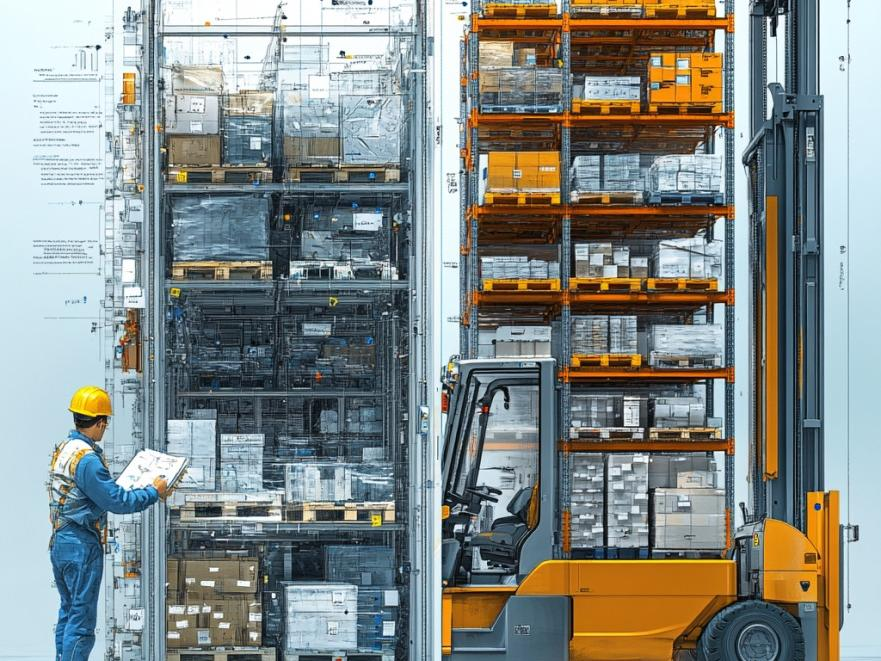
The biggest challenge in cold storage is not only keeping products cold — it is making every movement, every pallet position, and every square meter of space work harder. As frozen and refrigerated warehouses face increasing pressure from growing inventory demands, energy costs, and faster supply chain expectations, storage efficiency has become a key factor in operational success.
A warehouse that cannot fully utilize its available space may need costly expansions, while inefficient handling processes can increase labor requirements and slow down daily operations. This is why more cold chain operators are exploring advanced automation technologies such as ASRS crane systems to transform traditional storage environments into smarter, more efficient facilities.
An ASRS crane is more than an automated lifting device. It is a precision-driven storage solution that combines intelligent control systems, automated movement, and high-density rack structures to optimize pallet storage and retrieval in demanding cold environments. By reducing manual intervention and maximizing vertical storage capacity, ASRS crane technology helps warehouses achieve higher efficiency without requiring additional floor space.
As cold storage continues to evolve, automation is becoming a competitive advantage rather than a future concept. The right ASRS crane systems can help businesses improve inventory accuracy, enhance operational reliability, and create a scalable warehouse infrastructure designed for long-term growth.
In this guide, we will explore how ASRS crane systems improve cold storage warehouse efficiency, maximize space utilization, and help companies select the right automated storage solution for their specific operational needs.
The Growing Need for Advanced Automation in Modern Cold Storage Warehouses
Cold storage warehouses operate under unique challenges compared with traditional warehouses. Maintaining low temperatures, managing energy consumption, protecting product quality, and ensuring accurate inventory control all require highly efficient operations.
Traditional storage methods often rely heavily on forklifts and manual handling. While these approaches can support basic warehouse activities, they may create limitations when businesses need higher storage density, faster inventory movement, and improved safety in cold environments.
Space utilization is one of the biggest concerns for modern cold storage facilities. Because refrigeration systems require significant investment, maximizing the available storage volume is essential. Expanding warehouse buildings can be expensive, making vertical storage optimization an increasingly important strategy.
This is where automated storage technologies become valuable. ASRS crane systems allow warehouses to use vertical space more effectively while reducing unnecessary movement inside temperature-controlled areas. By automating pallet storage and retrieval, businesses can improve efficiency while maintaining consistent operational performance.
The demand for automation is also driven by the need for better accuracy. Cold chain industries such as food distribution, pharmaceuticals, and chemical storage often require strict inventory management. Automated systems help reduce human errors and provide more reliable tracking of stored products.
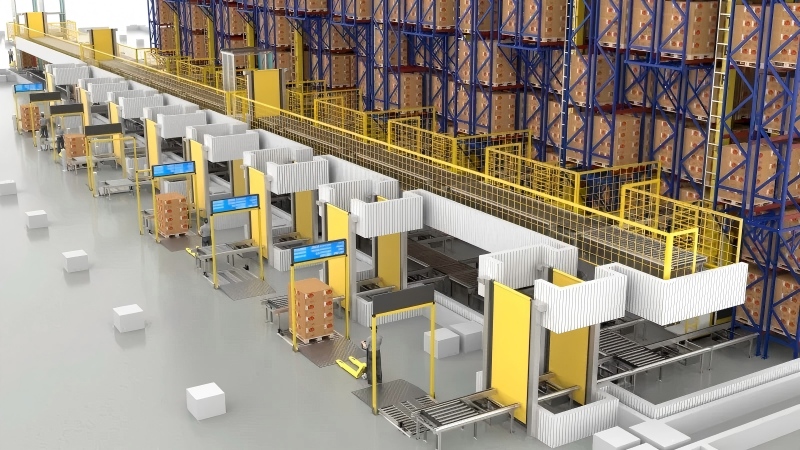
How ASRS Crane Systems Enable Automated Storage and Retrieval in Cold Environments
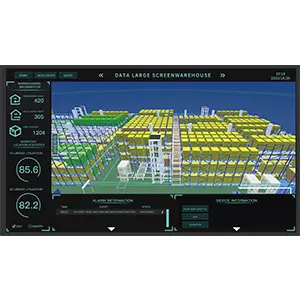
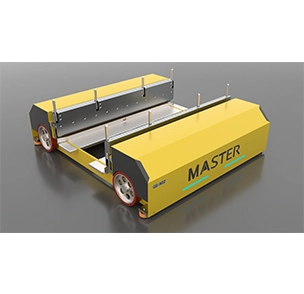
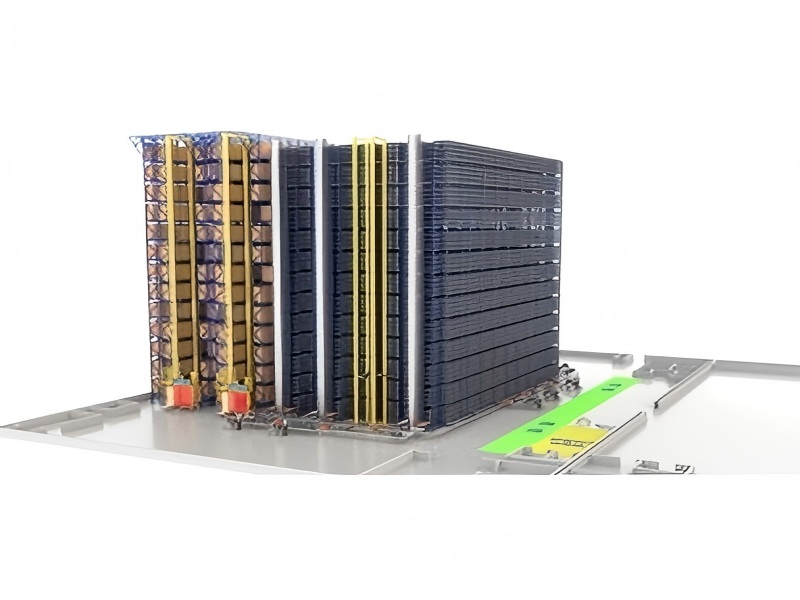
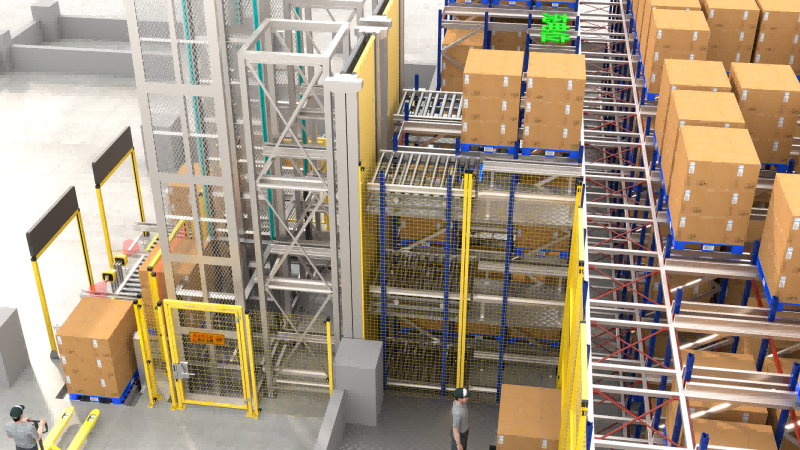
An ASRS crane system uses automated storage and retrieval technology to move pallets between storage locations and warehouse input/output areas. The system typically includes storage racks, automated cranes, control software, sensors, and warehouse management integration.
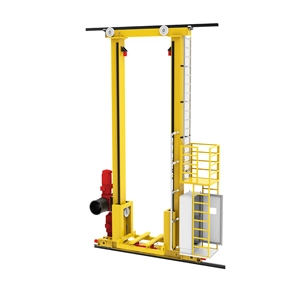
The core component, the ASRS crane, operates along storage aisles to accurately place and retrieve pallets. Unlike traditional forklifts, automated cranes can work in narrow spaces and utilize greater vertical height, making them highly suitable for cold storage environments where every cubic meter matters.
In low-temperature warehouses, reducing human activity inside storage areas can also provide operational advantages. Automated crane systems minimize the time workers spend in cold zones, helping improve working conditions while maintaining consistent storage processes.
Modern ASRS crane systems can support different warehouse requirements, including:
Frozen food storage facilities
Refrigerated distribution centers
Pharmaceutical cold chain warehouses
High-volume industrial storage facilities
Temperature-controlled logistics hubs
For automated warehouse infrastructure, reliable electrical transmission and signal communication are essential for stable operation. Companies planning automation projects can explore suitable industrial products and solutions from Master Auto-Group to support demanding equipment environments.
Maximizing Storage Density and Space Utilization with ASRS Crane Automation
One of the greatest advantages of ASRS crane systems is their ability to maximize warehouse space utilization. Traditional warehouses require wider aisles for forklift operation, which reduces the amount of space available for actual storage.
An ASRS-based warehouse uses automated cranes that operate within compact storage aisles. This allows more rack positions to be installed within the same building footprint while also increasing vertical storage capability.
For cold storage facilities, this improvement can have a significant impact. Since refrigeration costs are closely related to warehouse size, maximizing storage capacity within an existing building can improve long-term operational economics.
| Storage Factor | Traditional Forklift Storage | ASRS Crane Systems |
|---|
| Space Utilization | Requires wider aisles for manual operation | Optimizes vertical and horizontal storage space |
| Storage Density | Limited by forklift accessibility | Higher density through automated rack systems |
| Labor Requirement | Requires continuous manual handling | Reduces dependence on manual pallet movement |
| Inventory Accuracy | Depends heavily on operator management | Improved through automated control systems |
| Cold Environment Operation | Workers spend more time in low temperatures | Automation reduces human exposure |
By combining high-density storage design with automated movement, ASRS crane automation provides an effective solution for warehouses that need more capacity without increasing their physical footprint.
Enhancing Warehouse Efficiency, Accuracy, and Productivity Through ASRS Automation
Efficiency in cold storage depends on more than storage capacity. Fast retrieval, accurate inventory information, and consistent operation are equally important.
ASRS crane systems improve warehouse productivity by automating repetitive storage and retrieval tasks. Automated cranes can complete pallet movements according to programmed instructions, reducing delays caused by manual operations.
Inventory accuracy is another major advantage. Since ASRS technology integrates with warehouse management systems, businesses can maintain better visibility of product locations and movement history.
Compared with manual processes, automation reduces risks associated with misplaced inventory, incorrect handling, and inconsistent workflow. This is especially valuable for industries where product traceability is critical.
Key Benefits of ASRS Crane Systems for Cold Storage Operations
The adoption of an ASRS crane provides multiple benefits for cold storage operations, including improved efficiency, better space utilization, and more reliable warehouse management.
Higher storage capacity: Automated cranes maximize vertical storage space and improve warehouse density.
Improved operational accuracy: Automated systems reduce human errors in storage and retrieval processes.
Lower labor dependency: Businesses can reduce repetitive manual handling tasks.
Better cold environment management: Less human activity helps maintain stable warehouse operations.
Scalable warehouse performance: Automation systems can support future business expansion.
Enhanced safety: Reduced forklift traffic lowers operational risks.
How to Select the Right ASRS Crane System for Your Cold Storage Warehouse
Selecting the right ASRS crane systems requires careful evaluation of warehouse requirements, product characteristics, and long-term operational goals.
Important factors to consider include:
Storage capacity requirements: Determine current and future pallet storage needs.
Warehouse height: Evaluate available vertical space for automated storage.
Product characteristics: Consider pallet dimensions, weight, and temperature requirements.
Throughput requirements: Analyze how frequently products need to be stored and retrieved.
System integration: Ensure compatibility with warehouse management software.
Equipment reliability: Choose systems designed for continuous operation in cold environments.
A successful automation project requires not only the right storage equipment but also reliable supporting infrastructure. Businesses developing cold storage automation solutions can consult Master Auto-Group’s technical team for application-specific system recommendations to support stable equipment performance.
Conclusion
Cold storage warehouses face increasing demands for higher efficiency, greater storage capacity, and more accurate inventory management. Traditional storage methods may struggle to meet these challenges, especially as businesses seek smarter and more scalable solutions.
ASRS crane systems provide an effective way to optimize cold storage operations by combining automated storage and retrieval, high-density rack design, and intelligent control technology. From maximizing space utilization to improving productivity and accuracy, an ASRS crane helps businesses build more efficient warehouse environments.
For companies planning future-ready cold storage facilities, selecting the right automation system is a strategic investment. By evaluating storage requirements, operational goals, and infrastructure needs, businesses can choose ASRS crane technology that delivers long-term value.
FAQ
1. What is an ASRS crane system?
An ASRS crane system is an automated storage and retrieval solution that uses cranes, software, and control systems to automatically store and retrieve pallets.
2. Why are ASRS crane systems suitable for cold storage warehouses?
ASRS crane systems improve space utilization, reduce manual handling, and support efficient operations in temperature-controlled environments.
3. How does an ASRS crane improve warehouse space utilization?
An ASRS crane uses narrow aisles and vertical storage space, allowing warehouses to store more pallets within the same footprint.
4. Can ASRS crane systems improve inventory accuracy?
Yes. ASRS systems use automated controls and software integration to track storage locations and reduce human errors.
5. What industries use ASRS crane systems?
ASRS crane systems are widely used in food processing, pharmaceuticals, cold chain logistics, manufacturing, and distribution industries.
6. What should businesses consider before installing an ASRS crane system?
Businesses should evaluate storage requirements, warehouse layout, product types, throughput needs, software integration, and long-term expansion plans.


 English
  Español
  português
  العربية
  tiếng việt
  ไทย
ไทย  Indonesia