Toyota invented Just-in-Time (JIT) manufacturing decades ago. The idea was simple: parts arrive exactly when needed, no earlier, no later. Minimal inventory. Maximum efficiency.
But JIT has a dirty secret: it's incredibly fragile. One late shipment, one inventory error, one production line hiccup, and the whole system breaks. The pandemic exposed this fragility painfully.
Now, a new generation of manufacturers is redefining JIT. Not as "no inventory," but as "perfect visibility inventory." And the technology making this possible? Shuttle systems.
The Old JIT Problem
The New JIT Solution: Visibility + Speed
Modern JIT isn't about having zero inventory. It's about having perfect knowledge of where your inventory is, and the speed to get it where it needs to go exactly when needed.
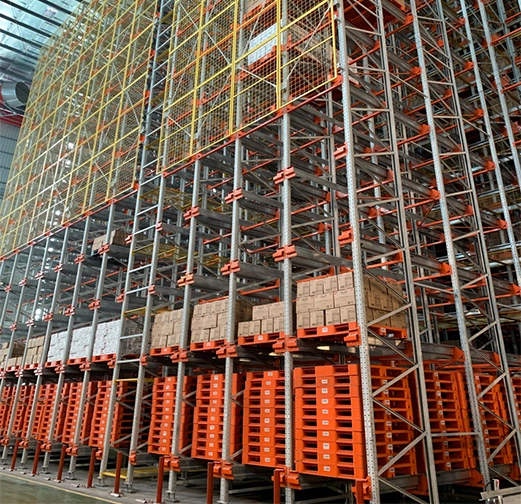
This is where 4-Way Shuttles and Pallet Shuttles become essential.
How Shuttles Enable Lean Manufacturing
1. Perfect Inventory Accuracy
In manufacturing, a missing part stops the line. Every minute of downtime costs thousands.
A Pallet Shuttle system with WMS integration ensures:
Result: Production schedulers trust the system. They plan with confidence, not guesswork.
2. Rapid Replenishment
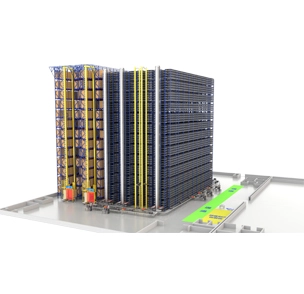
When the line needs parts, speed matters. A 4-Way Shuttle goods-to-person system can:
Retrieve specific totes from the grid in seconds
Deliver them to line-side staging areas automatically
Keep production flowing without manual searching
Result: No more forklift drivers racing to find parts. The parts come to the line, automatically.
3. Dynamic Sequencing
Advanced JIT isn't just about having parts. It's about having them in the right order.
With a 4-Way Shuttle system, you can:
Sequence parts exactly as needed for the production order
Stage them in the correct order at the line
Enable mixed-model production without complexity
Result: You can build different products on the same line without changeover delays.
4. Buffer Management
Even with perfect JIT, you need some buffer. A Pallet Shuttle provides:
Dense storage for safety stock
FIFO (First-In, First-Out) automatically managed
Space for critical spares
Result: You have the inventory you need without excess space consumption.
The Manufacturing Automation Flow
1. RECEIVING → Raw materials go to Pallet Shuttle storage
                    ↓
2. QUALITY CHECK → Inspected, verified
                    ↓
3. BUFFER STORAGE → Pallet Shuttle holds materials until needed
                    ↓
4. LINE FEED → 4-Way Shuttles deliver parts to production line in sequence
                    ↓
5. WIP STORAGE → Finished components stored in Pallet Shuttle or ASRS
                    ↓
6. FINAL ASSEMBLY → Parts retrieved in correct sequence
                    ↓
7. SHIPPING → Finished goods staged for outbound
Real Manufacturing Success Story
The Company: An automotive Tier 1 supplier
The Problem: 5,000+ SKUs of parts for multiple assembly lines. Manual picking causing line stoppages. 2% inventory inaccuracy leading to emergency orders. Expansion not possible.
The Solution:
Pallet Shuttles for bulk raw materials and finished goods
4-Way Shuttles for line-side replenishment and sequencing
Integrated WMS connecting production schedules to warehouse operations
The Results:
Line stoppages due to missing parts: Eliminated
Inventory accuracy: 99.9% → 99.99%
Emergency freight costs: Down 80%
Space for 30% more inventory within same footprint
New production lines added: 2 (without expanding warehouse)
The plant manager told me: "Before automation, my production planners didn't trust inventory data. They over-ordered 'just in case.' Now they trust the system. We run leaner and more reliably than ever."
The Financial Case: Why JIT with Automation Pays
Beyond Manufacturing: Any Industry with Flow
This JIT 2.0 model applies anywhere that flow matters:
Spare parts logistics: Aircraft parts, medical devices, heavy equipment
Retail replenishment: Keeping stores stocked without overstocking
E-commerce: Sequencing orders for efficient packing
The Bottom Line
Lean manufacturing was built on a brilliant insight: eliminate waste by having exactly what you need, exactly when you need it. But that insight was limited by the technology of its time.
Today, shuttle systems remove those limits. They give you the visibility to know what you have, the speed to get it where it needs to go, and the flexibility to adapt to change.
JIT 2.0 isn't about running leaner with more risk. It's about running leaner with more certainty.
Ready to power your lean manufacturing with shuttle automation?


 English
  Español
  português
  العربية
  tiếng việt
  ไทย
ไทย  Indonesia