In a fast-paced industrial environment, vertical material handling is the backbone of daily operations. Moving heavy goods across multiple facility tiers demands speed, but speed without rigorous safety engineering is a major liability. Warehouse elevators operate under immense daily stress, making regulatory compliance a critical baseline for operational survival.
Implementing a robust safety framework for your warehouse cargo lift does more than satisfy legal checklists. It actively minimizes sudden operational downtime, prevents catastrophic inventory damage, and, most importantly, protects your workforce from life-altering workplace injuries.
Why Safety Standards Matter for Warehouse Elevators
Industrial lifting environments are inherently high-risk zones. The physical realities of moving multi-ton loads or accelerating smaller goods at high speeds create substantial kinetic energy. When an uncertified warehouse cargo elevator suffers a mechanical or electrical failure, the consequences are immediate and severe.
Adhering to recognized global and regional safety guidelines forms a protective barrier for your entire business. Legally, strict compliance shields your company from crushing regulatory fines, litigation, and forced operational shutdowns by labor authorities. Financially, safety-compliant systems preserve your bottom line. A single warehouse cargo lift failure can destroy fragile stock, ruin surrounding infrastructure, and halt downstream production lines for days or weeks.
Furthermore, a workplace culture built around certified machinery enhances overall labor productivity. When operators know their lifting infrastructure is secure, material handling processes run faster, smoother, and with fewer stress-induced bottleneck delays.
Key Safety Standards and Regulations You Should Know
Navigating the landscape of industrial lifting regulations depends heavily on your geographic location and the specific engineering classification of your equipment. Generally, material-only lifts fall under different regulatory categories than passenger-carrying elevators, requiring precise engineering compliance.
In the United States, the Occupational Safety and Health Administration (OSHA) sets strict workplace requirements for material handling. Under OSHA guidelines, industrial vertical lifts must comply with specific structural and operational mandates. Parallel to OSHA, the American National Standards Institute (ANSI) and the American Society of Mechanical Engineers (ASME) govern the design side. Specifically, ASME B20.1 is the definitive safety standard for conveyors and related equipment, which explicitly covers Vertical Reciprocating Conveyors (VRCs) or specialized material-only warehouse cargo lift systems.
For companies operating in Europe or exporting to international markets, the European EN standards (such as EN 81 series variants for freight or the Machinery Directive 2006/42/EC) dictate stringent design, testing, and documentation parameters. In China, national standards like GB/T 24474 and associated industrial lifting codes establish rigorous testing protocols for manufacturing quality, load endurance, and structural integrity.
Understanding the distinction between a standard freight elevator and a Vertical Reciprocating Conveyor (VRC) is essential for correct regulatory alignment:
| Evaluation Criterion | Vertical Reciprocating Conveyor (VRC) / Material Lift | Traditional Freight Elevator |
|---|
| Primary Regulatory Code | ASME B20.1 / European Machinery Directive | ASME A17.1 / EN 81 Series |
| Rider Permissions | Strictly Prohibited (Material Transport Only) | Authorized Personnel & Freight Only |
| Installation Flexibility | High; versatile structural mounting options | Low; requires a dedicated, reinforced shaft |
| Speed Capabilities | Variable; advanced systems reach 3 m/s to 4 m/s | Typically slower industrial speeds (0.5 m/s) |
| Inspection Requirements | Streamlined industrial conveyor audits | Intensive, frequent state elevator board reviews |
Essential Safety Features in Modern Warehouse Elevators
Modern industrial engineering has moved far beyond simple cables and pulleys. Today, high-performance warehouse cargo elevator systems combine heavy-duty mechanical elements with intelligent digital control architecture to intercept failures before they happen.
Mechanical Fail-Safes and Structural Protection
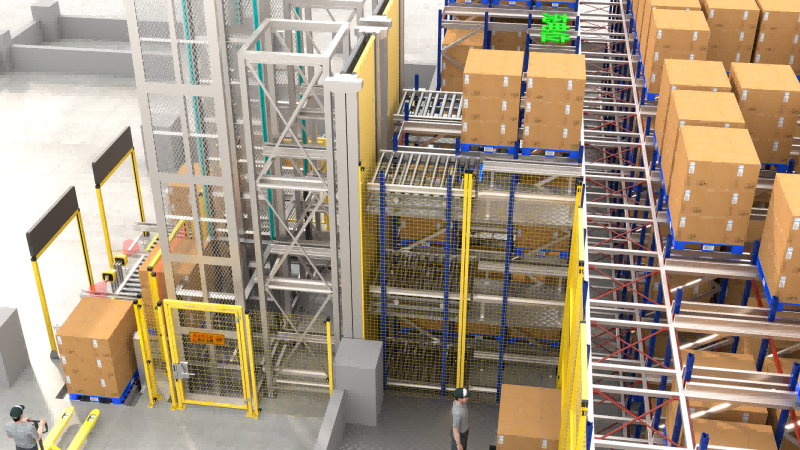
At the foundational hardware level, a premium warehouse cargo lift must feature robust physical fail-safes. Anti-drop safety locks function as mechanical safety clamps or safety cams that instantly lock the carriage to the guide rails if a lifting chain or timing belt loses tension. Electronic overload protection sensors act as weight indicators that prevent the motor from engaging if the weight threshold is exceeded. Furthermore, redundant emergency braking systems are capable of stopping a fully loaded carriage mid-travel within fractions of a second, while interlocked enclosures ensure physical gates at every access level remain mechanically locked until the lifting platform arrives completely flush with the floor.
Intelligent Control Automation and Precision
The true evolution of the warehouse cargo elevator lies in its smart control integration. Leading-edge systems utilize high-performance Siemens PLC architecture to manage the operational loop. This industrial-grade processing brain handles incoming signals from hundreds of data points along the lift path, coordinating movement with absolute precision.
To achieve flawless leveling across multiple mezzanine tiers, advanced systems drop legacy mechanical limit switches in favor of QR code precise positioning systems. Working alongside high-end optoelectronic tracking arrays, this digital mapping technique reduces positioning errors to a microscopic ±2mm. This prevents dangerous floor-level mismatches that cause forklifts and pallet jacks to tip during loading. Furthermore, advanced material lifts integrate custom servo motor setups featuring force balance modes. By balancing the natural gravity load of the carriage against the motor torque, the system minimizes mechanical stress, reduces power spikes, and allows manual adjustment with minimal human effort during specialized maintenance routines.
Best Practices for Safe Operation and Maintenance
Owning a certified warehouse cargo lift is only half the battle; maintaining its operational integrity requires continuous disciplined management, strict operational protocols, and forward-thinking predictive maintenance strategies.
Operational Protocols and Worker Training
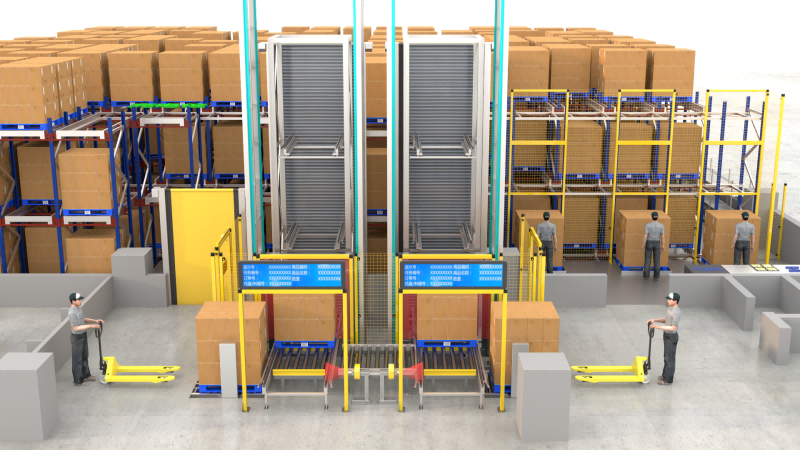
Human error remains a primary cause of industrial accidents. Facilities must implement uncompromising rules for day-to-day use. First and foremost, staff must be clearly trained on the absolute ban against riding a material-only warehouse cargo elevator. Signage stating weight limits must be visibly posted on the platform and at every loading terminal. Workers must learn how to center cargo evenly on the platform; off-center loading creates uneven torque on guide rails, accelerating mechanical wear and increasing jamming risks.
Multi-Tiered Maintenance Sequences
To guarantee smooth, continuous operation, facility managers should institute a structured, multi-tiered maintenance protocol:
Daily Visual Checks: Before starting a shift, operators should confirm that all level gates lock correctly, control panels show zero fault codes, and the immediate lift path is completely free of debris or loose packaging materials.
Monthly Mechanical Audits: Maintenance technicians must inspect all driving components. This includes checking timing belts or drive chains for proper tension, examining sprocket teeth for uneven wear, and verifying that automated limit sensors respond instantly.
Semi-Annual Lubrication: Guide shoes, rails, and bearings require cleaning and re-greasing with environment-specific lubricants. This step is especially critical for systems running inside extreme cold storage units down to -25°C where standard lubricants freeze.
Annual Certified Testing: A comprehensive structural review, insulation breakdown check, and full-load drop test should be executed by qualified technicians to recertify the system for another year of high-load performance.
Embracing Smart Diagnostics
Modern automated lifts remove the guesswork from maintenance via integrated intelligent detection systems. Rather than waiting for a component to snap, the software monitors internal telemetry like motor temperature variations, subtle belt tracking deviations, and micro-stalls. If a chain stretches slightly beyond normal thresholds or an automated transmission gate encounters resistance, the system alerts maintenance crews before an actual breakdown occurs.
How to Choose a Safety-Compliant Warehouse Elevator
Selecting the right equipment for a high-intensity industrial space requires a deep dive into engineering standards and manufacturer capabilities. When comparing quotes, look past the initial price tag and focus on systemic compliance metrics.
Key Factors for Procurement Evaluation
Verify that the equipment design matches your exact environment. If you run a high-density, automated e-commerce hub, you need a high-speed, timing-belt-driven warehouse cargo elevator engineered for constant cycling. Ensure the manufacturer provides full material traceability, verifiable welding certifications, and clear code compliance documentation (such as CE, OSHA, or specific national GB standards). Furthermore, ask for explicit details on their diagnostic capabilities—ensure the control software can communicate directly with your existing Warehouse Control Systems (WCS) for unified safety monitoring.
The Tianjin Master Advantage
Partnering with an industry-recognized engineering specialist simplifies the pathway to total compliance. For comprehensive automated facility integrations, explore the customized engineering options available on our Products Page.
As an industry leader operating a massive 50,000-square-meter precision production complex equipped with over 100 sets of CNC precision machine tools, Tianjin Master completely independently designs and produces its full range of automated warehouse logistics systems. Holding over 40 invention and utility model patents and more than 20 software copyrights, our team handles everything from initial logistics planning and design to single-machine research and software development.
Tianjin Master systems are built around top-tier components like Siemens PLCs and Pepperl+Fuchs positioning sensors, ensuring that every warehouse cargo lift we deploy functions reliably in demanding industrial environments. For operations seeking specialized system integration, professional structural design layout, or a direct project consultation, contact our engineering team to get comprehensive, certified support.
Conclusion
Industrial safety is an evolving operational standard. Investing in a high-speed, safety-compliant warehouse cargo elevator is a fundamental prerequisite for building a resilient, future-ready logistics system. By pairing certified physical fail-safes with smart automated diagnostics, modern enterprises protect their workforce while unlocking new levels of vertical efficiency. Tianjin Master remains committed to guiding global enterprises through this journey, delivering tailored, high-performance automated lifting solutions that turn safety compliance into a powerful competitive advantage.
Frequently Asked Questions (FAQ)
What is the difference between a VRC and a regular freight elevator?
A Vertical Reciprocating Conveyor (VRC) is for materials only, allowing faster speeds (3 m/s to 4 m/s) under conveyor codes (ASME B20.1). Traditional freight elevators allow passenger riders but require rigid, reinforced concrete shafts under stricter elevator codes (ASME A17.1).
How often should a warehouse cargo lift undergo safety inspections?
Operators must perform basic visual and operational safety checks daily before shifts. Technical crews should complete in-depth mechanical audits monthly, while certified structural testing and full-capacity load drops are required annually.
Can warehouse elevators operate safely in extreme cold storage settings?
Yes, if built with specialized low-temperature alloy steels, moisture-rated electronics, and heavy-duty industrial lubricants. These custom modifications prevent metal embrittlement and system freezing in deep-freeze facilities down to -25°C.
What happens if an automated warehouse elevator detects a safety anomaly?
The central Siemens PLC instantly halts all operations, locks the carriage, and triggers a local alarm. It simultaneously flashes a specific error fault code to the main Warehouse Control System (WCS) to block operation until a technician clears it.


 English
  Español
  português
  العربية
  tiếng việt
  ไทย
ไทย  Indonesia