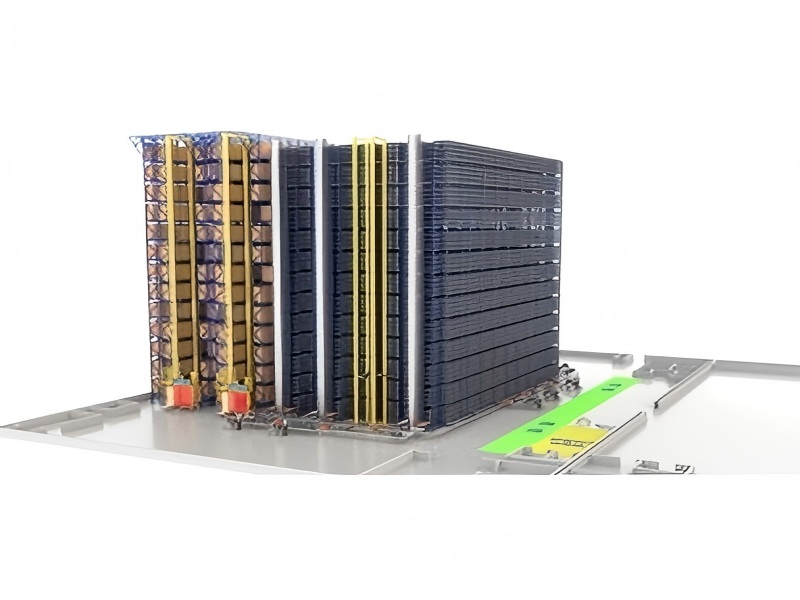
In the field of pallet-level automated storage, the four-way shuttle system has emerged as one of the fastest-growing technology routes in recent years. Distinguished from traditional stacker crane systems (AS/RS) and two-way shuttles, the four-way shuttle demonstrates unique value in warehouse layout adaptability and system expansion flexibility. This article provides a professional analysis of the four-way shuttle system from three dimensions: technical architecture, core components, and performance parameters.
I. System Architecture and Operating Principles
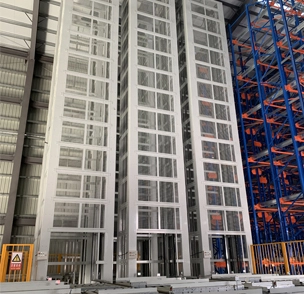
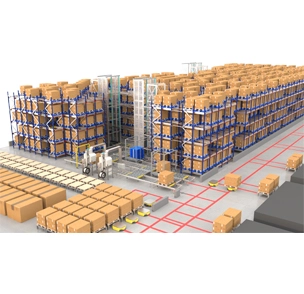
The four-way shuttle intelligent storage system consists of four-way shuttles, rapid vertical lifts, horizontal conveying systems, racking systems, and WMS/WCS control systems-2-8. Each unit is interconnected via wireless networks, completing FIFO or LIFO storage and retrieval operations under the unified scheduling of WMS/WCS.
The core technological innovation of the four-way shuttle lies in its ability to move in four directions—forward, backward, left, and right—automatically switching 90 degrees between longitudinal storage lanes and horizontal transfer passages, reaching any designated position within the racking grid-8.
Master's patented technology (CN112978181A) further optimizes the shuttle's steering mechanism: employing a hydraulic steering and lifting device that reduces intermediate transmission links, resulting in lower failure rates, easier installation and maintenance, and significantly reduced operating noise-6.
II. Core Components and Technical Parameters
Four-Way Shuttle Body
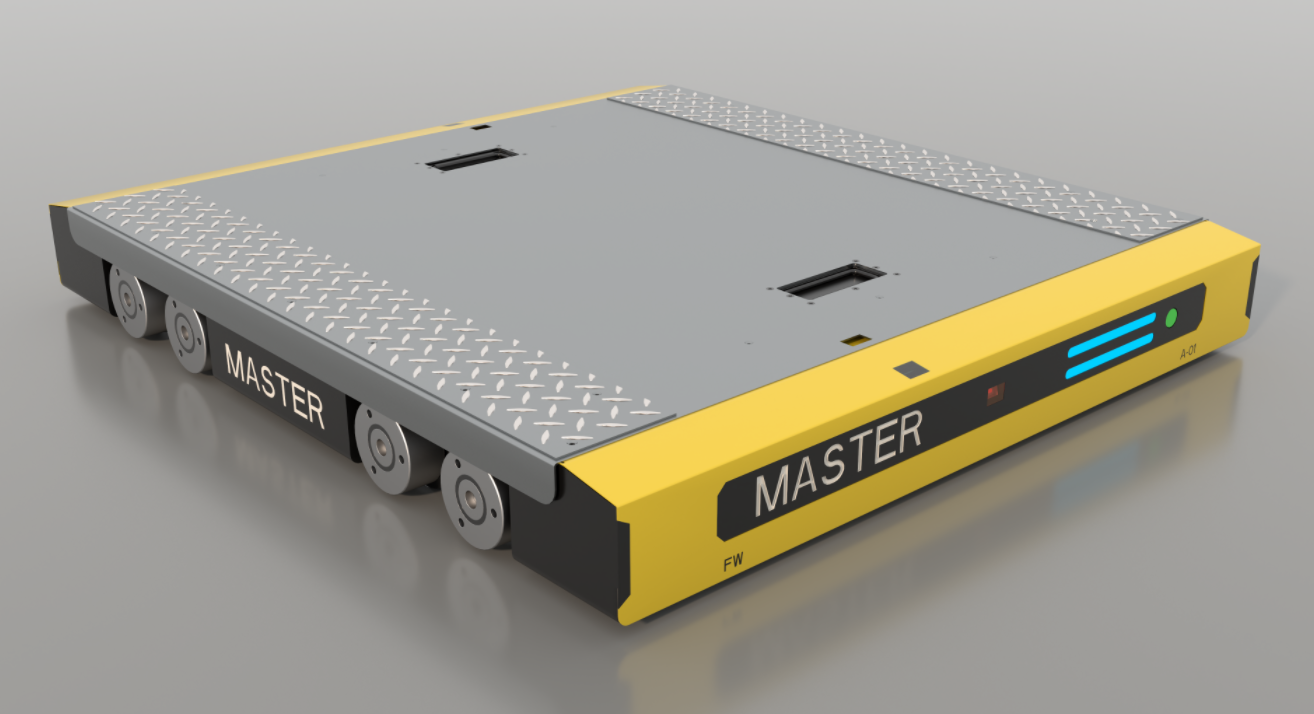
Master's four-way shuttle products adopt a mechanical cam lifting structural design with the following specifications-4:
The shuttle employs imported servo motors with photoelectric + encoder positioning for high precision, and supports industrial-grade WiFi or optical communication for wireless connectivity-2-4.
Racking and Rail System
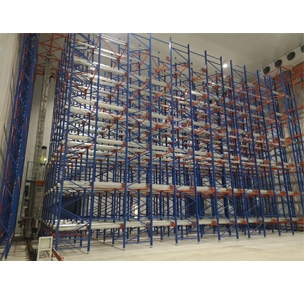
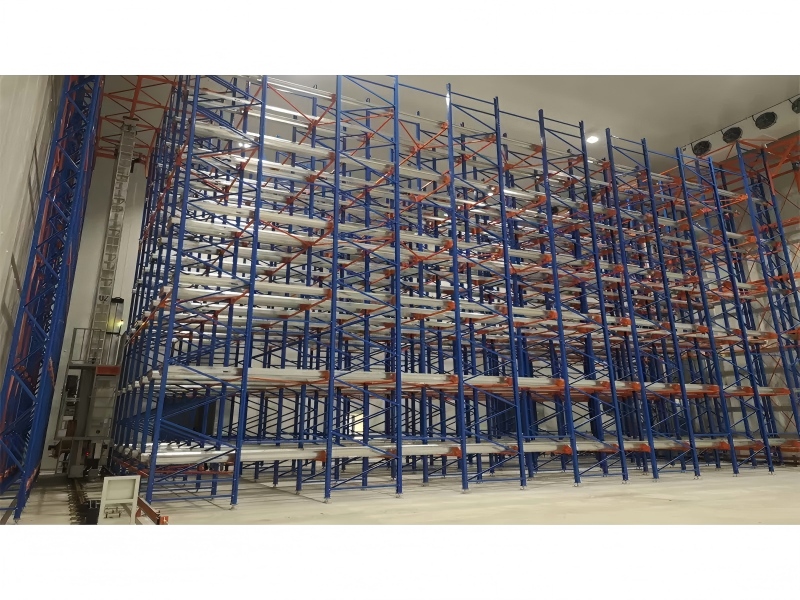
Four-way shuttle racking requires higher machining and installation accuracy compared to traditional racking. The racking structure uses an L-shaped cross-rail grid pattern, allowing shuttles to travel in both longitudinal and transverse directions-1. Racking space utilization can reach approximately 90%, 10%-60% higher than traditional storage modes-8.
Lifts and Conveying Systems
Vertical lifts serve as the core equipment enabling multi-level shuttle operations. Master has increased lift vertical speed to more than double the industry average, with dedicated optimization for high-level operational stability. The system is equipped with imported high-end core components and a dual-brake information system, using chain ropes instead of wire ropes for safer, more stable operation.
Software Control Systems
WMS (Warehouse Management System) is responsible for global inventory management and order strategy optimization, while WCS (Warehouse Control System) handles real-time equipment scheduling and status monitoring-8. In 2024, Master obtained the patent for "Digital Twin-based 4-Way Shuttle Logistics Modeling Method, System, and Medium," applying digital twin technology to achieve efficient modeling and optimization of logistics processes.
Master has assembled a software R&D team of approximately 30 people, successfully completing development and implementation for nearly 100 real-world cases-11.
III. Key Advantages
High Storage Density
With space utilization reaching approximately 90%, the system significantly increases storage capacity within the same footprint-8. Compared with conventional systems, a four-way shuttle racking system can increase storage capacity by approximately two-thirds.
Flexible Access
The system supports random access to any pallet or tote without being restricted by FIFO lane constraints-1. Multiple shuttles can be dynamically shared across aisles, balancing resources when some aisles are busy and others idle.
Scalability
Additional shuttles can be added to the existing grid as order volumes grow, increasing throughput without major structural changes-1. For multi-aisle warehouses with the same number of storage positions, infrastructure investment for the four-way solution is typically 20%-40% lower than the two-way solution.
System Reliability
Multiple shuttles operate within the same grid. If one shuttle fails, the scheduling system dynamically reallocates its tasks to other shuttles. The system is also equipped with 360-degree obstacle avoidance radar, mechanical bumpers, emergency stop devices, and pallet overhang detection sensors-3.
Energy Efficiency
The four-way shuttle is equipped with an energy recovery function, saving approximately 30% energy. In cold storage applications, high-density storage reduces door openings, lowering energy consumption-8.
IV. Applicable Industries and Scenarios
The four-way shuttle system is widely applicable to food, beverages, dairy, pharmaceuticals, tobacco, fine chemicals, and is particularly suitable for low-temperature cold chain logistics-2. Typical scenarios include:
Cold chain logistics: Reducing manual entry into low-temperature zones, with high-density storage lowering cold storage energy consumption
Irregular warehouse automation retrofits: Adapting to L-shaped, U-shaped, or older warehouses with dense column grids
Manufacturing line-side warehouses: Adapting to complex workshop layouts, supporting multi-aisle dynamic scheduling
E-commerce and retail distribution centers: Flexible scheduling to handle order fluctuations, with multi-shuttle coordination improving throughput
V. Project Validation
In the Inner Mongolia Jihong Packaging project, Master deployed 32 intelligent 4-way shuttles, a digital twin control platform, and customized WMS/WCS systems, achieving multi-vehicle same-level operation (9 shuttles running simultaneously per level) 24/7. The project achieved approximately 40% improvement in turnover efficiency, 2-3 times increase in storage space utilization, and over 99% inventory accuracy-11.
Whether facing the efficiency demands of high-bay warehouses or the flexibility needs of irregular warehouses, the four-way shuttle system demonstrates unique technical and economic value in specific scenarios. Understanding its technical essence and selection logic helps make more precise decisions in automation solution planning.


 English
  Español
  português
  العربية
  tiếng việt
  ไทย
ไทย  Indonesia