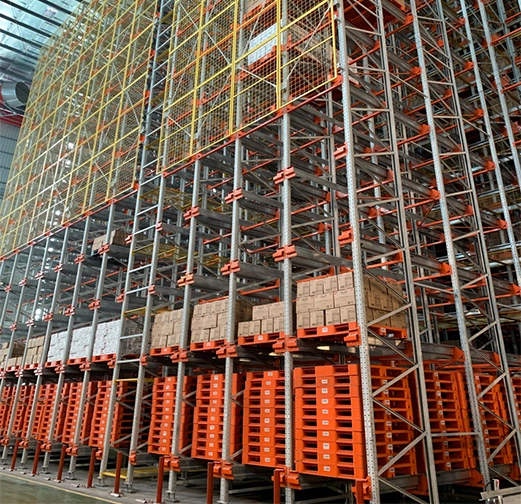
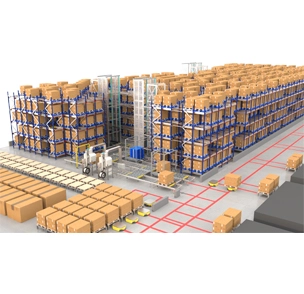
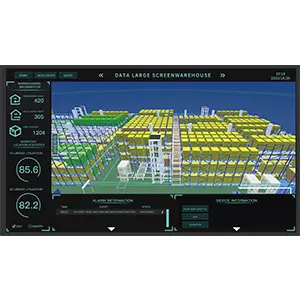
ASRS stands for Automated Storage and Retrieval System. It is one of the oldest forms of warehouse automation. Despite new technologies like shuttles, ASRS remains widely used.
How ASRS Works
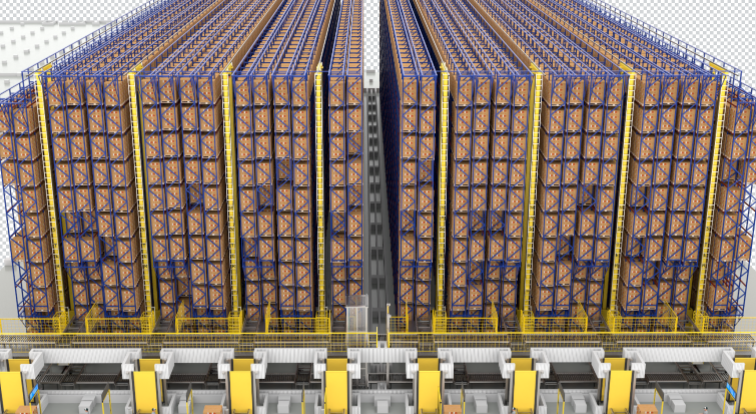
An ASRS uses stacker cranes that run on rails within fixed aisles. Each aisle has one crane. The crane moves horizontally along the aisle and vertically up the racking. It can reach any pallet position in that aisle.
The racking in an ASRS is tall, often 15 to 45 meters. This makes ASRS suitable for warehouses with high ceilings and expensive land.
Where ASRS Is Used
ASRS is common in several applications:
Manufacturing plants store raw materials and finished goods. Large distribution centers use ASRS for buffer storage. Cold storage facilities use ASRS to reduce labor in freezing temperatures. Food and beverage warehouses store full pallets of products.
ASRS vs Shuttles
Advantages of ASRS
ASRS makes good use of vertical space. A tall building can store many pallets with few aisles. Throughput is consistent and predictable. Cranes run 24/7 without breaks. Inventory tracking is accurate and real-time.
Disadvantages of ASRS
ASRS requires tall buildings. The upfront cost is high compared to shuttles. Adding capacity means adding entire aisles, which is expensive. If one crane fails, its entire aisle stops.
When to Consider ASRS
Consider ASRS if your warehouse has tall ceilings, you handle many full pallets, you need high throughput, and land is expensive. For lower buildings or mixed pallet and case handling, shuttles may be better.
Many facilities combine ASRS with shuttles. ASRS handles bulk pallet storage. Four-way shuttles handle order picking. Each system does what it does best.


 English
  Español
  português
  العربية
  tiếng việt
  ไทย
ไทย  Indonesia