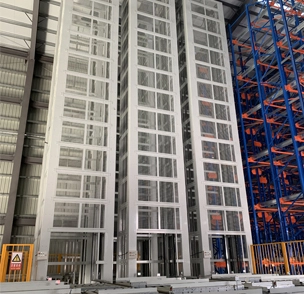
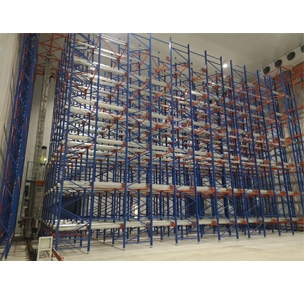
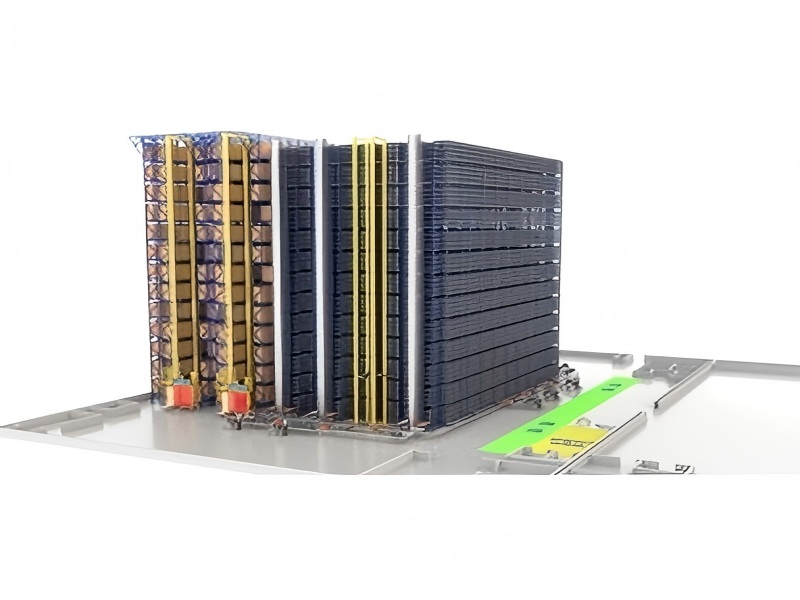
When companies explore warehouse automation, they often ask about the difference between a four-way shuttle and a pallet shuttle. Both move pallets. Both reduce manual labor. But they are designed for different problems. Choosing the wrong one leads to disappointing results. Here is a practical comparison.
What Is a Pallet Shuttle?
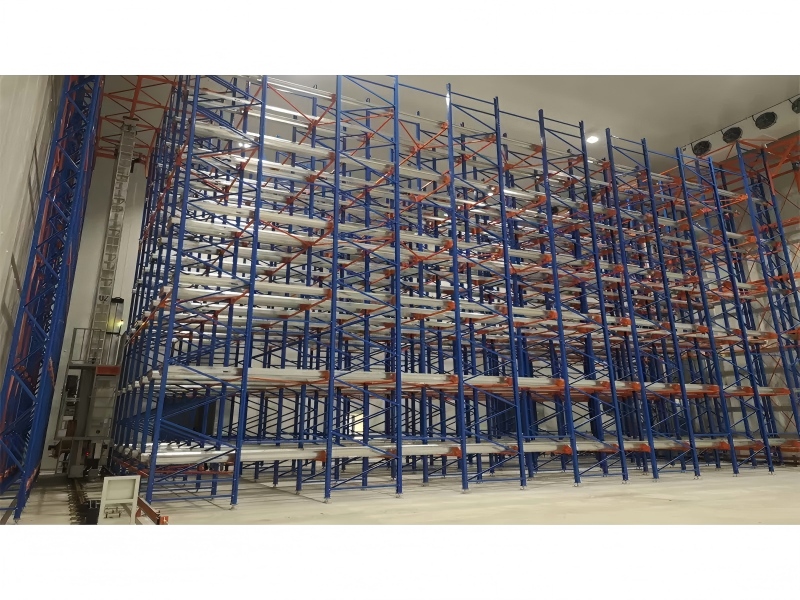
A pallet shuttle is a cart that runs on rails inside a deep storage lane. It moves in one direction—forward and backward -10-12. A forklift places a pallet at the lane entrance. The shuttle carries it to the deepest available position. For retrieval, the shuttle brings the pallet back.
Pallet shuttles prioritize density over flexibility. They are common in cold storage, food warehouses, and bulk material storage -11-12. In cold storage, they also save energy by reducing door openings. Each lane operates independently. If one shuttle fails, other lanes continue working.
What Is a Four-Way Shuttle?
A four-way shuttle operates on a grid of rails. It can move forward, backward, left, and right -5-9-10. This allows it to change aisles and access any location in the grid without a transfer car. Multiple shuttles work in the same grid, managed by software that prevents collisions.
Four-way shuttles prioritize flexibility and throughput. They are often paired with goods-to-person picking stations. Instead of workers walking to find items, shuttles bring containers to them -11-12. This reduces walking time and improves accuracy. Four-way shuttles are common in e-commerce fulfillment, retail distribution, and spare parts logistics -4-12.
Key Differences
When to Use a Pallet Shuttle
A pallet shuttle works best when storage density is the main concern -11-12. It is suitable for warehouses with limited floor space, full pallet movements, and moderate access frequency. Cold storage is a classic application. In freezers, reducing forklift traffic lowers energy costs significantly. Food and beverage warehouses also use pallet shuttles for ingredients and finished goods.
When to Use a Four-Way Shuttle
A four-way shuttle works best when flexibility and throughput matter most -4-5. It is suitable for warehouses with many SKUs, high order variability, or e-commerce fulfillment. The grid structure allows access to any storage location. Multiple shuttles can work simultaneously, increasing throughput. The goods-to-person model reduces labor requirements and improves picking accuracy.
Using Both Together
Many warehouses do not choose one technology. They use both in the same facility -11-12. Pallet shuttles store bulk pallets. Four-way shuttles handle order picking. Pallets move from the pallet shuttle area to a depalletizing station. Cases or totes are transferred to the four-way shuttle grid. Each system handles the part of the workflow it does best.
Summary
Pallet shuttles and four-way shuttles solve different problems. Pallet shuttles provide high-density storage for full pallets. Four-way shuttles provide flexible, high-throughput picking for totes and cases. The right choice depends on your operation. Many warehouses benefit from using both. A site assessment can help determine the optimal mix.


 English
  Español
  português
  العربية
  tiếng việt
  ไทย
ไทย  Indonesia